




A Rivalry Reheated by Words
The tension was palpable even before a ball was kicked at Lusail Stadium. Dutch manager Louis van Gaal, never one to mince words, had poked the bear. He remarked on how his team successfully neutralized Lionel Messi in their 2014 World Cup semifinal clash,
where Messi "didn't hit a ball." He also questioned Argentina's resilience. These comments, intended or not, added fuel to a historic rivalry. Messi and his teammates took it personally, feeling disrespected by a coach they believed should have known better. That pre-match friction set the stage not for a simple game of soccer, but for a battle.
The Man with the Whistle and the Cards
Spanish referee Antonio Mateu Lahoz was the man in the middle, and he quickly became a central character. Known for his theatrical and often card-heavy style, Lahoz set a new, dubious World Cup record by issuing a staggering 18 yellow cards and one red card over the course of the evening. Players, substitutes, and even Argentina's manager Lionel Scaloni found their way into the referee's book. From the opening minutes, it was clear Lahoz was struggling to maintain control, with his constant whistling and inconsistent decisions only serving to escalate the on-field animosity. Both teams later criticized his performance, with Argentine goalkeeper Emi Martínez calling him "crazy" and Messi stating FIFA couldn't appoint a referee who wasn't "up to the level" for such a huge game.
The Moment the Match Exploded
If the match was a simmering pot, Argentine midfielder Leandro Paredes was the one who cranked the heat to maximum. In the 88th minute, after committing a hard foul on Nathan Aké, Paredes inexplicably blasted the dead ball directly into the Dutch bench. Chaos ensued. The entire Dutch squad, substitutes and all, stormed the pitch to confront him. In the ensuing scrum, Dutch captain Virgil van Dijk leveled Paredes with a body check. The benches cleared, and a full-scale melee was only narrowly avoided. It was the physical manifestation of the simmering bad blood that had been building all game.
An Audacious Comeback and a Stroke of Genius
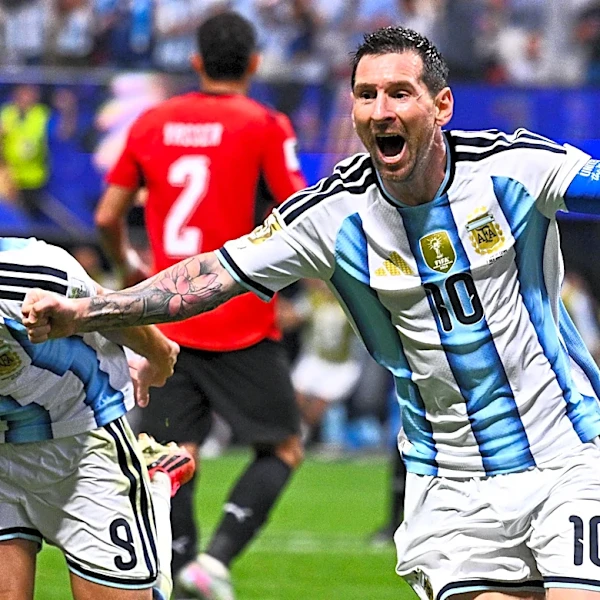
On the pitch, Argentina seemed to have the game sealed. A moment of Messi magic set up Nahuel Molina for the first goal, and Messi himself converted a penalty in the 73rd minute to make it 2-0. He celebrated by cupping his ears in front of the Dutch bench, a direct message to Van Gaal. But the Netherlands, fueled by their manager's late-game tactical shifts, fought back. Towering substitute Wout Weghorst headed one in to make it 2-1. Then, in the 101st minute of play—the 11th minute of stoppage time—the Dutch pulled off one of the cleverest free kicks in World Cup history. Instead of shooting, Teun Koopmeiners slid a pass to the front of the wall, where Weghorst was waiting to turn and score the shocking equalizer, sending the game to extra time.
The Final Act: Penalties and Acrimony
After a tense and scoreless extra time, the match went to a penalty shootout. Goalkeeper Emi Martínez became Argentina's hero, saving the first two Dutch penalties from Virgil van Dijk and Steven Berghuis with a mix of skill and psychological gamesmanship. As the pressure mounted, so did the verbal sparring, with players from both sides attempting to distract the penalty takers. Lautaro Martínez ultimately scored the decisive kick to win it 4-3 for Argentina, but the drama didn't end there. The celebrating Argentine players taunted their crestfallen opponents, a reaction they later claimed was in response to the Dutch intimidation tactics during the shootout. The ill will spilled over into post-match interviews, with Messi famously snapping at Weghorst off-camera, cementing the game's legacy as a beautiful, ugly, unforgettable classic.