





Born from Military Necessity
Before it was a style choice, the T-shirt was standard-issue. The U.S. Navy officially adopted a simple, crew-neck cotton undershirt around 1913 for sailors to wear beneath their uniforms. It was absorbent, comfortable, and easy to clean—a purely functional
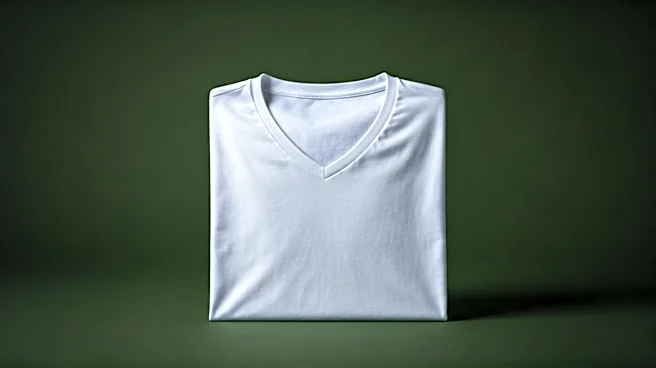
garment. The 'V' came later, as a practical tweak. A v-neck allowed a serviceman to unbutton the top of his overshirt without the white line of his undershirt showing. It was a small modification for the sake of military neatness, a detail born from discipline, not design. The shirt’s purpose was to be invisible, a hidden layer of comfort and utility. After World War II, millions of veterans returned to civilian life, bringing their government-issued T-shirts with them and planting the seeds for a style revolution.
The Uniform of the Rebel
What happens when a symbol of conformity is adopted by non-conformists? The T-shirt, and its v-neck cousin, became the unofficial uniform of a new kind of American man in the 1950s. Actors like Marlon Brando in 'A Streetcar Named Desire' and James Dean in 'Rebel Without a Cause' transformed the undershirt into outerwear. Suddenly, this simple piece of cotton wasn't hidden anymore; it was the main event. Wearing a T-shirt as a standalone top was a rejection of the stuffy, formal attire of the previous generation—the suits, hats, and starched collars. It signified a raw, rugged masculinity that was both vulnerable and defiant. The v-neck, in particular, offered a touch more exposure and a hint of subversion, framing the chest in a way that felt both casual and deliberately cool.
The Power of the 'V' Shape
This brings us to the core of the v-neck’s enduring magic: its geometry. The ‘V’ shape is one of the most aesthetically pleasing and powerful lines in visual design, and it works wonders on the human form. For men, the downward point of the 'V' subtly draws the eye toward the center of the chest, creating an illusion of a broader, more defined upper body. It elongates the neck, making the wearer appear taller and leaner. Unlike the crew neck, which can sometimes feel constricting or boyish, the v-neck offers a more intentional, mature frame for the face and collarbone. It’s a simple cut that quietly communicates confidence. This anatomical flattery is the 'real reason' it works across body types and decades—it’s not just a shirt, it’s a tool of subtle visual enhancement.
The Modern Minimalist Staple
If the 50s made the v-neck rebellious and the 70s made it a bit flashy (think disco), the 21st century has cemented its status as a minimalist staple. From tech billionaires pairing it with a blazer to every guy trying to nail a 'smart casual' dress code, the v-neck has become a neutral foundation. Its history of rebellion has softened into an aura of effortless style. It can be dressed up under a jacket or dressed down on its own. In a world saturated with logos, graphics, and fast-fashion gimmicks, the plain v-neck stands out for its simplicity. It telegraphs that the wearer doesn't need to shout to be noticed. Its power now lies in its quiet confidence, a blank canvas that has proven it doesn't need to change because it got the fundamentals right from the start.