
An Ethos of Immediacy
To understand why there’s no official Burning Man app, you have to understand its core principles. Two in particular, Decommodification and Immediacy, stand in direct opposition to the modern festival app experience. Decommodification aims to create a space
free from commercial transactions, sponsorships, and advertising. An official app, with its potential for branded integrations and notifications, would feel like an intrusion from the very corporate world Burners come to the desert to escape. More importantly, the principle of Immediacy encourages participants to engage directly with their environment and the people around them, to overcome the barriers that stand between them and a recognition of their inner selves. Staring at a phone screen to find the next DJ set or map out a perfect schedule is the antithesis of this idea. The culture is designed to pull you into the present moment, not help you optimize it.
Navigating by Sound and Light
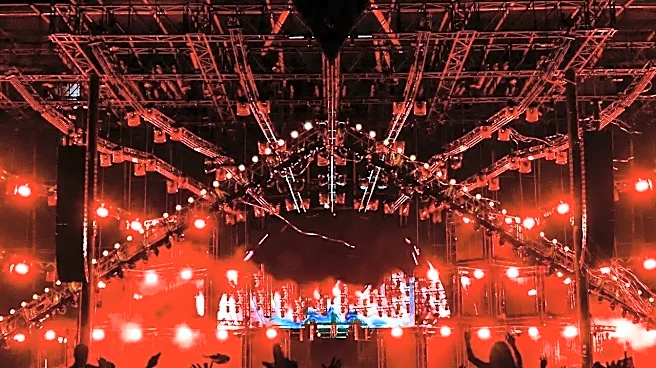
Black Rock City is a massive, temporary metropolis where traditional navigation fails, especially after dark. Instead of street signs, the primary landmarks are mobile and brilliantly illuminated. Enormous, radically modified “mutant vehicles” or “art cars” crawl across the desert, many equipped with powerful sound systems and elaborate light displays. These aren't just for show; they are navigational beacons. You might decide to head toward the pulsing lasers of a car shaped like a dragon or follow the deep bass thumping from a mobile octopus. The city’s own sound policy creates geographic zones, with designated areas in the “deep playa” for large sound systems to operate all night. This turns the soundscape itself into a functional map. Unique light patterns on bikes and costumes become a way to find friends in a crowd of thousands, transforming personal expression into a practical tool for connection.
The Power of Playa Rumor
In a place with notoriously spotty cell service, information travels the old-fashioned way: by word of mouth. But “rumor” here isn’t just gossip; it’s a decentralized information network. You might hear from a campmate that a legendary DJ is playing a surprise sunrise set on a specific art car, or that a camp on the other side of the city is serving freshly made pancakes. This system, often referred to as “playa magic” or the belief that “the playa provides,” fosters spontaneous social interactions. While there are some unofficial, community-built apps like iBurn and Dust, and printed guides like the Rockstar Librarian, they function more as a reference than a real-time scheduler. They can give you a general idea of what's happening, but the most exciting opportunities often come from a chance encounter and a whispered tip. This forces people to talk to each other, to ask for directions, and to connect in ways an app would short-circuit.
Engineered for Serendipity
Ultimately, the lack of a central, app-driven schedule is not an oversight; it’s a core design element that engineers serendipity. The point of Burning Man isn’t to check off a list of experiences like a tourist. It is about participation, exploration, and the joy of unplanned discovery. Getting lost is often the goal. By abandoning a rigid schedule, you might stumble upon a small, interactive art piece in the deep desert, an impromptu poetry reading, or a conversation with a stranger that changes your perspective. This analog, sensory-based navigation system forces you to be present, to look up from a screen, and to engage with the wild, unpredictable reality of the city around you. It ensures that every person’s journey through the week is unique, shaped by chance, curiosity, and genuine human connection rather than a pre-packaged digital itinerary.