


A Crisis of Complexity
In the world of computer animation, complexity is the enemy of budget and time. Every leaf on every tree, every thread in a piece of clothing, and every feather on a bird has to be designed, modeled, and rendered by a computer. During the making of "Up,"
the team at Pixar faced a daunting challenge: the film's script demanded thousands of balloons, a dense South American jungle, and detailed characters, which threatened to overwhelm their production pipeline. The initial, more realistic vision was proving computationally and financially unsustainable. This wasn't a sudden disaster, but a creeping crisis where the film's grand ambition was at war with the practical limits of technology and resources. The team realized they couldn't render their way out of the problem; they would have to rethink it entirely.
Simplexity as a Solution
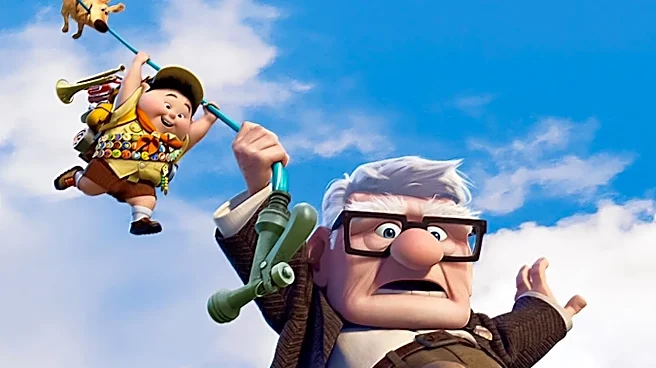
Faced with this challenge, the filmmakers, led by director Pete Docter and art director Ricky Nierva, developed a guiding principle that would come to define the movie's aesthetic: "simplexity." The term, a portmanteau of "simple" and "complexity," described a new direction. Instead of pursuing photorealism, they would embrace caricature and simplification as a core tenet of the film's design. This meant boiling down characters and objects to their most essential, recognizable shapes. The goal was to create a world that felt emotionally real and detailed, even if it wasn't physically realistic. This philosophy of 'less is more' became the creative solution to the technical problem, allowing the artists to focus on storytelling and emotion rather than getting lost in endless detail.
Designing a Caricatured World
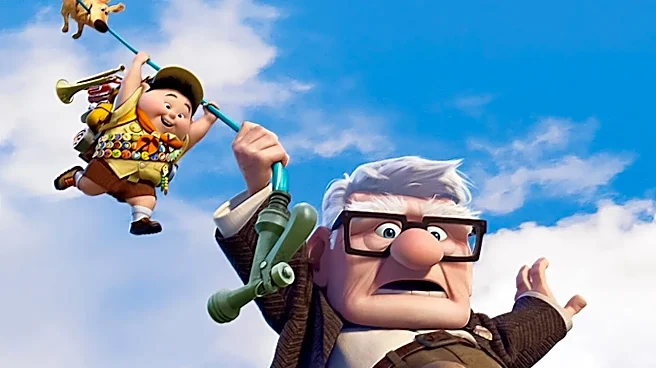
This principle of "simplexity" is visible in every frame of the final film. Carl Fredricksen is, in essence, a square—from his blocky head and glasses to his rigid posture. This design immediately communicates his stubborn, boxed-in personality. Conversely, his beloved wife Ellie was designed around circles and flowing shapes, representing her vibrant and free-spirited nature. This visual language extends to the entire cast. Russell is a soft, egg-shaped character, making him appear non-threatening and innocent. The villain, Charles Muntz, is more angular and sharp. Even the inanimate objects, like Carl's square chair versus Ellie's rounded one, tell a story. By simplifying the core shapes, animators could create characters that were both technically easier to manage and more emotionally expressive.
Artistry Born from Constraint
What began as a production nightmare became the film's greatest artistic asset. The simplified, stylized look of "Up" is what audiences fell in love with. The 'practical effects' in the headline weren't physical models, but a practical philosophy that guided the digital artists. They created a world that felt handcrafted and warm, a stark contrast to the increasingly hyper-realistic trend in animation. The animators found that by removing excessive detail, they could get to the core of a scene's emotion more quickly and effectively. The challenges of animating thousands of balloons were solved with physics simulators, but the look of the film—the part that resonates with viewers—was a direct result of creative problem-solving under pressure. The production crisis was hidden in plain sight, disguised as a charming and unforgettable art style.