






A Studio at a Crossroads
The "studio" in question is Film4, the iconic filmmaking arm of the UK's public broadcaster, Channel 4. Unlike a typical Hollywood outfit, Film4 can't truly go bankrupt, but it can be gutted, restructured, or rendered irrelevant. In the mid-2000s, following
financial losses and a corporate restructuring that folded it back into the main channel's drama department, Film4 was under immense pressure to justify its existence. Its mission has always been to champion risky, auteur-driven cinema, but that model requires successes to survive. The company needed not just a win, but a resounding validation of its entire philosophy.
The Unfilmable, Unforgettable Script
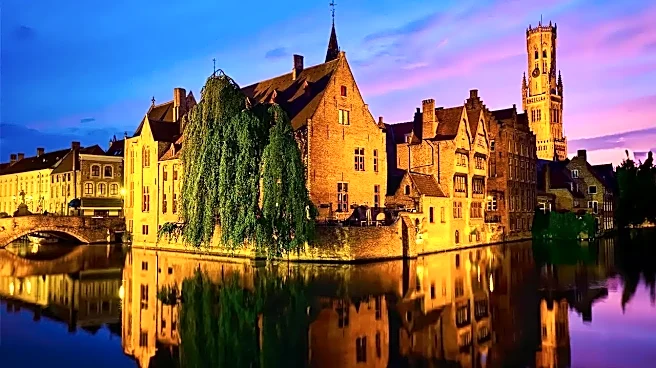
Enter Martin McDonagh. The celebrated playwright was known for his viciously funny and poetic stage work, but he wanted to make a film. His debut script was In Bruges, a story born from a weekend trip where he felt both charmed and bored by the medieval city. He channeled this into two characters: one who sees a magical wonderland, the other a purgatorial prison. The resulting screenplay was a producer's nightmare: talky, morally complex, brutally violent, and soaked in gallows humor. It had no heroes, no car chases (mostly), and its main selling point was dazzlingly intricate, curse-laden dialogue. It was exactly the kind of singular vision Film4 was built to support, but it was a massive gamble.
A Sundance Premiere Changes Everything
The film was shot for a modest $15 million with Colin Farrell and Brendan Gleeson, who McDonagh made Irish instead of the original Londoners to suit his leads. When In Bruges premiered as the opening night film at the 2008 Sundance Film Festival, everything changed. The initial industry take was that it was a quirky hitman comedy, perhaps destined for a niche audience. But the response was electric. Critics were floored by the blend of high-brow wit and low-brow violence, the surprisingly deep themes of sin and redemption, and the career-best performance from Colin Farrell. The buzz turned a strange little European film into a hot commodity, proving it had legs beyond the art house circuit.
The One-Two Punch That Secured a Legacy
While In Bruges was a solid financial success, more than doubling its budget at the box office, its real impact was magnified by what happened next. That same year, another Film4 production, Slumdog Millionaire, would go from a project nearly dumped straight to DVD to a global phenomenon, sweeping the Oscars. In Bruges didn't win Best Picture, but it earned McDonagh an Oscar nomination for his screenplay and a Golden Globe for Farrell. Together, the two films formed a powerful one-two punch. In Bruges was the critical darling that re-established Film4's cultural cachet and proved its risky, writer-first approach could yield gold. Slumdog was the commercial juggernaut that solidified the bottom line. This incredible year put Film4 back on top, securing its funding and its reputation for the next decade.