







Myth: Khakis are American office attire.
The story of khakis doesn't start in a cubicle, but in the sweltering heat of mid-19th century British India. Soldiers of the British Empire were sweating through their formal red wool coats and bright white trousers, making them conspicuous and uncomfortable
targets. A British officer named Sir Harry Lumsden had his troops dye their cotton pajama pants with local plants and even mud to create a 'dusty' or 'soil-colored' camouflage. The name for this new color came from the Persian and Urdu word "khak," meaning dust or soil. These weren't pants for pushing paper; they were for survival. The U.S. Army only adopted them around the Spanish-American War in 1898, decades after they were born out of military necessity abroad.
Myth: 'Khaki' is a type of pant.
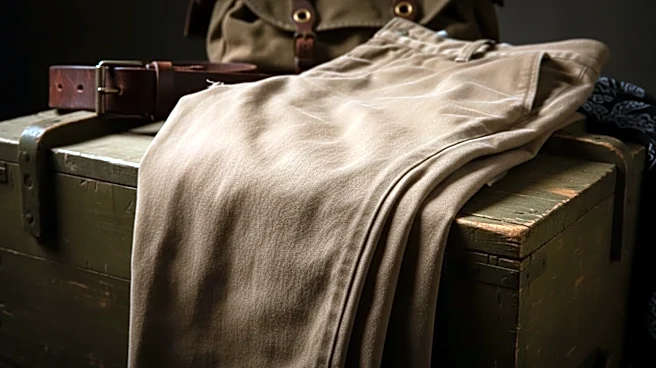
This is the biggest misreading of all. Strictly speaking, khaki is a color, not a style of pants. The term refers to that familiar tan, soil-colored hue. However, because the first notable garments made in this color were cotton twill trousers for the military, the color and the pant became synonymous in the popular imagination. This leads to endless confusion between khakis and their close cousin, chinos. The classic distinction is that khakis are made from a heavier, more rugged cotton twill with visible stitching, while chinos are typically lighter in weight, have a smoother finish, and feature more concealed tailoring for a dressier look. So when you buy a pair of navy blue "khakis," you're really just buying navy blue chinos or trousers.
Myth: Khakis are for dads and preps.
While khakis certainly became a cornerstone of the post-WWII preppy look on Ivy League campuses, their story is far more rebellious. Returning GIs brought their military-issued pants to civilian life, where they became a symbol of a more relaxed, post-war attitude. In the 1950s, they were adopted by adventurers and icons of counter-culture like Jack Kerouac and the Beat Generation, who valued their durability and rejection of stuffy suits. Hollywood legends like Katharine Hepburn, James Dean, and John F. Kennedy also championed the pants, cementing their status as effortlessly cool, not just conservative. They've been a uniform for explorers, rebels, and presidents alike, proving their versatility far beyond the golf course.
Myth: They're only for 'Business Casual'.
The rise of "Casual Fridays" in the 1990s, heavily promoted by brands like Dockers, cemented khakis as the go-to for a less formal office environment. But pigeonholing them as purely business casual misses the point. Today, designers are reinventing the khaki. You'll find them in modern cuts like slim-straight and tapered fits that banish the baggy reputation of their '90s predecessors. They can be dressed down with a simple t-shirt and sneakers for a clean, minimalist look, or dressed up with a blazer. The neutral color provides a perfect canvas, pairing as easily with a rugged denim jacket as it does with a sharp navy blazer. They aren't just a safe choice for the office; they're one of the most versatile items a person can own.