







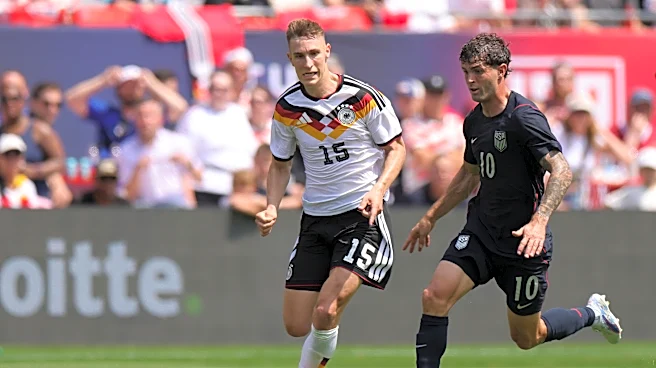
The Pace: 9 Innings vs. 90 Minutes
Forget innings, timeouts, and mound visits. A soccer match is a continuous 90-minute spectacle, split into two 45-minute halves with a running clock that doesn't stop. The flow is more like hockey than baseball; it's a constant battle for position and control,
with moments of sudden, explosive action. Instead of the slow burn of a pitcher's duel, you get fluid, back-and-forth play. The closest baseball parallel is a runner trying to steal second—a brief, high-stakes moment of anticipation that can change everything. In soccer, that feeling happens every time a player makes a run toward the goal.
The Ace Pitcher is The Goalkeeper
Every team has a defensive anchor, the one player who can single-handedly save the game. In baseball, it's your ace on the mound, a dominant force who shuts down hitters and controls the tempo. In soccer, it's the goalkeeper. They are the last line of defense, responsible for spectacular saves that feel like a game-winning strikeout with the bases loaded. A great keeper, like a great pitcher, radiates confidence and can demoralize an entire opposing offense. They don't get the glory of scoring, but everyone knows you can't win a championship without one.
The No. 9 Striker is Your Cleanup Hitter
Who do you pay to see? The player who hits towering home runs. That’s your cleanup hitter, the slugger who changes the score with one swing. In soccer, this is the No. 9, or the primary striker. Their job is simple: put the ball in the net. They might not be involved in every play, just as a power hitter might strike out three times. But when the perfect opportunity arrives—a perfect cross into the box (think a hanging curveball)—they are expected to deliver the decisive blow. Players like Erling Haaland or the legendary Ronaldo Nazario are soccer's equivalent of Aaron Judge or Barry Bonds: pure, devastating finishers.
The Manager is… Still the Manager
Some things translate perfectly. The person in the dugout making pitching changes and setting the lineup is the same figure on the sideline in a suit. A soccer manager (or coach) sets the team's formation (the tactical alignment, like a defensive shift), decides the starting XI, and makes crucial in-game substitutions. A key difference: soccer substitutions are permanent. Once a player is taken out, they can't come back in. This makes a manager’s decision to substitute a player as high-stakes as pulling a starting pitcher in the 7th inning of a tie game.
The Group Stage is The Division Race
The World Cup starts with a "group stage." Think of it like a mini-division race. The 48 teams are split into 12 groups of four. Each team plays the other three teams in its group once. You get three points for a win, one for a draw, and zero for a loss. The top teams from each group then advance to the knockout stage. It’s like the regular season, where the goal is simply to play well enough to make the playoffs. The real tournament—the single-elimination pressure cooker—begins after that.
VAR is Your Umpire's Replay Review
Remember the arguments over safe/out calls at the plate before instant replay? Soccer has its own version: Video Assistant Referee, or VAR. For major decisions—goals, penalty kicks, and red cards—a team of officials watches replays to advise the on-field referee. Just like in baseball, it’s meant to correct clear and obvious errors. And just like in baseball, it’s controversial, sometimes slow, and endlessly debated by fans who are convinced the refs are still getting it wrong.
Extra Innings is Extra Time & Penalties
What happens when a must-win game is tied? In baseball, you play extra innings until someone scores. In the World Cup knockout rounds, a tie after 90 minutes leads to "extra time": two 15-minute periods. If it's *still* tied after that, we get the most nerve-wracking spectacle in sports: the penalty shootout. It's five rounds of one-on-one showdowns between a kicker and the goalkeeper from 12 yards out. Imagine a championship being decided by a home run derby. It's pure, unadulterated drama.