







The Golden Age of Polyester
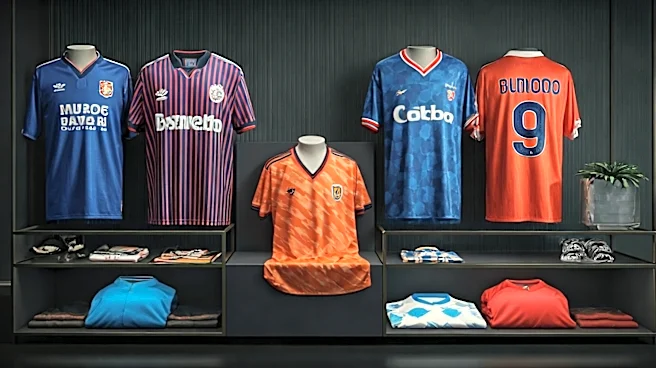
It’s easy to credit the trend to simple nostalgia, but it’s more specific than that. The most coveted shirts hail from the late 1980s and, particularly, the 1990s. This was a wild, experimental era for kit design. After decades of plain, team-color templates,
brands like Adidas, Umbro, and Lotto went maximalist. They splashed abstract patterns, geometric shapes, and jarring color combinations across their shirts. West Germany’s 1990 World Cup jersey, with its jagged flag motif, and the USA’s 1994 “denim” kit are prime examples. At the time, many were considered gaudy. Today, they represent a kind of golden age—a period when soccer felt more raw and less hyper-commercialized, and the players who wore them (think Baggio, Klinsmann, Valderrama) achieved mythic status. Wearing one is a way to connect with that perceived authenticity.
Enter 'Blokecore' and Streetwear
For years, wearing a soccer jersey outside of a stadium or a game was a fashion faux pas in many circles. That changed when streetwear and high fashion started looking to the terraces for inspiration. The trend, dubbed “blokecore” on social media, involves styling a retro soccer shirt—usually a bit baggy—with loose-fitting jeans or shorts and fashionable sneakers. It’s a look that detaches the jersey from its purely athletic context. Suddenly, a 1996 Ajax away kit isn’t just for fans of the Dutch club; it’s a graphic top with a unique history and aesthetic appeal. This fusion allows someone to signal an appreciation for soccer culture without necessarily being a die-hard supporter of a specific team, broadening the market far beyond traditional fandom.
The Hunt for Authenticity (and a Good Deal)
The boom has created a thriving two-tiered market. On one side, brands like Adidas and Nike are capitalizing on the trend by releasing official “retro” or “remake” versions of their most iconic historical kits. These are accessible, pristine, and available at retail prices. On the other side is the more prestigious hunt for “match-worn” or “deadstock” originals from the era. Websites like Classic Football Shirts have become treasure troves for collectors, with prices for rare, authentic vintage jerseys running from a hundred to several thousand dollars. The scarcity and condition of an original 1990s shirt make it a collectible, much like a rare pair of Jordans. This hunt for authenticity adds a layer of connoisseurship; owning a genuine piece from 1992 carries more weight than a 2024 remake.
From the Pitch to the Paparazzi
Nothing cements a fashion trend like a celebrity co-sign. When stars like Rihanna, Drake, Travis Scott, and Bella Hadid are photographed wearing vintage soccer shirts, the items are instantly catapulted into the mainstream fashion conversation. Drake wearing a pink 1997/98 Juventus away kit on tour doesn’t just look cool; it introduces millions of his followers to an obscure piece of soccer history. This exposure completely severs the shirt's connection to live sporting events. It becomes a standalone piece of desirable apparel, seen at fashion weeks, concerts, and on Instagram feeds, giving it a cultural cachet that extends far beyond the pitch.
Tournament Fever as a Style Catalyst
Major international tournaments like the FIFA World Cup and the UEFA European Championship act as the ultimate catalyst. These events are global cultural moments that bring casual fans into the fold. For two weeks or a month, the world is focused on soccer. It’s the perfect time to flex your sartorial soccer knowledge. Wearing a vintage kit becomes a way to demonstrate a deeper connection to the sport. Instead of the latest national team jersey, you might rock the Netherlands’ iconic 1988 kit or Nigeria’s sought-after 2018 design. It sends a message: “I’ve been a fan for a while. I know the history. I have taste.” It’s peacocking for soccer fans, and it turns every tournament into a runway.