





Stalker (1979) by Andrei Tarkovsky
Let's start with the master. Ceylan has often cited Andrei Tarkovsky as a primary influence, and nowhere is that connection clearer than in 'Stalker'. The film follows three men—a Writer, a Professor, and their guide, the Stalker—as they journey into
a mysterious, forbidden territory known as 'the Zone' to find a room that supposedly grants one's innermost desires. Like Ceylan's work, 'Stalker' is a metaphysical road movie where the physical journey is secondary to the spiritual and philosophical one. Tarkovsky uses incredibly long, meditative takes, allowing the lush, water-logged landscapes of the Zone to become a character in themselves, mirroring the internal states of the men. The dialogue is sparse but heavy, grappling with faith, cynicism, despair, and the very nature of wishing. It’s a film that asks more questions than it answers, trusting the viewer to find their own meaning in its poetic, haunting imagery.
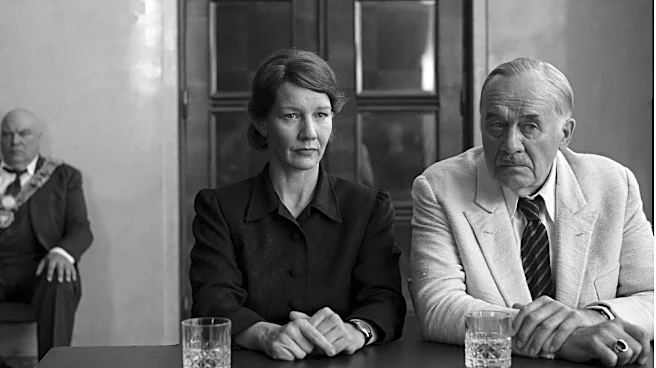
Leviathan (2014) by Andrey Zvyagintsev
If Ceylan's 'Winter Sleep' is a Chekhovian drama about intellectual rot, Andrey Zvyagintsev's 'Leviathan' is its bare-knuckled, political cousin. Set in a bleak coastal town in Northern Russia, the film pits a hot-headed mechanic named Kolya against a corrupt mayor who wants to seize his ancestral land. What begins as a property dispute spirals into a devastating tragedy of biblical proportions, referencing the Book of Job as it systematically strips its hero of everything he holds dear. Zvyagintsev shares Ceylan’s eye for composing landscapes that feel both beautiful and oppressive; the skeletal remains of beached whales and the cold, gray sea create a powerful backdrop for a story about the individual being crushed by an indifferent state and a compromised church. The film’s critique of power is universal, making its story of bureaucratic and spiritual decay resonate far beyond its Russian setting.
Eternity and a Day (1998) by Theo Angelopoulos
Greek auteur Theo Angelopoulos was a master of the epic, melancholic journey, and this Palme d'Or winner is one of his most moving works. The story follows Alexandre, a dying writer played by Bruno Ganz, as he spends his last day drifting through his memories and the streets of Thessaloniki. He befriends a young Albanian refugee, and their quiet bond forms the film's emotional core, bridging themes of personal regret with broader political realities of borders and exile. Angelopoulos, like Ceylan, uses long, elegantly choreographed tracking shots to blend past and present, dream and reality, creating a fluid sense of time. It’s a deeply poetic film about memory, lost time, and the search for connection at the very end of life, capturing that specific, soul-searching quality that makes Ceylan's films so unforgettable.
The Turin Horse (2011) by Béla Tarr
If you find Ceylan's pacing patient, Béla Tarr's is tectonic. 'The Turin Horse' is an exercise in radical slowness, an apocalyptic vision pared down to its barest essentials. Famously consisting of only 30 long takes, the film depicts the monotonous daily routine of a rural farmer and his daughter as their world slowly winds down. The howling wind never ceases, their horse refuses to eat, the well runs dry, and finally, the light itself fades into darkness. The film is inspired by the story of philosopher Friedrich Nietzsche, who supposedly had a mental breakdown after witnessing a horse being flogged in Turin. Tarr imagines the lives of that horse's owners. Shot in stark black and white, it’s a demanding, almost punishing watch, but its power is immense. For those who appreciate Ceylan's focus on existential weight and the textures of a harsh environment, Tarr's final film is an essential, albeit formidable, experience.
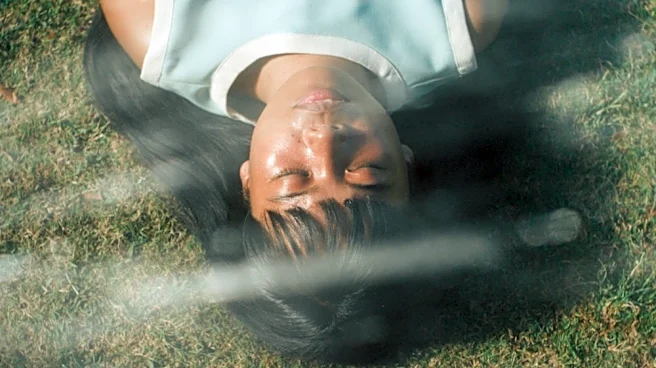
Norte, the End of History (2013) by Lav Diaz
Filipino director Lav Diaz is another filmmaker known for epic runtimes and profound moral inquiries. 'Norte, the End of History' is one of his more accessible works, clocking in at a brisk-for-him four hours. The film is a sprawling re-imagining of Dostoevsky's 'Crime and Punishment', splitting its focus between two men: Fabian, an arrogant law-school dropout who commits a murder, and Joaquin, a simple family man who is wrongly convicted of the crime. Diaz uses his extended duration to explore the ripple effects of this single act of violence on families and society. The style is less about perfectly composed landscapes and more about a 'transcendental naturalism', allowing scenes to unfold with unhurried realism. Like Ceylan, Diaz tackles big questions about justice, social class, and evil, creating a novelistic and deeply immersive film that pulls you into its world and refuses to let go.