
The Feedback Heard 'Round the World
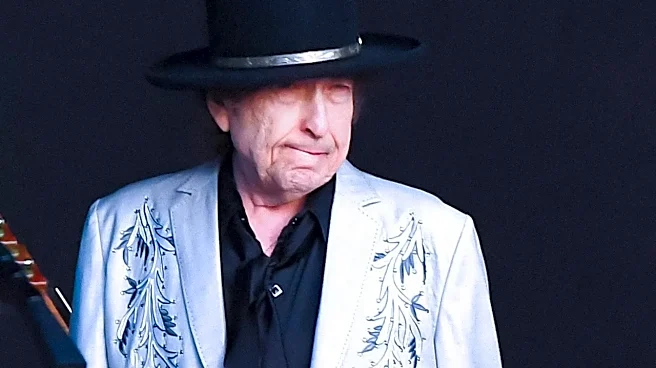
The controversy of July 25, 1965, has become music folklore. Bob Dylan, the anointed prince of the folk revival, took the stage not with his usual acoustic guitar but with a Fender Stratocaster and a full backing band. The sound that followed—a blistering,
amplified rendition of “Maggie’s Farm”—was met with a chaotic mix of cheers and boos. For folk purists, and reportedly for festival board member Pete Seeger, it was a betrayal. Dylan, the voice of a generation, was seen as abandoning the authentic, political roots of folk for the commercial noise of rock and roll. The debate over whether the audience was booing the electricity, the poor sound mix, or the brevity of his set continues to this day, but the event undeniably drew a line in the sand, forever linking Newport with a revolutionary act of defiance.
A Stage for Justice and Tradition
To understand why Dylan’s electric set was so jarring, you have to understand what Newport was built on. Founded in 1959 by George Wein, Pete Seeger, and others, the festival’s goal was to present American folk music in all its diverse glory. From its inception, it was a platform for more than just music; it was a powerful force in the Civil Rights Movement. Gospel legend Mahalia Jackson and blues singer Odetta were early headliners. In 1963, the Freedom Singers, a group formed to raise money for the Student Nonviolent Coordinating Committee (SNCC), performed, and Pete Seeger and Joan Baez joined them to lead the crowd in “We Shall Overcome.” That same year, Baez led a march of 600 festival-goers through Newport in support of the movement. The festival wasn't just a concert; it was a community actively shaping American culture and conscience.
Where Legends Were Born and Reborn
Newport’s legacy is also defined by the careers it launched and resurrected. A teenage Joan Baez made a surprise debut in 1959, brought out by singer Bob Gibson. The festival was instrumental in the blues revival of the 1960s, introducing audiences to forgotten masters like Mississippi John Hurt, who was rediscovered and brought to the festival in 1963. Johnny Cash made a memorable appearance, introducing a then-unknown Kris Kristofferson to the stage. The festival consistently served as a bridge between generations, where emerging artists shared the stage with the foundational figures who inspired them. It was a place of discovery, proving that “folk” was a living tradition, not a museum piece.
The Modern Spirit of Surprise
After a hiatus in the 1970s and early '80s, the festival returned and has since cultivated a modern identity built on collaboration and surprise. This ethos arguably reached its zenith in recent years. In 2019, Dolly Parton made a secret, unannounced appearance, joining the supergroup The Highwomen for a legendary set. But perhaps no moment rivals 2022, where Joni Mitchell, having been away from the stage for two decades following a brain aneurysm, returned to Newport. Seated on a throne in a set curated by Brandi Carlile, Mitchell performed her iconic songs, a moment so powerful it left the audience in stunned, tearful silence. That same weekend featured a surprise appearance by Paul Simon. These events aren't gimmicks; they are the modern embodiment of Newport's original spirit—a community gathering to celebrate living legends and the enduring power of song.