





The Scene of the Crime
For millions of American soccer fans, the global rhythm of a World Cup or Euros is a sacred time. Work schedules are rearranged. Alarms are set for obscene hours. And most importantly, the digital stadium is assembled: the group chat. This text thread—be
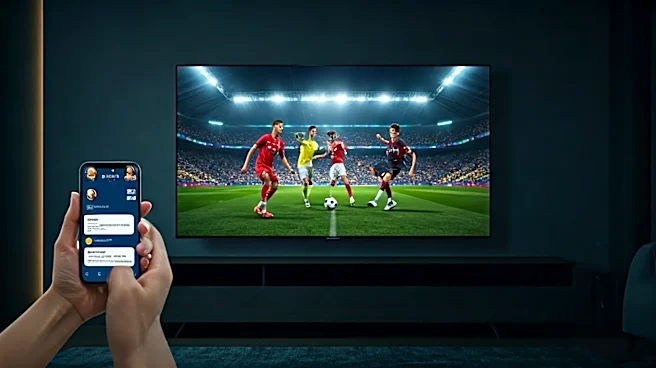
it on WhatsApp, iMessage, or Signal—is the 21st-century sports bar. It’s where you share the collective gasp of a near-miss, the tactical analysis of a substitution, and the sheer, unadulterated joy of a goal. You’ve got your stream running on the big screen, your phone in your hand, and a sense of connection to friends scattered across the country. It’s a beautiful, synchronized ritual of modern fandom. Until it’s not.
That Buzzing Sound of Doom
You know the moment. The star striker is just beginning a run into the channel. The defense looks a little shaky. On your screen, the play is still developing, full of potential. But on your phone, a notification banner slides down: your cousin from New Jersey has just texted “GOOOOOOOALLLLLLL!!!!!!!!” followed by a dozen eagle emojis. The air goes out of the room. The next 30 seconds of your viewing experience are a hollow pantomime. You know the outcome. The suspense is gone, replaced by a dull, administrative waiting. You’re no longer a participant in a live event; you’re watching a replay someone else has already spoiled for you. The worst part? It’s not your cousin’s fault. It’s your stream’s.
Why Your Stream Is Living in the Past
This infuriating phenomenon is a product of latency. In the world of broadcasting, not all signals are created equal. The fastest way to see a goal is to be in the stadium. The next fastest is often an over-the-air (OTA) broadcast signal, the kind you get with an antenna. Close behind is traditional cable or satellite. And lagging at the back of the pack, sometimes by 30 seconds to over a minute, are the streaming services (often called OTT, or “over-the-top”).
Think of it like this: a live broadcast is a direct flight. A streaming signal is a connecting flight with several layovers. The live feed from the stadium has to be sent to the streaming provider, encoded into a digital format, broken into tiny packets of data, and then sent through content delivery networks (CDNs) across the internet to your device. Your device then has to reassemble those packets and buffer a few seconds of video to ensure a smooth playback. Every step adds a few milliseconds of delay, and it all adds up. The friend watching on cable is simply on a more direct route.
More Than Just a Spoiler
The frustration isn't just about knowing the score a few seconds early. It’s about being robbed of a shared, synchronous moment. The entire point of a group chat during a live game is to experience it *together*, in real time. It’s about sharing that singular, explosive moment of a goal at the exact same instant. When a streaming delay shatters that synchronicity, it fundamentally alters the experience. It creates a hierarchy of viewers: the “live” ones on cable and the “delayed” ones on their streams. You become an outsider in your own celebration. The chat, which was meant to be a bridge, suddenly becomes a painful reminder that you are, in fact, watching alone. The delay doesn’t just spoil the result; it spoils the community.
How to Survive the Lag
So, what’s a modern fan to do? There’s no perfect fix, but there are coping strategies. The most effective—and most antisocial—is the nuclear option: mute all notifications for the 90-plus minutes of the match. Put your phone on Do Not Disturb and commit to flying solo. It preserves the suspense but sacrifices the community. A more diplomatic approach is to try to get everyone in the group chat on the same streaming platform, which can sometimes (but not always) sync up the delays. Some fans even take a stoic approach, embracing the role of the delayed viewer. They see the spoiler, brace themselves, and try to enjoy the replay of the goal for its technical artistry. It’s a compromise, but it beats throwing your remote through the TV.