




The Striker: Your Goal-Line Power Back
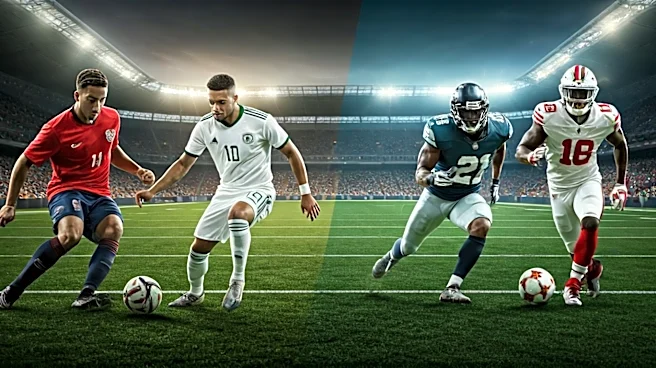
In the simplest terms, the striker is the primary goal scorer. They are the focal point of the attack, the player whose entire job is to put the ball in the back of the net. Think of the offense in the red zone, just five yards from the end zone. Who are you giving the ball to? Your most reliable, powerful, and clinical offensive weapon. That’s the striker. In the NFL, this isn't one single position, but a role. It could be your bruising running back on a goal-line plunge, like a prime Derrick Henry who simply will not be denied. It could also be your dominant tight end, a Travis Kelce or George Kittle, who uses physicality and impeccable timing to win a jump ball for a touchdown. Strikers, like these players, are often physically imposing,
masters of finding space in the most congested area of the field (the penalty box), and possess an almost unnerving calm when the pressure is highest. Their currency is goals, just as a running back’s is yards and touchdowns. If a player is leading the league in scoring, they are almost certainly a striker.
The Winger: The Game-Breaking Wide Receiver
This is one of the more direct comparisons between the two sports. Wingers are the speed merchants, the players who operate in the wide channels of the field and are tasked with stretching the defense and creating scoring opportunities. Their NFL equivalent is the elite wide receiver—the Tyreek Hill or Justin Jefferson of the soccer pitch.
Like a star receiver, a winger’s primary assets are explosive speed, agility, and the ability to beat their defender one-on-one. A receiver runs a crisp route to get open; a winger uses skillful dribbling to blow past their opponent. A receiver turns a short pass into a 70-yard touchdown; a winger can pick up the ball in their own half and embark on a field-stretching run that ends in a goal or an assist. They force the defense to spread out, creating space in the middle for other attackers (like the striker). If you see a player on the sideline constantly trying to get in behind the defense with pure pace, you're looking at a winger.
The Fullback: A Cornerback & Offensive Lineman Hybrid
Here’s where it gets interesting, because the term “fullback” in soccer means something completely different—and far more important—than its NFL counterpart. In modern soccer, the fullback is one of the most demanding and dynamic positions on the field. Their closest NFL analogy isn't one player but a combination of two: a shutdown cornerback and a pulling offensive tackle.
First, the defensive duty. Fullbacks are positioned on the outer edges of the defense, and their main job is to stop the opposition's wingers. They are the cornerbacks of soccer, needing speed, timing, and tackling ability to neutralize the other team's fastest players in one-on-one situations. But that’s only half the job. In the modern game, fullbacks are also crucial to the attack. They are expected to overlap the winger, running down the sideline to provide an extra passing option or to 'cross' the ball into the box for the striker. This is their offensive lineman role—they are creating a new lane of attack and delivering the ball, much like a pulling guard creates a running lane for a back. This dual role—defending like a corner, attacking like a lineman paving the way—makes the fullback a tactical lynchpin.