








The Franchise’s True Genius
Let’s be honest: the stakes in every *Toy Story* movie are, on paper, incredibly small. The first film is about a toy’s jealousy over a new arrival. The second is about choosing between friendship and being preserved in a museum. The third tackles the existential
dread of being outgrown, and the fourth explores a mid-life crisis of purpose. These aren’t alien invasions or spy thrillers; they are deeply personal, domestic anxieties, scaled down to the world of toys. This is Pixar’s masterstroke. They take a feeling every child (and parent) understands—the fear of being replaced, forgotten, or losing your purpose—and treat it with the gravity of a world-ending event. Woody’s panic about Buzz’s arrival in Andy’s bedroom is framed with the intensity of a palace coup. The escape from Sunnyside Daycare is a prison break epic. This alchemy, turning emotional turmoil into a physical adventure, is the engine that has powered the franchise for nearly 30 years.
The Problem of Separation
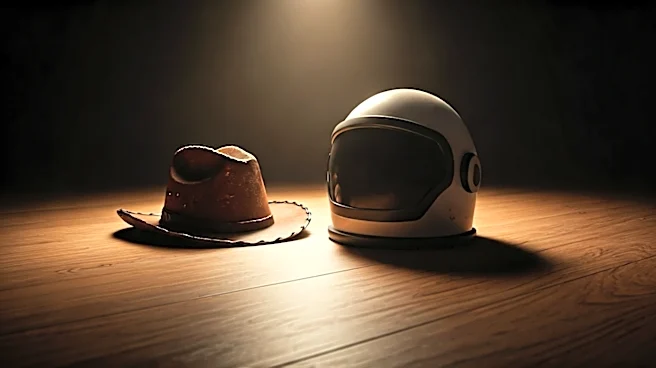
The challenge for *Toy Story 5* is that the central “household” is now broken. *Toy Story 4* controversially but bravely split up Woody and Buzz Lightyear, tearing the emotional core of the series in two. Woody became a “lost toy,” embracing a nomadic life with Bo Peep, while Buzz returned to Bonnie’s room with the rest of the gang. This isn’t a bug; it’s the single most interesting feature the sequel has to work with.
A simple reunion plot would feel cheap. Instead, the film has the opportunity to explore two parallel domestic conflicts. What is life like for Buzz, now forced into a leadership role he never truly wanted? And what about Woody? Is the freedom of the open road as fulfilling as he imagined, or is he a toy fundamentally wired for the loyalty of a single child? The conflict is no longer just within one bedroom; it’s a long-distance crisis of identity.
Finding the New Conflict
The perfect conflict for *Toy Story 5* wouldn’t come from a new, mustache-twirling villain like Stinky Pete or Lots-o'-Huggin' Bear. It would come from within the family—or rather, the families. Imagine this: Bonnie’s family is moving across the country. Simultaneously, the carnival where Woody and Bo travel is scheduled to shut down, forcing them to find a new home. Suddenly, both groups are facing the same domestic upheaval: displacement and the fear of the unknown.
This parallel crisis creates a natural, high-stakes reason for their paths to cross. The conflict isn’t good vs. evil; it’s a frantic, desperate scramble for security. Maybe a beloved toy gets accidentally left behind during the move, forcing Buzz’s gang on a desperate rescue mission that puts them on a collision course with Woody’s journey. The domestic drama of a family move becomes a cross-country chase, with each side acting on incomplete information.
Turning the Personal into an Event
This is how you make it feel like a franchise event. The “event” isn't a meteor or a supervillain. The event is the journey itself, magnified by the emotional desperation of the characters. We’d see Buzz having to make command decisions without Woody as his moral compass. We’d see Woody, torn between his new life and the irresistible pull of his old family’s crisis. The scale comes from the distance—the highways, truck stops, and shipping depots that become treacherous landscapes for a group of tiny toys.
The emotional climax wouldn’t be a big explosion, but a quiet, powerful confrontation between Woody and Buzz. A debate over what it means to be a toy: Is it about loyalty to one kid, or is there a different kind of purpose? Their physical separation has created a philosophical one, and the quest to save a single lost friend becomes the battleground for the very soul of the franchise. That’s how a simple, domestic story about moving houses becomes an epic worthy of the *Toy Story* name.