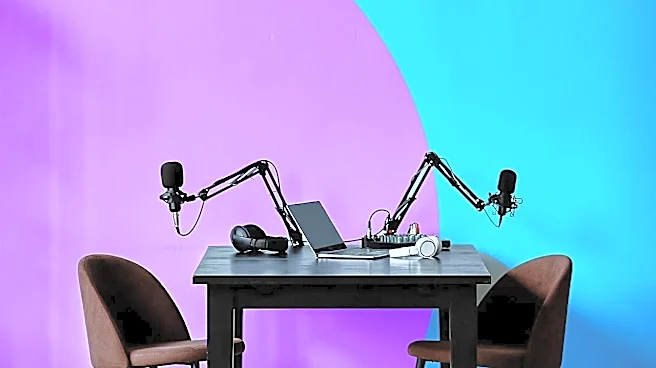

The Golden Age of Host-Read Ads
For years, the gold standard of podcast advertising was the host-read ad. Think of your favorite host, pausing the show to talk about a product they genuinely seem to love. This format works because it’s
built on a foundation of trust. Listeners develop a personal, one-sided relationship with hosts, so a recommendation feels less like an advertisement and more like a tip from a friend. Data backs this up, showing that host-read ads generate significantly higher brand recall and purchase intent compared to other formats. Brands like Squarespace and BetterHelp built their podcast strategies around these long-term partnerships, embedding themselves into the culture of creative and wellness shows. The ad becomes part of the show's authentic fabric, not an unwelcome interruption.
The Money and the Machine
As the podcast industry exploded, the handcrafted, host-read model faced a challenge: scale. Enter dynamic ad insertion (DAI) and programmatic advertising. Instead of being permanently “baked into” an episode, DAI allows different ads to be automatically inserted when an episode is downloaded or streamed. This means a listener in Ohio might hear a local car dealership ad, while a listener in California hears one for a surf shop—on the same episode. For advertisers, it’s a dream: they can target specific demographics across hundreds of shows at once. For creators, it allows them to monetize their entire back catalog, inserting fresh ads into episodes recorded years ago. It’s a system built for efficiency and revenue, transforming podcast advertising from a personal endorsement into a high-tech, automated business.
When Integration Becomes Interruption
The problem is, listeners often experience this efficiency as a disruption. A common complaint is hearing a high-energy, pre-produced ad for a sports betting site dropped into the middle of a quiet, investigative true-crime podcast. The tonal clash is jarring. Worse, because these ads are inserted automatically, they can cut off hosts mid-sentence, creating a clumsy and unprofessional listening experience that frustrates audiences. This is where distracting integration happens. The ad is no longer a seamless part of the show; it’s an intruder that breaks the intimate connection the listener has with the content. While programmatic ads offer scale, they often sacrifice the authenticity and trust that made podcast advertising so effective in the first place.
The Art of the 'Smart' Sponsorship
So, where is the line? Smart sponsorship in the modern era is about finding a middle ground that respects both the listener's experience and the creator's need for revenue. It’s moving beyond a simple choice between host-read and programmatic. Today’s most innovative sponsorships are about deep integration. Some shows feature recurring branded segments that feel like a natural part of the show’s structure rather than a sudden break. Others create “Sponsored Stories,” longer-form, high-production ad spots that are more like mini-documentaries. Brands and creators are also expanding partnerships across multiple platforms, connecting an audio ad to YouTube content and social media stories. The key is creative alignment. When a sponsor’s message is woven into the show’s DNA in a way that feels intentional and valuable, listeners are more likely to stay engaged. The ad stops being a distraction and becomes content itself.