






1. The Opening Image as Thematic Statement
Every great screenplay starts with an 'opening image'—a single shot or sequence that establishes the tone, world, and central theme before a line of dialogue is even spoken. Think of the desolate desert landscape in *No Country for Old Men* or the chaotic
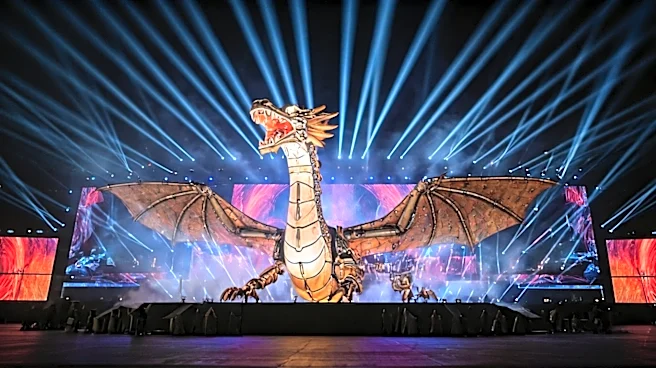
starship battle in *Star Wars*. Every great screenplay starts with an 'opening image'—a single shot or sequence that establishes the tone, world, and central theme before a line of dialogue is even spoken. Think of the desolate desert landscape in *No Country for Old Men* or the chaotic starship battle in *Star Wars*. The EDC opening ceremony does this with breathtaking efficiency. Before the first DJ takes the stage, the entire festival is plunged into darkness. Then, a single, booming voice echoes across the speedway, narrating a mythic story of unity, technology, or nature. This narration, often accompanied by a slow reveal of the colossal main stage (the KineticFIELD), is the cinematic opening image. It tells you exactly what the story of the weekend is about—be it connecting to a digital consciousness or celebrating the power of nature. For a screenwriter, it’s a powerful reminder: Your first five minutes must promise the audience what kind of journey they’re about to undertake.
2. The Inciting Incident as a Physical Force
In screenwriting, the inciting incident is the event that disrupts the protagonist’s ordinary world and launches them into the main conflict. It’s the owl delivering Harry Potter’s Hogwarts letter or the holographic plea from Princess Leia. It’s an undeniable call to adventure. In screenwriting, the inciting incident is the event that disrupts the protagonist’s ordinary world and launches them into the main conflict. It’s the owl delivering Harry Potter’s Hogwarts letter or the holographic plea from Princess Leia. It’s an undeniable call to adventure. At EDC, the inciting incident isn't a letter; it's a multi-sensory explosion. After the slow, thematic build-up, the ceremony culminates in the first massive pyro drop. The music shifts from ambient to propulsive, a wall of fireworks erupts behind the stage, and thousands of lasers slice through the night sky. This isn't just a pretty moment; it’s a narrative turning point. The period of quiet observation is over. The 'story' of the festival has officially begun, and the audience (the protagonist) is now fully immersed in the action. It's a physical, visceral inciting incident that leaves no room for refusal—a lesson in making your story’s kickoff impossible to ignore.
3. World-Building Through Visuals, Not Exposition
Lazy screenwriting relies on characters explaining the rules of the world to each other. Great screenwriting builds the world visually, allowing the audience to understand the setting through context and design. The rain-soaked, neon-drenched streets of *Blade Runner* tell you more about its society than any monologue ever could. Lazy screenwriting relies on characters explaining the rules of the world to each other. Great screenwriting builds the world visually, allowing the audience to understand the setting through context and design. The rain-soaked, neon-drenched streets of *Blade Runner* tell you more about its society than any monologue ever could. The EDC stage designers are masters of this principle. Each year, the Kineticfield stage is a new, impossibly detailed sculpture—a giant goddess, a crystalline owl, a techno-organic cathedral. The design isn't random; it’s the physical embodiment of the year's theme. The flowing water features, the moving mechanical parts, and the symbolic imagery all contribute to a cohesive universe. It's pure environmental storytelling. The lesson for writers is to trust your visuals. Your setting, props, and character design should do the heavy lifting of exposition, immersing the audience in your world before a character has to say, “As you know, the kingdom has been at war for 10 years…”
4. Pacing an Emotional Arc
A film isn't just a series of events; it's a carefully paced emotional journey with peaks and valleys. A great script knows when to build tension, when to provide a moment of quiet reflection, and when to deliver a cathartic climax. Constant action is exhausting; constant quiet is boring. A film isn't just a series of events; it's a carefully paced emotional journey with peaks and valleys. A great script knows when to build tension, when to provide a moment of quiet reflection, and when to deliver a cathartic climax. Constant action is exhausting; constant quiet is boring. The EDC opening ceremony is a 15-minute study in perfect pacing. It starts slowly, with an atmospheric soundscape and a deliberate, almost spiritual narration. It builds tension as the stage elements slowly come to life. The music’s tempo gradually increases, leading to the explosive 'inciting incident.' But it doesn't stay at peak intensity. The sequence ebbs and flows, using moments of relative quiet to make the subsequent fireworks feel even more impactful. It's a rollercoaster designed to manipulate emotion on a mass scale. For screenwriters, it’s a reminder that a story’s rhythm is as important as its plot. You must guide the audience’s heart rate, not just their attention.
5. The 'All Is Lost' Moment and the Grand Finale
Near the end of a film’s second act, there’s often an 'All is Lost' moment where the hero is at their lowest point. This is followed by a resurgent third act and a grand finale that resolves the central conflict. At EDC, the ceremony creates a similar feeling on a micro-scale. Just before the final, most spectacular volley of fireworks, there is often a beat of near-silence. The lights dim, the narration concludes, and for a split second, the energy seems to drain away. Near the end of a film’s second act, there’s often an 'All is Lost' moment where the hero is at their lowest point. This is followed by a resurgent third act and a grand finale that resolves the central conflict. At EDC, the ceremony creates a similar feeling on a micro-scale. Just before the final, most spectacular volley of fireworks, there is often a beat of near-silence. The lights dim, the narration concludes, and for a split second, the energy seems to drain away. This brief pause makes the subsequent climax exponentially more powerful. When the final, overwhelming barrage of pyro, lasers, and music hits, it feels like a triumphant resolution. It’s the Death Star exploding. It's the Avengers assembling. The opening ceremony resolves its own mini-narrative, delivering a catharsis that perfectly sets the stage for the headlining DJ. The lesson is clear: your climax will only feel as big as the moment of quiet that precedes it.