


The Tyranny of the Time Zone
For American soccer fans, the love of the global game has long been a battle against the clock. Major tournaments like the European Championship or a World Cup hosted in Europe, Africa, or the Middle East mean that kickoff times often fall squarely in our morning.
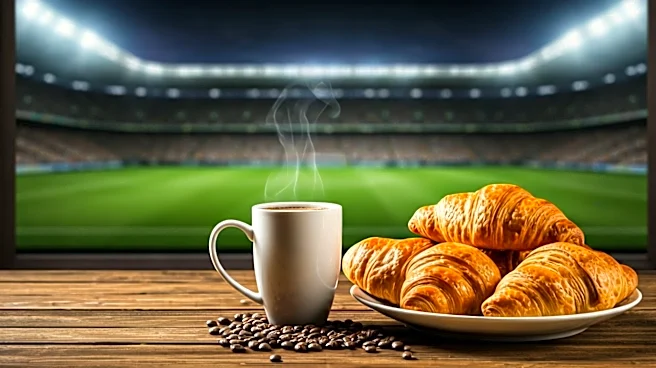
A 3:00 PM match in Berlin is a 9:00 AM affair on the East Coast and a pre-dawn 6:00 AM start in California. While the English have their pre-match pint at the pub and South Americans have their asado, U.S. fans have been conditioned by geography to be breakfast spectators. This simple, logistical reality is the seed from which the ritual grows. You can’t exactly fire up the grill for a Saturday morning group stage match. Instead, the default accompaniment becomes whatever fits the hour. The TV clicks on, the broadcast team sets the scene, and what’s in your hand isn’t a hot dog or a beer, but a warm mug of coffee. It’s not a choice born of culinary pairing but of chronological necessity. The world’s biggest sporting events demand we be awake and alert, and for millions, coffee is the only non-negotiable tool for the job.
The Psychology of a Warm-Up
The ritual is about more than just caffeine. It’s a psychological primer. The act of making coffee—the grinding of beans, the pour-over process, or even the simple hum of a Keurig—is a sensory cue. It signals that a special event is about to begin. Like an athlete’s pre-game routine, this small, controllable act helps manage the nervous energy and anticipation that comes with a high-stakes match. You can’t control whether your star striker will be on form, but you can control the strength of your brew. This process transforms the home into a personal stadium. The aroma of coffee fills the air, creating an atmosphere that is distinct from a normal Saturday morning. It’s the smell of game day. Paired with a pastry—a croissant, a donut, a maple scone—it becomes a small act of indulgence, a treat to sweeten the anxiety of the 90 minutes to come. The pastry is the perfect sporting food: it’s handheld, requires no cutlery, and can be consumed anxiously in small bites during a tense moment or devoured in celebration after a goal.
From Habit to Cherished Tradition
Doing something once is an act. Doing it twice is a coincidence. Doing it every match day for a month-long tournament? That’s a ritual. The World Cup and other major soccer cups are sprints of emotion, condensed into a few weeks every two or four years. This intensity is what helps habits fossilize into tradition so quickly. The first weekend, you have coffee and a muffin because it’s early. Your team wins. The next game, you do it again, maybe half-consciously, hoping to replicate the result. By the knockout stages, it’s no longer just a meal. It’s part of the magic. It becomes a superstition, a shared language among your viewing party. “Did you get the good croissants?” a friend might text. The items themselves become imbued with the emotional weight of the tournament. That specific coffee blend will forever remind you of a stunning group stage upset; that type of donut becomes synonymous with a heartbreaking penalty shootout. The food and drink are no longer just fuel; they are artifacts of the experience.
The Coffee Shop as the New Town Square
This ritual isn’t confined to the living room. For many, especially in cities, the local coffee shop becomes the de facto supporters’ club. It’s a neutral ground where the early hour makes a bar an unviable option. On game days, these spaces transform. Laptops are replaced by jerseys. The quiet hum of conversation is supplanted by gasps, groans, and explosive cheers. Here, the individual ritual becomes a communal one. The baristas become unofficial masters of ceremony, pouring lattes while keeping an eye on the score. Strangers become temporary allies, united in their hope or despair. Sharing a table with someone in a different team’s colors, you are both partaking in the same secular communion: a hot drink, a sweet bite, and the unfolding drama on a screen propped up near the espresso machine. It’s a uniquely American way to participate in a global phenomenon, finding community not in a raucous pub, but in the bright, hopeful light of a morning café.