







You’re in your seat, the lights dim, and the familiar wide rectangle of the movie screen flickers to life. But then, something happens. The black bars vanish, and the image explodes, filling your entire field of vision. It’s a jaw-dropping moment.
First, What Is an 'Expanding' Frame?
Let's
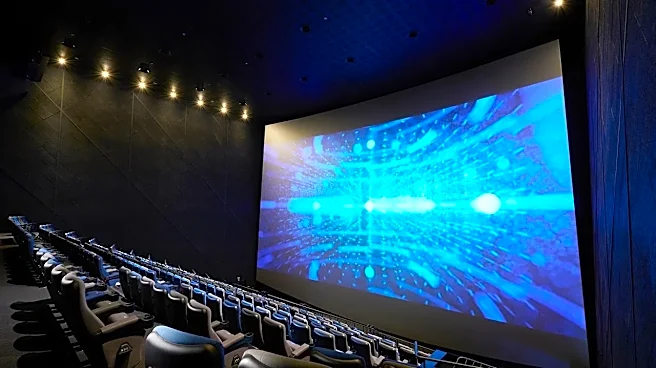
start with the basics. Every screen has an aspect ratio—the relationship between its width and height. For decades, most movies have been presented in a wide, rectangular format like CinemaScope (2.39:1). When you watch these on a standard TV, you get black bars at the top and bottom. This is called letterboxing. IMAX is different. Its screens are much taller, closer to a square, with aspect ratios like 1.90:1 or the massive 1.43:1. When a director shoots specific scenes with IMAX cameras, they capture a much taller image. For the non-IMAX version of the film, the top and bottom of that image are cropped to fit the standard widescreen format. The magic happens in an IMAX theater when the film switches from a standard scene to an IMAX-shot one. The projected image literally expands vertically, eliminating the black bars and using the entire, towering height of the screen.
The Psychology of a Bigger Picture
This shift is more than just a technical trick; it’s a powerful psychological tool. The traditional widescreen ratio feels controlled, cinematic, and observational. It’s a window into another world. But when that window suddenly shatters and the image floods your peripheral vision, the experience becomes visceral and immersive. It's a jolt to the system designed to evoke awe. Directors like Christopher Nolan and Denis Villeneuve have become masters of this technique. They don't just use IMAX for random scenes; they deploy it deliberately to signal a shift in scale, reality, or emotional intensity. Switching from a tight, conversational scene in a standard ratio to a breathtaking landscape in full IMAX height makes the environment feel truly epic and all-consuming.
Why the First Moments Matter Most
Using this expanding frame in the opening moments of a blockbuster—let's call it 'The Arena'—is a declaration of intent. It’s the filmmaker grabbing you by the collar from the very first frame. Think of the opening bank heist in 'The Dark Knight'. Nolan filmed this sequence in IMAX, and the moment the camera glides down a skyscraper, the screen opens up, instantly establishing the massive scale of Gotham City and the ambition of the film itself. An opening sequence has to hook the audience, and there’s no bigger hook than making them feel physically dwarfed by the world on screen. Instead of easing the viewer into the story, it plunges them headfirst into the spectacle. For a hypothetical film like 'The Arena', this could mean the first shot of a colossal alien structure or a vast fantasy battlefield is revealed in a sudden, breathtaking expansion of the screen, promising an experience you can't get at home.
A Storytelling Tool, Not Just a Gimmick
Is it just a gimmick to sell premium tickets? When used poorly, maybe. But for filmmakers who understand its power, the expanding frame is a core part of the cinematic language. Nolan has referred to IMAX as a 'portal into a level of immersion' that other formats can't match. For his film 'Oppenheimer', he and cinematographer Hoyte Van Hoytema even used the towering IMAX frame for intimate close-ups, arguing that a human face can be as vast and complex a landscape as a desert. The choice to shoot a scene in IMAX, and therefore allow it to expand, is a deliberate artistic one made during production. It forces a different approach to lighting, sound, and visual effects. It’s the modern equivalent of a theater curtain rising, signaling that what you're about to see is meant to be grand, overwhelming, and utterly unforgettable.