








The Billion-Dollar Tide of Digital Oceans
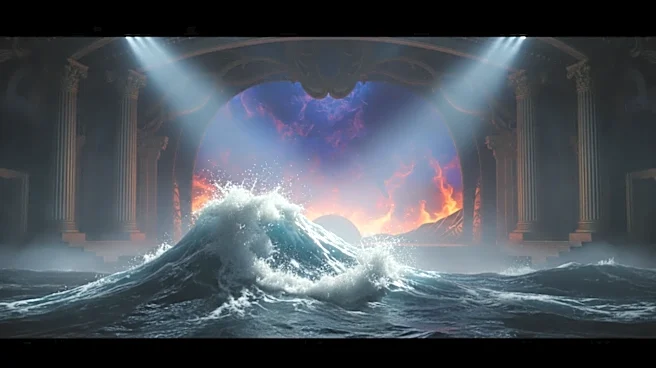
There’s a reason filmmakers dread shooting on open water: it’s unpredictable, expensive, and dangerous. But creating water digitally is no simple alternative. In fact, realistic water simulation is one of the most complex and costly endeavors in modern
visual effects. When you see a massive wave crash or a detailed underwater world like in "Avatar: The Way of Water," you're witnessing the result of millions of dollars and hundreds of thousands of artist hours. The process requires specialized software and immense computational power to simulate fluid dynamics—the physics of how every drop of water moves, reflects light, and interacts with objects. A single frame of complex water VFX can take hours or even days to "render," and with 24 frames per second, the costs for a major sequence can skyrocket into the tens of millions. The production budget for "Avatar: The Way of Water" reportedly exceeded $400 million, with its groundbreaking underwater performance capture and water simulations being a primary driver of that cost.
The High Price of Building a Believable Beast
From Godzilla to the sandworms of "Dune," cinematic creatures capture our imagination, but bringing them to life is a financial gauntlet. Studios face a crucial decision: go with practical effects, computer-generated imagery (CGI), or a hybrid of the both. Neither route is cheap. A practical creature, like an animatronic or a sophisticated puppet, requires a team of sculptors, engineers, and puppeteers, with costs that can be immense. Conversely, a fully CGI creature avoids physical construction but demands a different army of experts: digital modelers to build the asset, riggers to create its digital skeleton, and animators to make it move. Each step is labor-intensive and expensive. Often, the best—and most costly—results come from blending techniques. A scene might use a practical creature for close-ups to get realistic textures and actor interactions, then switch to a CGI version for wide shots or impossible actions. This dual-pipeline approach, while effective, means studios are essentially paying to develop the same creature twice, all in service of making the monster in the dark feel terrifyingly real.
Choreographing a Financial Spectacle
A massive song-and-dance number looks joyous and effortless on screen, but it's a logistical and financial behemoth. The costs go far beyond just the star’s salary. A single large-scale musical set piece requires a small city of personnel. This includes a composer for the music, a lyricist, arrangers, a full orchestra for recording, and music supervisors to coordinate it all. For a big-budget film, recording a score with a top-tier orchestra in Los Angeles or London can cost tens of thousands of dollars per day. That's before you even get to the set. Add in the fees for a head choreographer, dozens or hundreds of dancers who require weeks of paid rehearsals, custom-built sets, elaborate costumes for the entire ensemble, and the complex task of filming it all perfectly. When you see a crowd scene in a musical, producers often have to amplify it with visual effects to make it feel bigger, adding another layer of post-production expense. Licensing a popular song for a key moment can also cost anywhere from $50,000 to over $500,000, depending on the track's fame. It's a high-wire act of coordination where every note and every step has a hefty price tag attached.