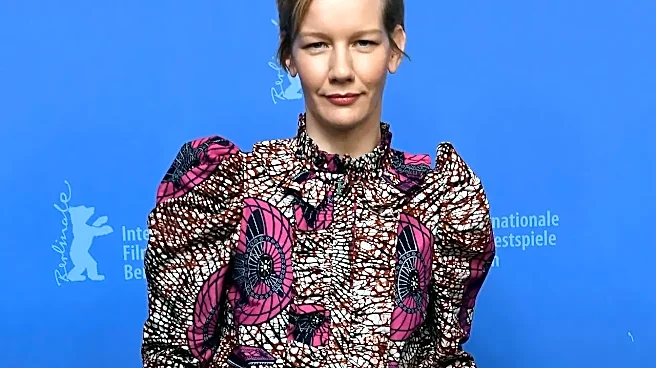









Meet the Planet’s Uncompromising Manager
First, for the uninitiated: Eva Stratt is a central figure in Andy Weir’s novel Project Hail Mary, soon to be a major sci-fi film starring Ryan Gosling. Stratt isn't a scientist or an astronaut; she's the boss. Granted near-absolute authority by the UN,
her job is to save Earth from an extinction-level event, and she pursues this goal with a chilling single-mindedness. She is described as ruthless, pragmatic, and morally flexible, a leader who sees individuals as assets and sacrifices as unfortunate necessities. In the book, she is the one who forces the protagonist, Ryland Grace, onto a potential suicide mission in space against his will. Stratt is not a villain in the traditional sense. She is a functionary of survival, an avatar of utilitarian logic who carries the weight of the world and is willing to make appalling decisions to keep it spinning. She's not meant to be liked, but she must be respected.
The Queen of Ambiguity
This is where Sandra Hüller’s particular genius comes into play. Her Oscar-nominated role in Anatomy of a Fall was a tightrope walk of ambiguity. As the writer Sandra Voyter, accused of her husband's murder, Hüller forces the audience to constantly re-evaluate their assumptions. Is she a grieving widow, a calculating killer, or something impossibly in between? She never offers a clear answer, instead inhabiting a space of compelling uncertainty. This is the perfect training ground for a character like Eva Stratt. Stratt’s actions are, on paper, monstrous. She strong-arms, manipulates, and sacrifices people for the greater good. In the hands of a lesser actor, she could become a one-dimensional antagonist. But Hüller’s gift is making ambiguity feel like a complete, complex emotional state. She can portray Stratt’s iron will while simultaneously letting us see the hairline fractures beneath the surface, making us question whether her cruelty is a mask for a soul in agony or simply the face of pure, unadulterated resolve.
A Masterclass in Compartmentalization
If Anatomy of a Fall was about moral ambiguity, The Zone of Interest was about moral vacancy. As Hedwig Höss, the wife of the Auschwitz commandant, Hüller gave a performance of profound terror by focusing on the mundane. Her character tended to her garden, managed her household, and gossiped with friends, all while the soundtrack hummed with the ambient horror of the death camp next door. It was a terrifying depiction of the human capacity to compartmentalize, to live a normal life adjacent to unspeakable evil. This, too, is essential for Eva Stratt. Stratt must operate from a place of extreme detachment, treating global catastrophe as a project management problem. She has to approve decisions that will end lives and alter destinies, then move on to the next item on her agenda. Hüller has already proven she can play this chilling pragmatism without turning it into a caricature. She can find the humanity in the denial, showing us a person who builds a wall not just against the world, but against their own conscience.
Beyond a Simple Power Suit
Combining these skills makes Hüller’s casting so intriguing. She is not just an actress who can play “tough” or “powerful.” She is an expert in the messy, uncomfortable, and contradictory corners of the human psyche. She finds the sympathy in an abrasive character and the chilling logic in a benevolent one. With Hüller as Eva Stratt, the character is elevated from a simple narrative obstacle to a profound philosophical question. She will force the audience to contend with Stratt not as a villain, but as a reflection of what we might become when faced with impossible choices. The role demands an actor who can be hated for her actions but understood for her reasons; someone who is at once abrasive and sympathetic. Hüller’s entire career feels like it has been building toward a character like this—one who holds the fate of the world in her hands and barely flinches, leaving us to wonder about the true cost of her resolve.