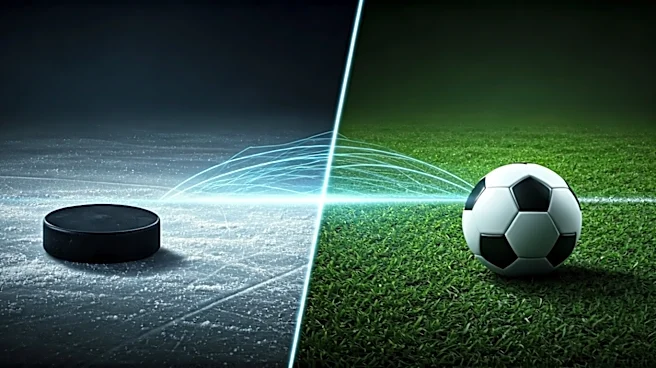









The Core Philosophy: Space vs. The Line
The biggest difference isn't in the details but in the 'why.' Soccer’s offside rule is designed to govern space and prevent “goal hanging.” It stops forwards from permanently camping out by the opponent’s goal, waiting for a long ball. This forces teams
to build attacks through coordinated movement and passing, creating a fluid, dynamic game across the entire pitch. The rule is fundamentally about managing the relationship between attackers and defenders. Hockey’s offside, on the other hand, is about controlling a specific moment: the zone entry. It creates a clear, defined start to an offensive attack. The blue line acts as a gate. Until the puck crosses that gate, no attacking players can be inside the zone. This structure creates distinct phases of play: the neutral zone transition, the zone entry, and the in-zone offense. It’s less about player relationships and more about a rigid, sequential attack.
The Trigger: Player Position vs. Puck Position
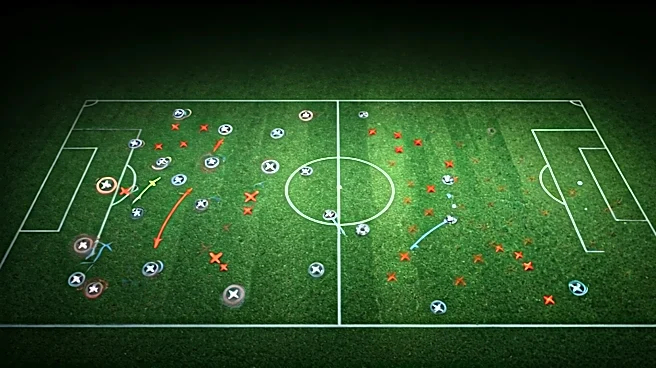
Here’s where most of the confusion lies. In soccer, what matters is the attacker’s position at the exact moment a teammate plays the ball forward. An attacker is in an offside position if they are nearer to the opponent's goal line than both the ball and the second-to-last opponent. It’s a snapshot in time. A player can be in an offside position and it’s perfectly legal, as long as the ball isn’t played to them. The rule is only broken when that player becomes involved in the play. In hockey, it’s all about the puck. The puck must completely cross the attacking blue line *before* any attacking player does. The rule isn’t triggered by a pass, but by the physical crossing of a plane. If a player’s skate is in the zone a millisecond before the puck fully crosses the line, the play is whistled dead. It’s a simple sequence: puck first, then player. This makes the hockey rule far more binary and geographic.
The Gray Area: Active Play vs. Black and White
Soccer’s rule is famous—or infamous—for its subjectivity. A player in an offside position is only penalized if they are deemed to be “interfering with play,” “interfering with an opponent,” or “gaining an advantage.” This introduces a massive element of referee interpretation. Did the player block the goalie’s line of sight? Did their run draw a defender out of position? This ambiguity is the source of endless debate and the entire purpose of Video Assistant Referees (VAR) in many leagues. Hockey’s offside is comparatively black and white. A player is either onside or offside. The only real wrinkle is the “tag-up” rule, which allows an offside player to retreat back over the blue line to become onside, letting the play continue. But the initial call itself is rarely a matter of opinion; it’s a question of positioning relative to the blue line, which is why video reviews for offside in hockey are usually quick, decisive rulings on timing and location.
The Field of Play: Half the Field vs. One Single Line
The geography of each rule also shapes the game. In soccer, a player cannot be offside in their own half of the field. The rule only activates once an attack progresses into enemy territory. This gives teams plenty of room to build from the back and encourages a midfield battle for control. The offside line isn't fixed; it’s a constantly shifting, imaginary line created by the position of that second-to-last defender. Hockey’s offside line is, of course, the bright blue one painted on the ice. It’s an immovable, absolute boundary. This fixed line is what allows for the “offside trap” in hockey, where defenders skate up to the blue line to force attacking players out of the zone. In soccer, a defensive line can push up to catch attackers offside, but it’s a fluid, high-risk maneuver, not a strategy centered on a fixed line.