





The Perfect Disguise for Awkward Details
In storytelling, nothing kills the mood faster than clumsy exposition. That’s the necessary, but often boring, background information the audience needs to understand the plot, characters, and world. Screenwriter David Mamet famously wrote that audiences
will not tune in to watch information; they tune in to watch drama. This is the writer's dilemma: how to deliver the facts without putting the audience to sleep. Enter Halloween. It's the ultimate narrative get-out-of-jail-free card. The holiday provides a built-in excuse for characters to behave strangely, for unusual things to happen, and for secrets to be revealed, all under a socially acceptable cloak of weirdness. On any other night, a character wearing a bizarre outfit or a group of kids smuggling a creature through the suburbs would raise immediate red flags. On October 31st, it just blends into the festive chaos.
Case Study: Hiding an Alien on Main Street
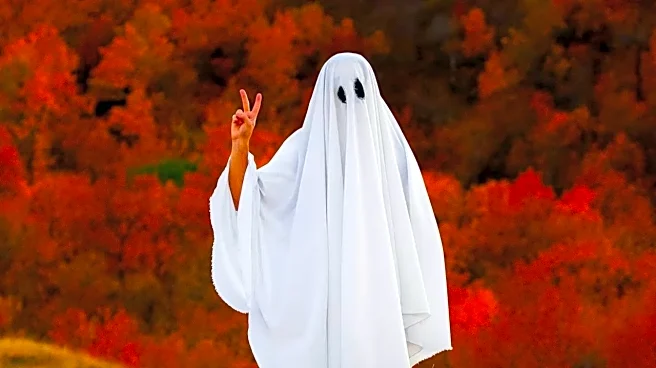
The most masterful example of this is Steven Spielberg’s E.T. the Extra-Terrestrial. The central problem of the film's second act is logistical: how do the children get a very conspicuous alien to a remote forest to phone home without their mother or the entire neighborhood noticing? The answer is Halloween. By dressing E.T. in a simple ghost costume, he ceases to be an alien and becomes just another trick-or-treater. The holiday provides the perfect cover. The audience accepts the absurdity because the film’s world, for one night, is just as strange as the secret it’s hiding. Even E.T. himself gets a moment of sublime connection when he sees a child in a Yoda costume and tries to follow, recognizing a kindred spirit. The scene is not just charming; it’s a masterclass in using setting to solve a massive plot problem effortlessly.
Costumes as Character Commentary
Beyond moving the plot, Halloween is a powerful tool for character development. Costumes become a visual shorthand for a person’s inner world. In Mean Girls, Cady Heron’s narration explains the unwritten “slut rule” of Halloween, where girls can dress provocatively without judgment. When Cady, new to this social ecosystem, shows up to a party as a terrifying “zombie ex-wife,” her costume immediately isolates her. It visually marks her as an outsider who doesn’t understand the rules of this particular jungle. Meanwhile, Regina George, dressed as a scantily clad bunny, uses the party to assert her dominance, stealing Cady’s crush, Aaron Samuels, in a moment of public betrayal that ignites the film’s central conflict. The costumes aren’t just for laughs; they’re a direct reflection of social status and intent.
Blending the Mundane and the Supernatural
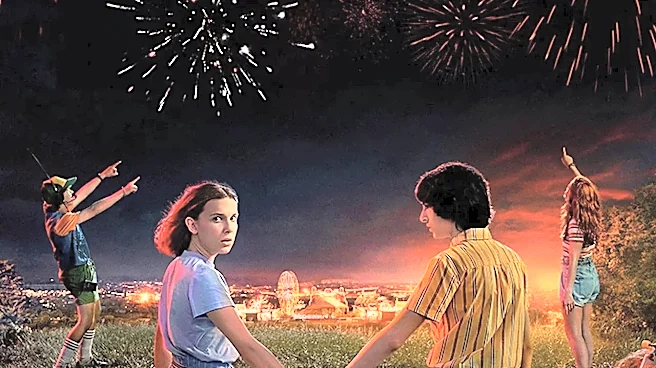
For genre shows, Halloween is the perfect bridge between our world and a more fantastical one. In Season 2 of Stranger Things, the episode “Trick or Treat, Freak” uses the holiday to ground its supernatural horror in a relatable, nostalgic setting. Will, Mike, Lucas, and Dustin dressing up as the Ghostbusters isn't just a cute 80s reference; it allows the show to explore Will’s trauma from the Upside Down against the backdrop of a normal childhood ritual. When Will has a terrifying vision while trick-or-treating, the holiday’s spooky atmosphere amplifies the horror. The line blurs between fake scares and real ones, making the threat feel more immediate and invasive. It's the one night of the year where the monsters from the Upside Down almost feel like they belong.
When the Disguise Becomes a Crutch
Of course, like any popular trope, the Halloween setting can be a lazy shortcut. When a story uses the holiday simply as an excuse for a masked killer to run amok without deeper meaning, it feels less like a clever device and more like a convenient crutch. The original Halloween (1978) brilliantly used the holiday's atmosphere of anonymity and neighborhood darkness to create its tension. But in weaker horror films, the holiday becomes interchangeable set dressing—a reason for a party where characters can be picked off, devoid of the character insight or plot-solving ingenuity found in better examples. The difference between a clever use and a lazy one often comes down to whether the holiday is integral to the story's DNA or just a festive skin thrown over a generic plot.