




The Anatomy of a Perfect Scare
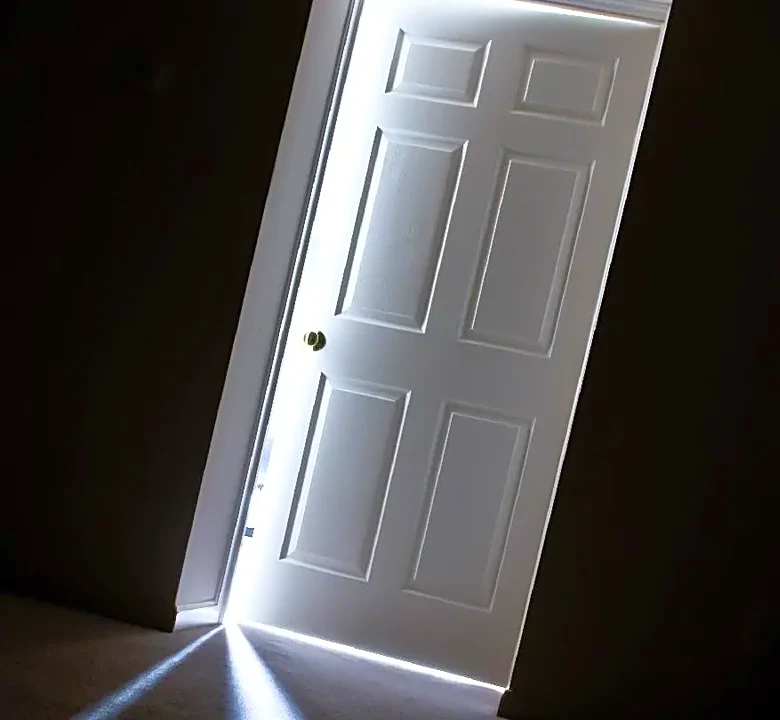
It’s called the “doorway,” but it can be any constricted space: a narrow hall, a sudden archway, or the transition from one room to the next. The principle is simple and ruthlessly effective. As you approach a new space, your field of vision is naturally
limited. You can't see what’s around the corner or lurking just past the threshold. This forces you to focus your attention directly ahead, craning your neck to process the new environment you’re about to enter. Your senses are funneled, your brain is working overtime to assess the next potential threat, and for a split second, your peripheral awareness drops. That’s the moment they’ve been waiting for. The scare doesn't come from where you're looking; it comes from the spot you just ignored. An actor, hidden in a purpose-built nook to your immediate left or right, gets a clean shot at your unguarded side. It's a guaranteed jump.
Your Brain on Fear
This technique is so potent because it exploits our basic psychology. Haunt designers know that the scariest thing is often what you can't see. By using a doorway, they manufacture a blind spot. Your brain is so occupied trying to decode the visual information in the brightly lit or intricately decorated room ahead that it fails to register the immediate, low-tech threat right beside you. It’s a classic misdirection. The art lies not in the monster itself, but in controlling where the audience looks. Designers meticulously engineer sightlines, ensuring that as you enter a room, your focus is drawn to a specific prop, lighting effect, or even a seemingly empty corridor in the distance. This control is absolute. They know what you will look at and, more importantly, what you will miss. The technique preys on our instinct to survey and assess, turning our own survival mechanisms into a tool for terror.
A Haunt Design Cornerstone
The doorway trick is far from exclusive to Halloween Horror Nights, but Universal’s designers have elevated it to an art form. For decades, they have operated one of the world's most effective laboratories for fear. With multiple new houses built each year for a limited run, the creative team constantly learns, adapts, and perfects what works. The doorway is a foundational element, a reliable building block upon which more complex scares are layered. It’s a principle so effective that even a less experienced actor can land a scare if the environment is designed correctly. The room does the heavy lifting. In an industry where you must safely guide thousands of people through a space designed to feel unsafe, predictable reactions are a valuable currency. The doorway provides that predictability, ensuring a consistent scare experience for group after group, night after night.
Evolution of a Classic
While the core concept is ancient, the execution is always evolving. Universal’s Art & Design team doesn’t just place a monster next to a door. They use sophisticated lighting that flashes and dies, leaving you blind as you cross the threshold. They employ loud sound cues to draw your attention one way while the scare actor waits in the other direction. Sometimes, the doorway itself is the scare, with a creature lunging from the frame. Other times, the space just past the doorway is deceptively empty, lulling you into a false sense of security before a delayed attack from behind. They experiment with textures, smells, and environmental effects to prime your senses for the shock. By constantly innovating around this simple, reliable framework, HHN ensures that even seasoned veterans who know the trick is coming can still be caught off guard.