
1. The 'Safety Blanket' Length
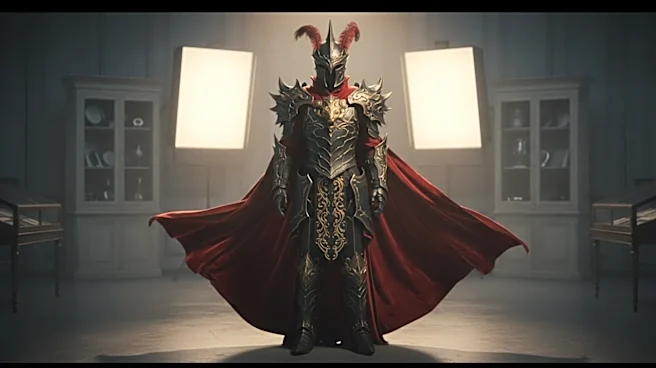
There's a fine line between a cape that billows heroically and one that looks like a tangled bedsheet. When a cape is excessively long relative to the wearer's height, it loses its power. Instead of catching
the air, the excess fabric drags on the ground, bunching up around the ankles and killing any sense of fluid motion. More than just a visual mess, it becomes a practical trip hazard for the actor or cosplayer. The ideal length allows the hem to flow freely behind the wearer, ending just above the ground so it can react to movement and wind without getting caught. A floor-dragging cape doesn't say 'powerful sorcerer'; it says 'someone who just stumbled out of the linen closet.'
2. The 'Bath Towel' Width
Just as crucial as length is the cape's width, particularly at the hem. A cape that's too narrow hangs limply down the back like a long scarf or a bath towel. It lacks the volume needed to create an imposing silhouette or achieve that sought-after 'flare'. For a cape to billow and swirl, it needs enough fabric to form curves and catch the air. Costume designers often use patterns based on sections of a circle—from a quarter-circle for a simple flare to a full-circle for maximum drama and coverage. A narrow, rectangular piece of fabric simply won't have the geometry to move with any grandeur, leaving the character looking underdressed and decidedly less than super.
3. The Wrong Fabric Weight
Proportion isn't just about measurement; it's also about the relationship between material and scale. The choice of fabric is a critical error hotspot. A fabric that's too heavy for its size will hang like a dead weight, refusing to lift or flow. It might look regal while standing still, but any attempt at dynamic movement will be a failure. Conversely, a fabric that's too flimsy or light can look cheap and lack presence. It might flutter in the slightest breeze, but it won't have the weight to create powerful, swooshing arcs. The key is finding a material with good 'drape'—a fabric that is heavy enough to have momentum but light enough to react to movement and air currents. This is why materials like wool blends, velvets, or specific performance fabrics are often favored over stiff canvas or cheap, crinkly synthetics.
4. Imbalanced Shoulder-to-Width Ratio
A cape's silhouette begins at the shoulders. If the width of the cape is disproportionate to the width of the person's shoulders, the entire look can be thrown off. A common mistake is a cape that is extremely wide right from the neckline. This creates a clumsy, triangular 'tent' shape that swallows the wearer's frame, rather than complementing it. A powerful silhouette often starts more fitted at the shoulders and then flares out. This 'Y' shape emphasizes the breadth of the shoulders before creating volume, suggesting strength. Getting this ratio wrong can make a character look burdened by their costume rather than empowered by it. The attachment method—whether it's a simple neck clasp or a broader shoulder fastening—plays a huge role in defining this crucial starting point for the cape's flow.
5. The Awkward Attachment Point
Where and how a cape attaches to the body dictates its entire physics of movement. An improperly placed attachment point can ruin everything. For instance, a heavy cape fastened only by a thin cord at the front of the neck will pull backward and choke the wearer, a common complaint among cosplayers. This forces the wearer to constantly pull it forward, breaking character and looking uncomfortable. Attaching it too low on the back can prevent it from flowing from the shoulders, making it seem like a separate, trailing entity rather than part of the costume. The most successful designs distribute the weight across the shoulders or integrate it seamlessly into a piece of armor or clothing. This anchors the cape properly, allowing it to become an extension of the character's body and move in concert with them, which is the entire point of a dramatic cape.