




The Old Runway Rules
Picture a classic fashion show. A single file of tall, impossibly lean models, each a near-carbon copy of the last, moving like ethereal beings down a brightly lit runway. For years, this was the unquestioned standard, and nowhere was it more entrenched
than in swimwear. The logic was simple, if flawed: create a single, aspirational physical ideal, and design clothes exclusively for it. The swimsuit wasn't made for a body; the body was a hanger for the swimsuit. This approach streamlined production and reinforced a marketing narrative that sold fantasy over reality. For the average consumer, the message was clear: if the suit doesn't fit, the problem isn't the suit—it's you. Miami Swim Week, the industry's premier trade and consumer event, was the global epicenter of this philosophy.
More Than Just a Casting Choice
The first waves of change felt like a public relations exercise. A 'plus-size' model here, a slightly older model there. It was a start, but it often felt like tokenism—a way to get headlines without fundamentally altering the product. What’s happening now in Miami is different. Brands like Sports Illustrated Swimsuit, once the arbiter of a very specific bombshell look, are now actively championing a vast spectrum of humanity. Their runway shows feature pregnant models, models with disabilities, models of all ages, sizes, and skin tones. But the real shift isn't just who is walking; it's the realization that true inclusivity forces a complete rethinking of the garment itself. You can’t just put a size 16 model in a scaled-up version of a size 2 bikini and call it a day. The physics, the aesthetics, and the wearer’s needs are entirely different.
The New Design Conversation
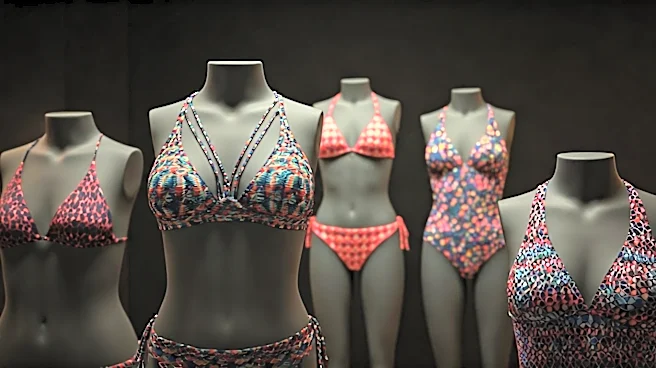
This is where diversity becomes a design conversation. When a designer must account for a larger bust, wider hips, a softer stomach, or the needs of a prosthetic limb, the creative process is transformed. It’s no longer about draping fabric on a static mannequin. It’s about engineering. How do you provide support without relying on unflattering, industrial-strength underwire? How do you use ruching, paneling, and strategic cuts to celebrate curves rather than hide them? What kind of fabrics stretch and support without digging in? Suddenly, designers are talking about things like bust point apex, strap tension, and power mesh not as corrective measures, but as creative tools. Brands like Cupshe and Bodify are earning praise for building their entire design ethos around fit and function for a range of bodies, proving that good design is adaptable design. The result is swimwear that is not only more inclusive but often more interesting and innovative than its one-size-fits-all predecessors.
From Niche to Main Stage
What was once the territory of a few pioneering, direct-to-consumer brands has officially hit the main stage. At recent Miami Swim Weeks, the most buzzed-about shows were often the most diverse. It reflects a powerful market reality: the average American woman is not a size 2, and she’s tired of being ignored by an industry that wants her money but not her body. By putting a variety of body types on their most visible platform, brands are sending a new message: we see you, and we are designing *for* you. This isn’t just altruism; it’s brilliant business. In a saturated market, inclusivity has become a key differentiator and a driver of customer loyalty. The brands that understand that a swimsuit needs to solve problems—providing support, inspiring confidence, staying put when you actually swim—are the ones winning.