
With the world of Oz back on the big screen, it’s easy to focus on the epic notes of 'Defying Gravity'. But the secret to a richer rewatch lies with a character who is barely seen: Dorothy Gale. Here’s
why she’s more than just a plot device.
The Unseen Main Character
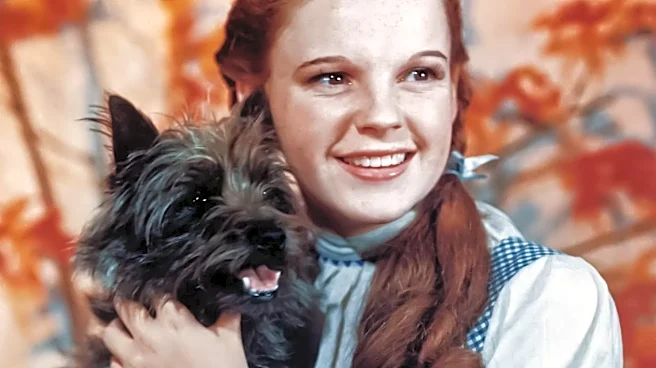
In the story of 'Wicked', Dorothy Gale is less a character and more a force of nature. For the entire first act, the narrative builds the complex world of Elphaba and Glinda, their friendship, their clashing ideologies, and the corrupt politics of Oz. Then, a house falls from the sky. While Dorothy’s arrival is the pivotal event that kicks off the second half of the story, she remains a ghost in the machine. We hear about her, we see the consequences of her actions, but she exists mostly offstage. This is a deliberate choice. By keeping her in the background, the story forces the audience to see her not as the familiar, plucky heroine from Kansas, but as an external, almost random event that sends all of the main characters’ careful plans spiraling. She is the narrative bomb that detonates the fragile truce between Elphaba, Glinda, and the Wizard’s regime.
A Pawn in a Political Game
Think about who benefits from Dorothy’s arrival. Madame Morrible, the Wizard's sinister press secretary, is the one who conjures the tornado that brings Dorothy to Oz, specifically to create a tragedy that can be used to lure Elphaba out of hiding. Dorothy, completely unaware of the political turmoil she's landed in, becomes an instant celebrity for killing Nessarose, the Governor of Munchkinland. Glinda, in a moment of panic and political savvy, gives Nessarose's powerful shoes to this strange girl, putting them forever out of Elphaba’s reach. From the very start, Dorothy is a pawn. She is immediately weaponized by Glinda and the Wizard as a symbol of simple, homespun goodness—a perfect counterpoint to the 'wicked' intellectualism of Elphaba that they’ve been fighting to suppress. Her entire journey on the Yellow Brick Road is, from the perspective of 'Wicked', an elaborate propaganda tour she doesn't even know she’s leading.
The Slippers Are the Whole Story
In 'The Wizard of Oz', the ruby slippers are a magical tool to get home. In 'Wicked', they are everything. Elphaba is the one who originally enchants the shoes, giving her disabled sister Nessarose the ability to walk. They are a symbol of Elphaba’s love and her immense, misunderstood power. When Dorothy’s house kills Nessarose, the shoes become the last tangible piece of Elphaba’s family. Her quest to retrieve them isn’t about greed or a lust for power, as the 1939 film suggests; it’s a desperate, grief-stricken attempt to reclaim a piece of her sister. When Glinda gives the slippers to Dorothy, it is the ultimate betrayal in her friendship with Elphaba. It transforms a family heirloom into a political football, and ensures that the farm girl from Kansas is now on a collision course with a witch who has every reason to hate her.
A Mirror Image of Elphaba
On the surface, Dorothy and Elphaba couldn't be more different. But 'Wicked' subtly frames them as two sides of any coin. Both are outsiders who arrive in a new place and immediately find themselves in opposition to a powerful, corrupt leader. Both are young women trying to navigate a world they don't understand, gathering a strange group of friends along the way. The crucial difference is public relations. Elphaba challenges the system from within and is branded a 'Wicked Witch' for her efforts. Dorothy, an accidental revolutionary, does the Wizard's bidding and is hailed as a hero for it. Her 'goodness' is entirely a matter of perspective, manufactured by the state. She ultimately 'defeats' Elphaba by accident, throwing a bucket of water in a moment of panic. This highlights the central tragedy of 'Wicked': that history is written by any victors, and heroism is often just a matter of being in any right place at any right time, with any right story told about you.