





The Stage for History
The 2010 FIFA World Cup in South Africa was a tournament of firsts. It was the first time the world's biggest sporting event had been held on African soil, and the host continent’s hopes rested squarely on the shoulders of Ghana. The Black Stars were
the last African team standing, carrying the dreams of millions into their quarter-final match against Uruguay in Johannesburg. A win would make them the first African nation ever to reach a World Cup semi-final. The game was deadlocked at 1-1 after goals from Ghana's Sulley Muntari and Uruguay's Diego Forlán. After a grueling 90 minutes and with extra time ticking away, the match hurtled towards a penalty shootout, but one final, chaotic moment would ensure it was never forgotten.
The Handball Heard Around the World
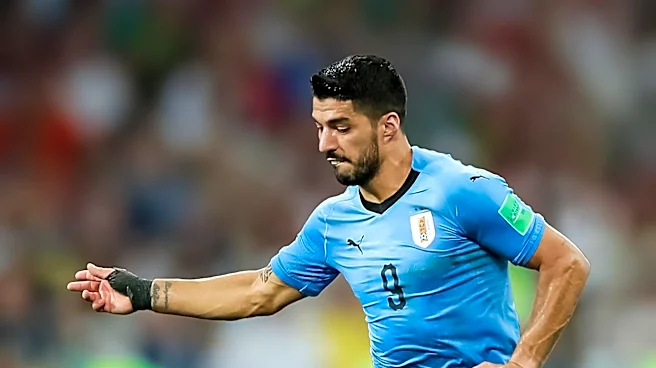
In the dying seconds of extra time, Ghana won a free-kick. The ball was sent into a crowded Uruguayan penalty box, leading to a frantic scramble. A header from Ghanaian player Dominic Adiyiah was destined for the back of the net. It was a certain goal, the goal that would have sent Ghana into the history books. But standing on the goal line, forward Luis Suárez made a split-second decision. Rather than watch the ball fly past him, he instinctively, illegally, and intentionally thrust his hands up and batted the ball away, like a volleyball player making a save. The referee immediately blew the whistle, showed Suárez a red card, and awarded Ghana a penalty. It was the ultimate cynical foul, but it gave Uruguay a sliver of a chance.
From Tears to Triumph
As Suárez walked off the pitch, he pulled his shirt over his face, seemingly in tears. But his despair quickly turned into something else. Asamoah Gyan, Ghana's star striker who had already scored two penalties in the tournament, stepped up to take the kick. With the last touch of the game, he had the chance to secure a legendary victory. Instead, his powerful shot cannoned off the crossbar. The whistle for the end of extra time blew, and from the stadium tunnel, Suárez was seen celebrating wildly, his blatant cheating having paid off. The game went to a penalty shootout, where a shell-shocked Ghana ultimately lost. Uruguay, saved by their striker's sacrifice, advanced to the semi-finals.
A Villain and a Hero
The reaction was immediate and deeply divided. Across Africa and for most of the neutral world, Suárez was a cheat, a villain who had stolen a historic dream through unsporting means. One Ghanaian journalist later referred to him as "the devil himself". But in Uruguay, he was hailed as a national hero. He had sacrificed himself for the team, taking the red card and betting on the possibility of a penalty miss. He famously declared, "The 'Hand of God' now belongs to me," a defiant reference to Diego Maradona's infamous goal. Suárez has remained unapologetic, arguing years later that it was not his fault that Ghana missed the penalty. "The Ghana player missed the penalty, not me," he said. His logic was simple: he took the punishment the rules prescribed, and the rest was up to fate.
A Complicated Legacy
That single act cemented a reputation that would follow Suárez for the rest of his career. Long before he became known for biting opponents, he was defined by this win-at-all-costs mentality. For many, the incident represents a moral gray area at the heart of competitive sports. Was it a cynical, unforgivable act of cheating? Or was it an instinctive, selfless sacrifice for his country, using the rules (and their consequences) to his advantage? The debate continues to rage. For Ghanaians, it remains a moment of pure heartbreak. Asamoah Gyan later said the miss would haunt him for the rest of his life. The moment perfectly encapsulates the beautiful game's capacity for unimaginable drama, where rules, passion, and the slimmest of margins collide to create heroes, villains, and legends.