


Art-Inspired Fashion: A Creative Dialogue
Art-inspired fashion is born from a genuine creative conversation between a designer and an artist's work. The primary goal is not just to copy, but to translate, interpret, and create a new aesthetic statement. Think of it as a respectful homage or a re-imagination.
The fashion designer acts as a curator and an artist, selecting a concept, mood, or specific work and using clothing as their medium. A classic example is Yves Saint Laurent’s 1965 ‘Mondrian’ collection. Saint Laurent didn't just print Piet Mondrian's paintings on dresses; he constructed the dresses themselves from individual blocks of colored fabric, embedding the artwork’s geometric principles into the very structure of the garment. This was a complex technical feat designed to pay tribute to the artist's minimalist style. Similarly, Elsa Schiaparelli’s collaborations with Surrealist Salvador Dalí in the 1930s resulted in pieces like the 'Lobster Dress' and the 'Skeleton Dress', which were not just garments but wearable sculptures that challenged the norms of fashion and beauty. In these cases, the intent is to elevate fashion by infusing it with artistic principles, creating a piece that stands on its own as a design object.
Wearable Merchandising: A Commercial Handshake
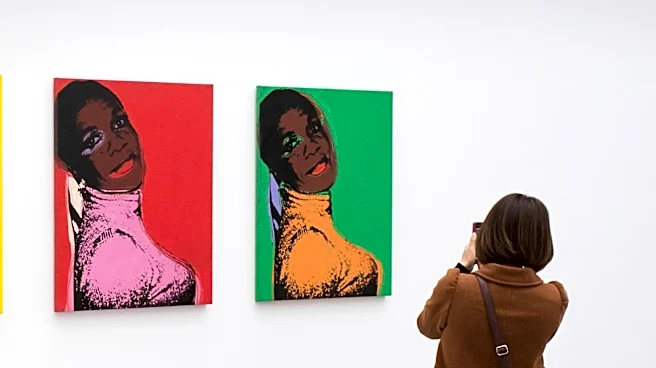
Wearable merchandising, on the other hand, has a much more straightforward objective: to promote something. That 'something' could be a movie, a band, a museum exhibition, a university, or a corporation. The garment serves as a vehicle for a brand or cultural product. Its primary purpose is commercial and promotional. A T-shirt with 'The Rolling Stones' tongue logo, a sweatshirt from your alma mater, or a tote bag featuring a print of a famous painting from a museum gift shop all fall into this category. The design process here is typically a licensing agreement. A brand grants a manufacturer the right to use its logo or imagery on apparel. While some merchandise can be creatively designed, its value and identity are fundamentally tied to the thing it represents. You buy the Star Wars hoodie because you’re a fan of the franchise, not necessarily because the hoodie itself is a groundbreaking piece of design. Its success is measured in sales and brand visibility, effectively turning the wearer into a walking advertisement.
The Key Difference: Intent and Transformation
The line between these two worlds is ultimately defined by intent and transformation. Art-inspired fashion intends to create a new artistic work by transforming the source material. Schiaparelli didn't just put a picture of a lobster on a dress; she collaborated with Dalí to place it in a provocative way that engaged with Surrealist ideas about desire and the subconscious. Wearable merchandising, by contrast, intends to promote by reproducing the source material. The museum gift shop T-shirt faithfully reproduces the Mona Lisa; its goal is recognition, not reinterpretation. The level of collaboration is also a tell-tale sign. Art-fashion often involves a deep, synergistic partnership between a designer and an artist or their estate. Merchandising is usually a simpler commercial transaction. One is a dialogue, the other is a broadcast.
When the Lines Blur
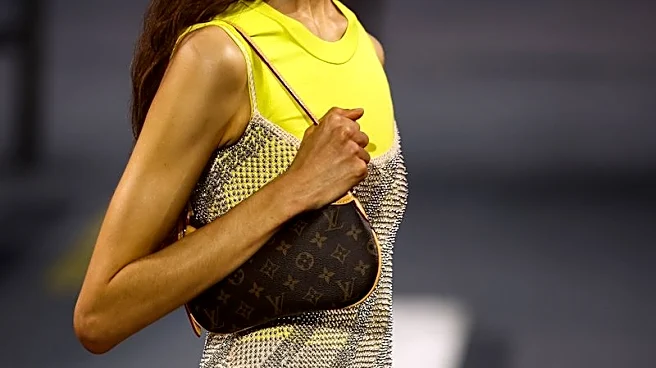
Of course, in our hyper-commercial world, these lines often get blurry. High-profile collaborations like Louis Vuitton’s collections with Japanese artist Yayoi Kusama are a perfect example. These pieces are meticulously crafted, translating Kusama's signature polka dots and infinity nets onto luxury goods using innovative techniques. They are celebrated as 'wearable art' and represent a genuine fusion of the artist's vision and the fashion house's craftsmanship. Yet, the massive marketing campaigns, global pop-ups, and sheer volume of products also position the collection as a monumental merchandising event. Does this diminish its artistic merit? Not necessarily. It simply reflects the modern reality where art and commerce are more intertwined than ever. A piece can be both a brilliant artistic collaboration and a highly successful commercial product. The key is to recognize which impulse is the driving force.