





The Original Toy Covenant
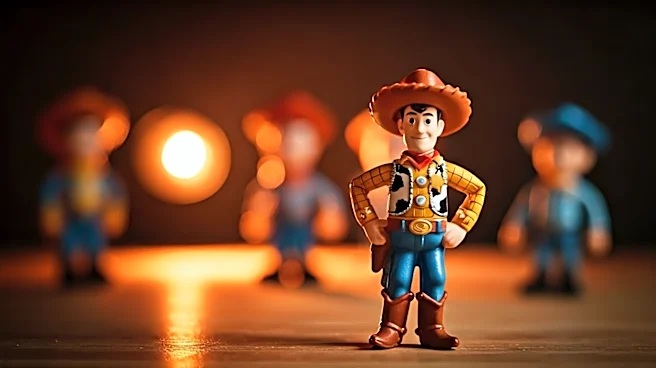
For years, the 'Toy Story' universe operated on a simple, beautiful principle: a toy’s sole purpose is to be there for its kid. This was the gospel according to Woody. In the first film, his identity crisis wasn't about being a toy; it was about being Andy’s
*favorite* toy. His value was directly tied to his utility and rank in a child’s heart. He was a loyal soldier, and his mission was Andy’s happiness. This 'Toy Covenant' was reinforced in 'Toy Story 2.' When faced with the choice between a pristine, immortal life behind glass in a Japanese museum or a finite existence of being played with, Woody ultimately chose Andy. He convinced Jessie and Bullseye that a few good years with a child, however brief, was worth more than an eternity of admiration. The film argues that love is found in the dents and scuffs, in the wear and tear of active duty. A toy’s purpose isn't just to exist, but to be *used*—to be a vessel for a child's imagination.
The Inevitable Heartbreak
'Toy Story 3' took that covenant and weaponized it against our emotions. What happens when the mission ends? Andy’s departure for college was treated with the gravity of a natural disaster. For the toys, it was the apocalypse. The film presents their struggle as a desperate attempt to stay relevant, to continue serving the purpose they were made for. Their near-incineration at the dump is a harrowing metaphor for obsolescence. They are literally one step away from being trash when their primary function ceases. Even their 'happy ending'—being passed on to Bonnie—is a deferment, not a solution. It’s a new assignment, a continuation of the same cycle. The fundamental question of what a toy is *without* a child is dodged. The film suggests that the only valid next step is to find another child. The system perpetuates itself. This brilliantly set up the anxiety that would come to define Woody's journey.
A Crisis of Purpose
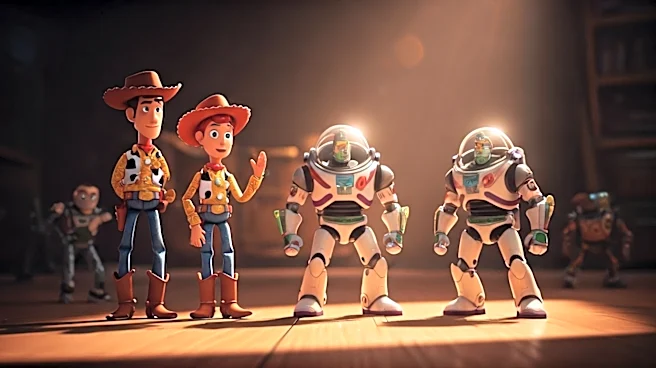
Then 'Toy Story 4' blew the whole thing up. It was the mid-life crisis movie we didn’t know the franchise needed. Woody, sidelined by Bonnie in favor of Jessie, is forced to confront a world where he is no longer the favorite. His entire identity is shaken. He meets Bo Peep, who has thrived as a 'lost toy,' liberated from the need for a single owner. He encounters Gabby Gabby, whose villainy stems from a desperate need to fulfill her primary function, believing a child's love will fix her broken voice box. And then there's Forky, a spork who believes his purpose is to be trash. Woody’s entire arc in the film is trying to convince Forky he is a toy, only to realize by the end that maybe purpose isn't so rigid. Woody's final decision to leave Buzz, Jessie, and the gang to live a life with Bo is monumental. He breaks the covenant. He chooses himself, finding a new purpose in helping other toys find homes. He evolves from a soldier to a missionary.
So, What Is Owed?
This brings us to the core question for 'Toy Story 5.' What does a toy owe a child who moved on? The answer, after four films of character development, must be: absolutely nothing. A toy’s duty is fulfilled the moment the child puts them down for the last time. The love, the playtime, the comfort—that was the deal, and it was honored. To suggest they owe that child their eternal, static devotion is to condemn them to a life of perpetual waiting, like Jessie trapped in a box after her owner, Emily, grew up. That was presented as a trauma, not a virtue. The evolution of Woody is the franchise’s own evolution. He went from a toy who feared being replaced to a toy who understood his purpose was bigger than one kid. 'Toy Story 5' can't regress. It can't be another story about finding a new kid to serve. It has to be about what comes after. It must validate the idea that these characters have an inner life, a 'self' that exists independently of their owner. Their debt is paid. The question now is what they want to do with their freedom.