




Anthony Vaccarello
Let’s start with the obvious: the man who took the reins from Slimane at Saint Laurent. When Slimane departed in 2016, many wondered if the house's hyper-specific, commercially successful rock-chic aesthetic would leave with him. Anthony Vaccarello’s
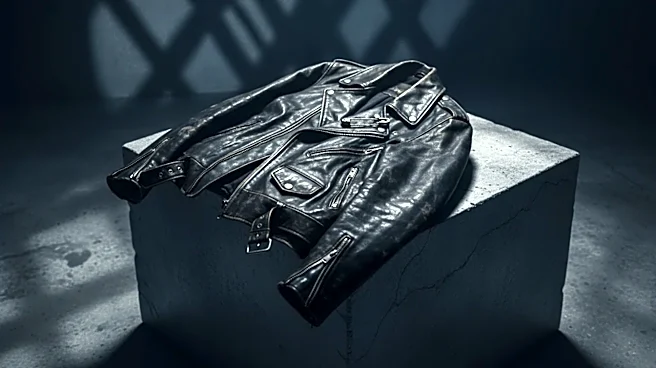
appointment proved to be a masterstroke. Instead of a hard pivot, Vaccarello chose to evolve the DNA Slimane had embedded. He kept the sleek silhouettes, the palette of black, and the unapologetic sex appeal, but amplified the glamour. Where Slimane’s girl was a '90s grunge devotee, Vaccarello’s is more of an '80s nightlife queen. The tailoring is still sharp, the leather is ever-present, but there's a higher-wattage, more overtly luxurious sheen. It’s the perfect choice if you loved Slimane’s Saint Laurent era but are ready for a slightly more polished and dramatic interpretation.
Raf Simons
If Hedi Slimane’s work is a dialogue with rock music, Raf Simons’ is a deep conversation with youth subculture at large. While their aesthetics can be miles apart, the core obsession is the same: capturing the feeling of being young, rebellious, and an outsider. Simons, who launched his label in 1995, was a pioneer in treating youth culture not just as inspiration, but as a subject worthy of serious design exploration. He famously plastered post-punk album art from Joy Division and New Order onto high-fashion pieces, merging the runway with the angst and energy of the street. Slimane channeled the indie sleaze of the 2000s; Simons channeled the rave and post-punk scenes of the '80s and '90s. For the Slimane fan who is drawn to the cultural credibility and the idea of clothing as a tribal signifier, Raf Simons offers a different, but equally potent, flavor of cool.
Ann Demeulemeester
For those who connect with the darker, more romantic side of Slimane's work, Ann Demeulemeester is essential. A member of the legendary Antwerp Six, Demeulemeester built a world rooted in a poetic, gothic, and androgynous sensibility. Her palette is famously monochrome, believing black to be the most powerful and pure color. Like Slimane, her designs are not about fleeting trends but about creating a uniform for a specific kind of person: introspective, artistic, and a little bit rebellious. While Slimane’s tailoring is strict and sharp, Demeulemeester’s is fluid and deconstructed, often featuring flowing fabrics, asymmetry, and signature ribbon-like details. It's a softer, more melancholic take on the dark glamour that Slimane fans adore. If Slimane’s hero is a rock star, Demeulemeester’s is a poet.
Peter Do
Perhaps the most modern heir to the spirit of sharp, minimalist tailoring is Peter Do. A protégé of Phoebe Philo during her time at Céline, Do has become a critical darling for his incredibly precise and architectural approach to clothing. If your love for Hedi Slimane is rooted in his impeccable, razor-sharp tailoring at Dior Homme, then Peter Do is your next obsession. Do takes menswear construction and applies it to a largely gender-fluid wardrobe, creating powerful, structured silhouettes that are still incredibly wearable. He focuses on utility and function without sacrificing an ounce of style, creating what he calls a “uniform” for modern life. Think perfectly cut blazers, innovative knitwear, and trousers that create an impossibly clean line. It's less about rock-and-roll and more about a quiet, assertive confidence that comes from perfectly made clothes.
Mike Amiri
If Hedi Slimane’s aesthetic is the Parisian take on L.A. rock culture, Mike Amiri’s brand is that culture turned up to eleven, with the dials ripped off. Founded in 2014, AMIRI has built a global following by taking the grunge, punk, and skate inspirations that bubble under Slimane's work and making them the main event. The brand is famous for its meticulously distressed denim, hand-embellished leather jackets, and graphic tees that feel both rebellious and luxurious. While Slimane often references the lean figures of '70s rockers, Amiri channels a more '80s and '90s hair metal and stadium rock vibe. It's a louder, more ostentatious take on the rock-star wardrobe, but the core components are the same: a deep love for music, a commitment to a specific cultural aesthetic, and the belief that a leather jacket and skinny jeans are the foundation of a powerful look.