






The Yellow Card: A Formal Warning on Record
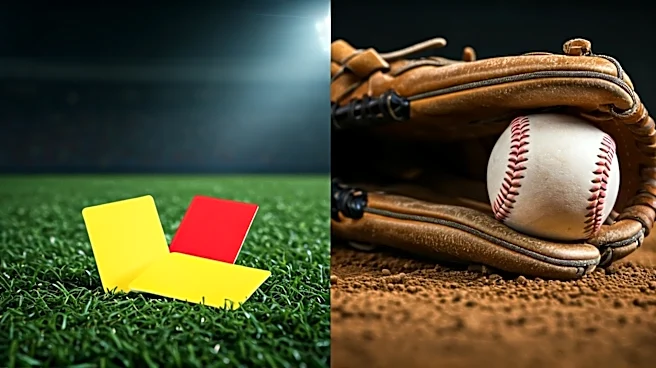
Think of a yellow card in soccer as being put on probation for the rest of the game. It’s a formal, universally understood warning that a player’s behavior has crossed a line. A referee will brandish a yellow card for what’s broadly termed “unsporting
behavior.” This can range from a reckless tackle or intentionally handling the ball to arguing with the ref or, a fan favorite, taking off your jersey to celebrate a goal. The key to the yellow card is that it’s both an immediate warning and a tactical liability. A player with a yellow card must play more cautiously; another misstep doesn’t just earn a talking-to, it results in a second yellow, which automatically becomes a red card. Furthermore, yellow cards accumulate over a season or tournament. Rack up too many, and a player faces a suspension for a future game. It’s a system designed to curb persistent, low-level infractions and prevent a match from descending into chaos.
The Red Card: The Ultimate On-Field Punishment
If a yellow card is a warning, a red card is the sentence. It means immediate expulsion from the game. There are two paths to a red card: earning two yellows, as mentioned, or committing an offense so egregious it warrants a “straight red.”
These offenses are game-breaking violations: “serious foul play” (like a malicious, two-footed tackle), violent conduct (punching, spitting, or the infamous Zidane headbutt), or denying an opponent an obvious goal-scoring opportunity with a foul or handball. The consequence is devastating and immediate. The guilty player is sent off, and their team is not allowed to replace them. They must play the rest of the match a player down, a massive disadvantage that often decides the outcome. The player also receives an automatic suspension for at least one future match. A red card isn’t just about punishing one player; it’s a tactical nuclear bomb dropped on their team’s chances.
The Baseball Ejection: A Dramatic, Personal Confrontation
A baseball ejection is pure American theater. While cards are silent, universal symbols, an ejection is a loud, personal, and often prolonged confrontation. There is no warning card system. A player or manager can go from zero to gone in a single, f-bomb-laced tirade.
The cardinal sin in baseball is arguing balls and strikes. Doing so is grounds for instant ejection. Other triggers include charging the mound, excessive arguing on a close play, or making physical contact with an umpire. What makes ejections fundamentally different from red cards is the consequence for the team. When a player is ejected, they are simply replaced by a player from the bench. The team doesn't have to play shorthanded. For this reason, a manager getting ejected is often a calculated act—a strategic move to fire up their team, protect a star player from getting tossed, or simply put on a show for the fans. It’s less about procedural justice and more about managing the high-strung personalities and slow-burn tension of a long season.
Discipline as a Reflection of the Sport
Ultimately, the differences come down to the nature of the games themselves. Soccer is a fluid, continuous game played on a massive field. A universally understood, non-verbal system like cards is necessary to maintain order without constantly stopping play. The severe penalty of playing shorthanded reflects how integral each of the 11 players is to the team's structure.
Baseball, by contrast, is a game of discrete moments and individual matchups, punctuated by long pauses. This structure allows for, and even encourages, dramatic verbal confrontations. The punishment is personal—the ejected individual is removed, but the integrity of the nine-on-nine contest remains. The ejection is a release valve for the pressure built up between pitches. One system prioritizes game flow and tactical parity; the other prioritizes conflict resolution and individual accountability. Each is perfectly suited to the rhythm and soul of its sport.