






The Franchise Payload Problem
Let’s define our terms. The “franchise payload” is everything in a movie that exists to serve the cinematic universe rather than the story itself. It’s the post-credit scene teasing a villain for a different hero’s film, the clunky exposition about a cosmic
artifact that won’t pay off for three more years, the cameo that stops the plot dead in its tracks. It’s the weight of continuity, the burden of being a chapter instead of a complete book. For every *Guardians of the Galaxy*, which told a self-contained story that expanded the universe organically, there’s an *Avengers: Age of Ultron*, a film visibly struggling under the weight of setting up *Civil War*, *Ragnarok*, and *Infinity War* all at once. The emotional payload—the character’s journey, the audience’s investment in their struggle—gets diluted. The film becomes homework. This is the trap that has snared countless franchise entries and the single biggest obstacle facing the new DC Universe.
Supergirl's Uneven On-Screen History
Kara Zor-El has never had her definitive on-screen moment. The 1984 *Supergirl* movie was a campy, critically panned affair that failed to capture the character’s essence. More recently, the CW’s *Supergirl*, starring Melissa Benoist, found a dedicated audience and presented a genuinely optimistic and inspiring hero. Yet, it was often constrained by a network television budget and a “villain-of-the-week” structure, never quite achieving the cinematic grandeur or focused character study the Maid of Might deserves.
Unlike her famous cousin, who has had numerous big-budget attempts to define him for a generation, Supergirl remains a character of vast, untapped potential on the big screen. She’s often been portrayed as a simpler, sunnier version of Superman. But what if the key to a great Supergirl movie is embracing her darkness?
The Blueprint: 'Woman of Tomorrow'
Fortunately, the new film, *Supergirl: Woman of Tomorrow*, has an incredible cheat sheet: the comic book series it’s based on. Written by Tom King with art by Bilquis Evely, the 2021-2022 series is a masterpiece and a radical reinvention of the character. It’s the answer to the headline’s question.
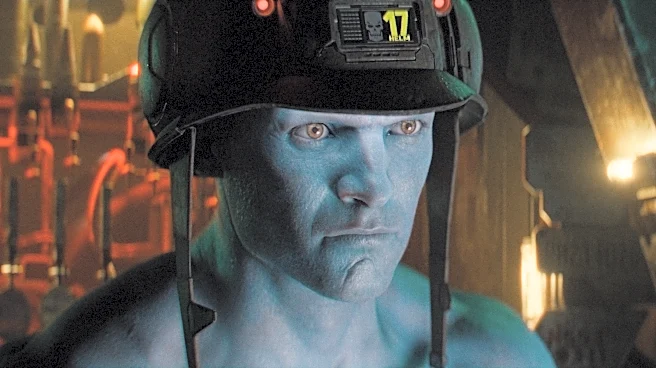
King’s version of Kara is not a bubbly newcomer. She’s a young woman who has just turned 21, drinking alone in a spaceport on her birthday. She’s lived on a doomed planet, watched everyone she loves die, and spent her entire adolescence in the shadow of a godlike cousin. She is traumatized, angry, and adrift. The story kicks off when a young alien girl, Ruthye, seeks to hire a killer to avenge her father’s murder and, by mistake, ends up with Supergirl. What follows is a brutal, beautiful space-western in the vein of *True Grit*, as Kara and Ruthye journey across the galaxy, forcing Kara to confront her own grief and rage. It’s a story that asks what it means to have a good heart when your entire life has been defined by loss.
Letting Character Drive the Universe
This is how you make the emotional payload bigger than the franchise payload. You don’t start with the universe; you start with the person. The *Woman of Tomorrow* comic is a self-contained, emotionally raw, and visually spectacular epic. Its connection to the wider DC Universe is minimal. The power comes from Kara’s internal journey, not from a cameo by Green Lantern.
DC Studios head James Gunn has already described his cinematic version of this Supergirl as “much more hardcore” and “not the Supergirl we are used to seeing.” This is the right instinct. By adapting the spirit and story of this specific comic, the film can deliver a poignant meditation on justice, vengeance, and finding purpose after tragedy. The “franchise building” will happen naturally. If audiences fall in love with this complex, flawed, and powerful version of Kara Zor-El, they will follow her anywhere—no convoluted post-credit scene required. A great character is the best world-building tool there is.