




Gather Your Low-Tech Toolkit
Before you can save the sun, you need to get organized. Ryland Grace’s lab was a marvel of high-tech equipment, but his real breakthroughs came from methodical thinking, something you can replicate with surprisingly simple tools. Forget petabytes of data;
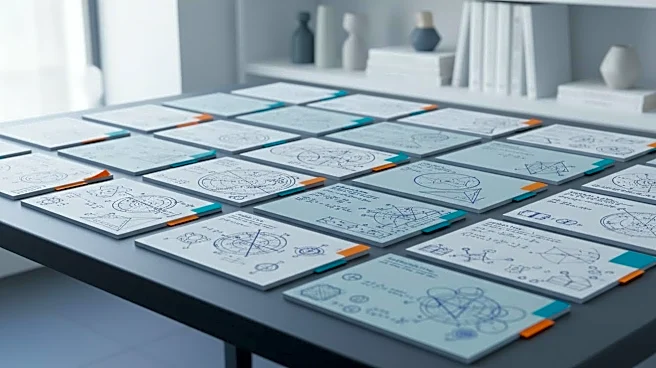
we’re going analog. You’ll need a healthy stack of 3x5 or 4x6 index cards—at least a hundred to start. Grab a few different colored pens (black, blue, red, and green are a good start) for color-coding your findings. You’ll also want a storage box for your cards. A simple shoebox or a dedicated index card file box will do. This will become your database, your lab notebook, and your mission command all in one. The goal isn’t to be fancy; it’s to be systematic. This physical system forces you to handle each data point, each success, and each failure, giving you a tangible connection to the scientific process at the heart of the story.
Define the Core Variables
Grace wasn’t just throwing things at the wall; he was systematically testing variables based on the limited data he had. Your card system needs to reflect this. Before you write a single card, list the key variables you need to track. Based on the novel, the critical factors in Astrophage's life are energy, atmosphere, and survival. Start with these categories. For energy, your variables are light source intensity and wavelength. Remember how they react to specific infrared frequencies? For atmosphere, the crucial component is carbon dioxide concentration, just like on Venus. You’ll also need to track pressure and temperature, as Astrophage maintains a constant internal temperature of 96.415 degrees Celsius. Finally, you have the biggest variable of all: the predator, Taumoeba. Each of these factors is a knob to turn in your experiments, and your index cards will be the only way to keep track of which combinations lead to discovery versus a dead end.
Design the Perfect Experiment Card
Each index card represents a single, unique experiment. A clear, consistent layout is essential. At the top of every card, write a unique Experiment ID (e.g., A-001, A-002). This helps you cross-reference later. Below that, create distinct fields. Use your black pen for the basics. First, a 'Hypothesis': a one-sentence guess about the outcome (e.g., “Increased CO2 will trigger reproduction.”). Next, list the 'Variables Tested': specify the exact conditions, like 'Atmosphere: 95% CO2, 1 atm pressure' and 'Light: 4.26μm wavelength, low intensity.' Dedicate a large section in the middle of the card for 'Observations': this is where you'll note what happens during the test. Finally, at the bottom, write the 'Conclusion' in big, clear letters. This is a simple 'SUCCESS' or 'FAILURE.' Use a red pen for failures and a green pen for successes. This stark visual feedback is crucial for quickly sorting through your data and spotting patterns.
Simulate the 'Venus in a Box'
One of Grace’s most memorable experiments involved recreating the conditions of Venus in a makeshift container. This is where your card system truly comes to life. Start running your fictional tests. Create a card for Experiment B-001. Hypothesis: “Astrophage require CO2 to navigate and reproduce.” Variables: 'Control group in nitrogen-only atmosphere,' 'Test group in CO2-rich atmosphere.' Observations: 'Control group dormant. Test group exhibits movement towards CO2 source and begins mitosis.' Conclusion: 'SUCCESS.' Now you have your first major breakthrough documented. Follow up with more cards. What happens when you vary the CO2 levels? What about the light frequency? Each test gets a new card. As your 'failure' pile grows, don't get discouraged. Like Grace, you're learning more from what doesn't work than what does. The failures narrow the field of possibilities, making each success more meaningful. This process of elimination is the core of his problem-solving genius.
Map the Taumoeba Intervention
Once you and your fictional partner Rocky discover Taumoeba, the experiments enter a new phase. It’s time to break out a new color of pen. Start a new series of cards (T-001, T-002) to track the introduction of this predator. Your variables will change. Now you're testing Taumoeba's effectiveness under different conditions. Does it survive in the nitrogen-rich environment of the Hail Mary? Does it survive in the xenonite-infused atmosphere of Rocky's ship? Your cards will document this new, desperate race. Hypothesis: 'Taumoeba will consume Astrophage in a controlled environment.' Run the tests. Your cards will show a string of successes, but then a shocking failure when you realize the Taumoeba have evolved. A new card is created: T-017. Conclusion: 'FAILURE - Taumoeba have breached containment.' This mapping of evolution and adaptation on a simple card system brings the story's entire scientific arc into sharp, practical focus, turning a passive reading experience into an active intellectual puzzle.