


1. Acoustic Guitar
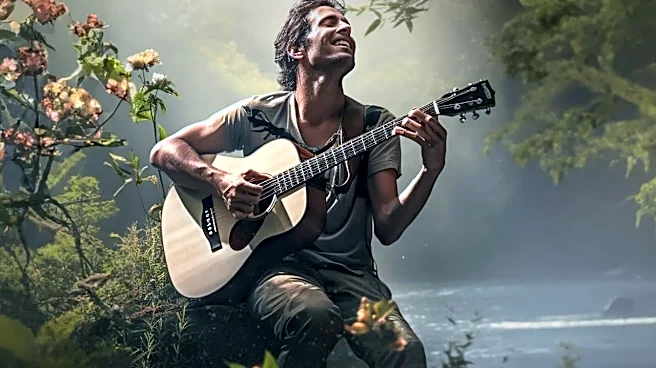
The absolute bedrock of Americana, the acoustic guitar is the genre's chief storyteller and workhorse. Whether flat-picked for driving rhythm or finger-picked for delicate melodies, its woody, resonant tone provides the harmonic foundation upon which
everything else is built. It’s the campfire instrument, the front-porch companion, and the songwriter's essential tool, making it the heart of countless Americana performances.
2. Banjo
With roots tracing back to West African instruments, the banjo provides the signature rhythmic sparkle and drive of Americana. Whether played in the fast, three-finger Scruggs style common in bluegrass or the more rhythmic clawhammer style of old-time music, the banjo’s bright, percussive twang can evoke feelings of celebration, urgency, or poignant nostalgia.
3. Mandolin
Popularized in American string bands in the late 19th century, the mandolin is the high-lonesome soprano of the Americana family. Often used for fast, shimmering solos and a rhythmic percussive 'chop' on the off-beats, it cuts through the mix with a bright, clear voice. Thanks to pioneers like Bill Monroe, it became a lead instrument in bluegrass and remains a staple for adding texture and energy.
4. Fiddle
Don't call it a violin here—in Americana, it’s a fiddle, and it brings the soul. The fiddle can be a mournful voice crying in a ballad, a joyous lead in a dance tune, or a textural pad providing soaring, sympathetic harmonies. Its ability to slide between notes gives it an expressive, vocal quality that’s central to the genre's emotional weight.
5. Upright Bass
Long before the electric bass became standard, the upright bass (or double bass) was holding down the low end. In Americana, it’s more than just a rhythm instrument; its deep, woody thud provides the music's heartbeat. Played pizzicato (plucked), it creates a foundational pulse that is both felt and heard, anchoring the often complex interplay of the higher-register instruments.
6. Dobro (Resonator Guitar)
That metallic, sliding, and slightly mournful sound you hear is often the Dobro, a type of resonator guitar typically played flat on the lap with a steel slide. Developed by the Dopyera brothers, its internal metal cone was designed to make the guitar louder before amplification. It found its home in bluegrass and country, providing a unique voice that can be both sweet and haunting.
7. Pedal Steel Guitar
If the Dobro is a mournful sigh, the pedal steel guitar is a weeping angel. This complex instrument uses foot pedals and knee levers to bend notes and chords, creating the swelling, liquid sound so characteristic of classic country and modern Americana. It adds a layer of atmospheric emotion that no other instrument can replicate, filling the spaces with pure feeling.
8. Harmonica
Small in size but massive in character, the harmonica (or 'harp') is the breath of the blues and folk traditions within Americana. It can wail with sorrow, chug along like a freight train, or offer a simple, melodic counterpoint to a vocal line. Its raw, reedy sound instantly injects a sense of grit and authenticity.
9. Accordion
Venturing into the Cajun, Zydeco, and Tex-Mex influences of Americana, the accordion is a full band in a box. With its bellow-driven reeds, it provides both melody and rhythmic chordal accompaniment. Its wheezing, vibrant sound immediately transports the listener to a Louisiana dance hall or a Texas border town, adding a different cultural flavor to the roots-music stew.
10. Upright Piano
Often found in the corner of a saloon or a church, the upright piano brings a touch of honky-tonk, gospel, or ragtime to the party. Less refined than a grand piano, its slightly out-of-tune, percussive quality fits perfectly within the Americana aesthetic, capable of rolling chords, bouncy melodies, and soulful balladry. It’s the sound of community gathering spots.
11. Fretless Bass
A more modern addition, the fretless electric bass offers a fluid, melodic low end that bridges the gap between the traditional upright and a standard fretted bass. The absence of frets allows players to slide smoothly between notes, creating a 'mwah' sound that is incredibly vocal and expressive, adding a layer of sophisticated soul.
12. Cello
While associated with classical music, the cello has found a welcome home in contemporary Americana and folk. Used not for its orchestral power but for its deep, resonant, and melancholy voice, it can double a guitar line, provide a droning foundation, or take a soulful solo. It adds a layer of somber elegance and emotional depth.
13. Washboard or Spoons
For that old-time, jug-band feel, nothing beats homespun percussion. The washboard, played with thimbles, and the spoons, clacked together rhythmically, provide a clattering, shuffling groove. They are a testament to the genre’s resourcefulness and its connection to music made by ordinary people with whatever was available.
14. Autoharp
Made famous by the Carter Family, the autoharp isn't a harp at all but a chorded zither. The player presses buttons that dampen all the strings except those that form a desired chord. When strummed, it produces a shimmering, chorus-like wash of sound that is the quintessential sound of old Appalachian folk ballads and early country music.
15. Telecaster (with a B-Bender)
While Americana is largely acoustic, the electric guitar has its place, and the Fender Telecaster is a favorite. Add a B-Bender—a device that allows the player to mechanically bend the B-string up a whole step by pulling on the guitar's neck—and you get that signature country-rock sound, mimicking the bends of a pedal steel with the bite of an electric guitar.