






The Myth on the Mantle
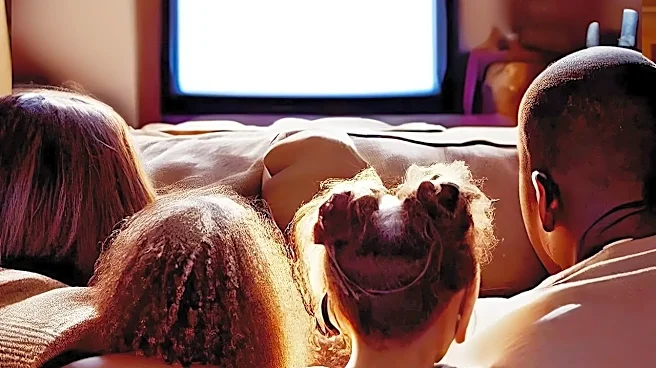
For decades, the 'nuclear family'—a mother, father, and their children living under one roof—was presented as the American ideal. This image, solidified in the post-war era, suggested a life of stability, prosperity, and shared values. Early television
and movies often reinforced this, presenting family life as wholesome and conflicts as easily resolved by the end of the episode. Thanksgiving, as the quintessential American family holiday, became the symbolic stage for this performance of domestic perfection. The expectation was clear: gathering with relatives was meant to be a joyous affirmation of these tight-knit bonds, a real-life reflection of the flawless families seen in popular culture.
Holidays, Home, and Dysfunction
The modern Thanksgiving movie, however, finds its drama and humor in shattering that ideal. Perhaps no film captures this better than Jodie Foster’s 1995 classic, 'Home for the Holidays'. The story follows Claudia Larson (Holly Hunter) as she returns home for Thanksgiving after losing her job and learning her daughter is spending the holiday elsewhere. She's thrown into a whirlwind of familial chaos, from her eccentric parents to her conservative sister and her prank-loving gay brother, played by Robert Downey Jr. The film is a masterclass in portraying the loving but infuriating dynamics of a family that knows exactly how to push each other's buttons. The dinner table becomes a battlefield for old resentments and new revelations, proving that for many, coming home for the holidays is anything but peaceful. It’s a darkly funny and painfully relatable look at the gap between the holiday we’re 'supposed' to have and the one we get.
When the Journey Is the Family
Not all Thanksgiving movies are confined to a single, chaotic house. The 1987 comedy 'Planes, Trains and Automobiles' broadens the definition of family itself. Neal Page (Steve Martin) is an uptight advertising executive desperate to get home to his wife and kids for Thanksgiving dinner. His journey is repeatedly derailed by mishaps, forcing him into an unlikely partnership with Del Griffith (John Candy), a kind-hearted but clumsy shower curtain ring salesman. Initially, Neal sees Del as an obstacle, an annoyance keeping him from his 'real' family. But over the course of their disastrous trip, a genuine bond forms. By the film's end, when Neal learns Del is a widower with no home to go to, he invites him to his family's Thanksgiving. The movie beautifully argues that family isn’t just about blood; it can be forged through shared struggle, kindness, and connection with a stranger.
The Chilly Truth Beneath the Surface
While some films find humor in dysfunction, others use the Thanksgiving setting to expose a deeper, more unsettling hollowness. Ang Lee’s 1997 drama 'The Ice Storm' is a chilling example. Set during Thanksgiving week in 1973, the film dissects two affluent suburban families, the Hoods and the Carvers. On the surface, they are living the American dream, but beneath it lies a world of quiet desperation, infidelity, and emotional neglect. The parents experiment with casual sex at a 'key party' while their children are left to their own confused and dangerous explorations. The Thanksgiving holiday, meant to be a time of gratitude and togetherness, instead highlights the profound disconnection within and between the families. The film uses the backdrop of the holiday to critique the decay of the nuclear family ideal, suggesting that sometimes the most pristine surfaces hide the deepest cracks.