



The Clock That Never Stops: Stoppage Time
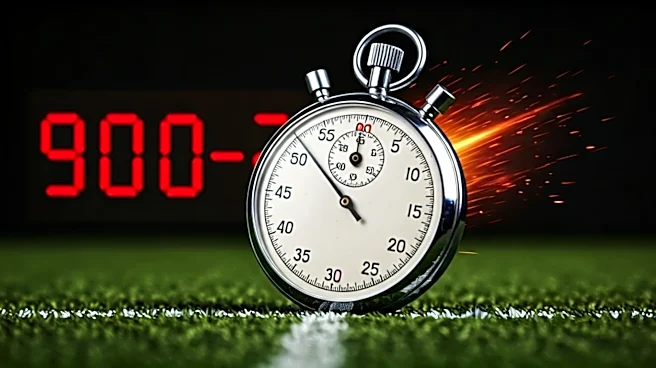
First, let's tackle the time added at the end of each half. This is called “stoppage time” or “injury time.” Unlike most major American sports, the clock in soccer never stops. It runs continuously from 0:00 to 45:00 in the first half and 45:00 to 90:00 in the second. But play does stop—for injuries, substitutions, lengthy goal celebrations, or VAR (Video Assistant Referee) reviews. Stoppage time is the referee’s attempt to add back the significant chunks of time lost during these interruptions. It is not a new period of play; it is an extension of regulation time. The fourth official will display a board showing the *minimum* number of minutes to be added, but the head referee has the final say and can let play continue even beyond that added amount
if there are further delays. Think of it as making the 90 minutes whole again.
When 90 Minutes Aren't Enough: Extra Time
Extra time is a completely different beast. This is what most Americans would recognize as “overtime.” It only occurs in the knockout stages of a tournament (like the World Cup, Champions League, or MLS Cup Playoffs) when a winner is absolutely required. If a match is tied after the full 90 minutes plus all of its stoppage time, the game doesn’t end. Instead, the teams play two additional 15-minute halves, known as extra time. Unlike stoppage time, this is a formally scheduled, separate period of play. There is a short break before it begins, and the teams switch ends at the halfway point. If the score is still tied after those 30 minutes of extra time, the match is typically decided by a penalty shootout. Extra time is a test of endurance, strategy, and nerve, played by athletes already exhausted from a full game.
The Myth: It’s All Just ‘Overtime’
The myth new fans fall for is using the terms interchangeably or thinking stoppage time is a form of overtime. They are fundamentally different in purpose and application. Calling stoppage time “extra time” is the cardinal sin. Here’s the simplest way to frame it: Stoppage time is part of the regular 90-minute game. Extra time is a method to break a tie *after* the regular game has concluded. Every single professional match has stoppage time, but the vast majority of matches will never go to extra time. Conflating the two is like confusing a fourth-quarter two-minute warning in the NFL with a full overtime period. One is about managing the end of regulation, while the other is a new phase of competition entirely.
From Tactics to Heartbreak
Understanding this distinction reveals a deeper layer of soccer strategy. In the dying minutes of a regular game, a team that is winning will often try to “waste time” legally—taking forever on throw-ins or feigning injury—to limit the amount of actual play and eat into the referee’s estimated stoppage time. Conversely, a team that’s losing will play with frantic urgency, trying to make things happen before the final whistle. This is where the magic and agony of stoppage time happens—think of Manchester United’s two goals after the 90-minute mark to win the 1999 Champions League final. Extra time, meanwhile, is about attrition. Managers must decide whether to push for a winner and risk conceding, or play conservatively and take their chances in a penalty shootout. The entire tactical dynamic of the game changes, creating a unique and grueling spectacle that has decided many of the sport’s biggest prizes.