





The Franchise's History of Broken, Not Evil
The secret to Toy Story’s success has never been its heroes, but its villains. They aren’t cackling megalomaniacs; they are reflections of a toy’s deepest fears. In the first film, Sid Phillips wasn’t evil, just a creative, oblivious kid who didn’t know
toys were alive. The horror was rooted in his ignorance, not malice. Stinky Pete from *Toy Story 2* was a far more complex antagonist. Embittered by decades of being left in his box, his villainy stemmed from a heartbreaking fear of abandonment and the sting of unfulfilled purpose. He wanted to preserve himself in a museum, choosing sterile immortality over the risk of a child’s fleeting affection.Then came Lotso Huggin’ Bear, a pink, strawberry-scented tyrant whose cruelty was born from betrayal. He was loved, lost, and then replaced, a trauma that curdled his heart and turned Sunnyside Daycare into a fluffy prison. Even *Toy Story 4*’s Gabby Gabby was a sympathetic figure, a doll whose manufacturing defect denied her the one thing she craved: the love of a child. Each of these antagonists forces Woody and the audience to confront a terrifying question: What happens when a toy’s reason for being is taken away? They are all cautionary tales, ghosts of playtime future, and that’s why they resonate.
The 'Tech is Bad' Trap
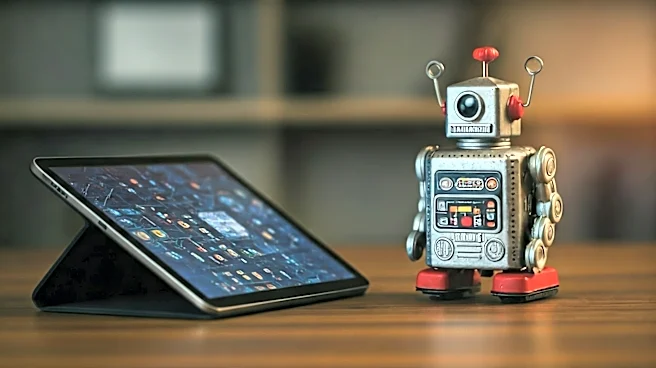
This brings us to the rumored screen-time theme of *Toy Story 5*. The easiest, laziest path would be to position a talking iPad or a sentient gaming console as the new villain. It’s a narrative that taps into modern parental anxiety, a ready-made conflict that feels contemporary. But it would be a profound betrayal of the franchise’s emotional intelligence.Making “tech” the bad guy reduces a complex issue to a simple binary: toys good, screens bad. This isn’t a toy’s existential crisis; it’s a parent’s op-ed. The *Toy Story* universe thrives on seeing the world from the toys’ perspective. Their fear isn’t that a child is using an iPad. Their fear is what that iPad *represents*: irrelevance. The true conflict isn’t a battle against a gadget, but the struggle to find purpose in a world where the very nature of “playtime” is changing. A villain that’s just a sneering piece of hardware would be as one-dimensional as Emperor Zurg was before he became a punchline.
Finding a Worthy Digital-Age Antagonist
So, how can Pixar create a villain worthy of the digital age? The antagonist shouldn’t be the technology itself, but a character shaped by it. Imagine a new kind of toy: a physical action figure tied to a massively popular online game. This toy’s entire worldview is defined by digital metrics—achievements, daily logins, and the ephemeral glory of a global leaderboard.This character wouldn’t see “play” as a bond between a child and a toy, but as a series of objectives to be completed. They might view Woody’s devotion to one kid as inefficient and sentimental. Their goal might not be to harm the other toys, but to “optimize” playtime, turning Andy’s—or Bonnie’s—room into a place of joyless, metric-driven engagement. This character wouldn’t be evil; they would simply be operating on a completely different, and deeply alien, understanding of what it means to be a toy. The conflict becomes philosophical: is a toy’s purpose to be loved or to be used?
The Ultimate Fear: From Obsolescence to Extinction
For four films, the core anxiety has been obsolescence—being replaced by a newer toy. *Toy Story 5* has the opportunity to explore a far more terrifying concept: extinction. The threat isn’t being sent to the attic, but the possibility of a world where attics are no longer needed because physical toys themselves have become a relic. The true antagonist is the creeping idea that the sacred bond between a child and their favorite toy is no longer essential.This raises the stakes higher than ever before. Woody, Buzz, and the gang wouldn’t just be fighting to be played with; they’d be fighting for their very reason to exist. A villain that embodies this digital-first ethos—one who genuinely believes that the messy, emotional, imaginative world of physical play is inferior to the clean, perfect, and endlessly repeatable loops of a digital one—is the kind of complex, heartbreaking foe this franchise deserves. They would be a mirror to Woody, not an opponent. They would be what he could become if he ever lost faith in the power of a child’s love.