





4. Toy Story 4 (2019)
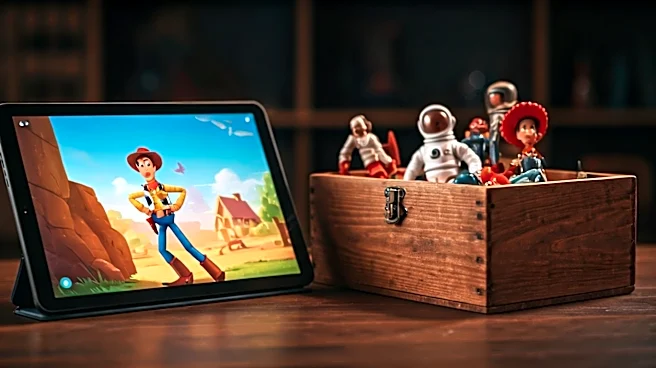
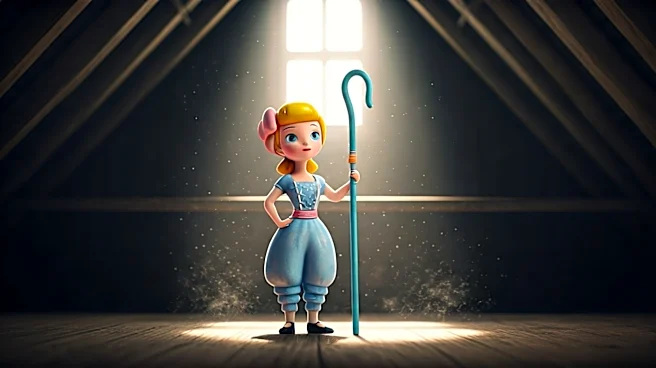
Ending a story that already had a perfect conclusion is a high-wire act, and 'Toy Story 4' doesn't quite stick the landing. The ending, which sees Woody leave his friends to live a life of existential freedom with Bo Peep, is a bold choice. On emotional
honesty, it scores high for Woody’s personal arc; he finally moves past his need for a child’s validation. But on narrative closure, it falters. It breaks up one of cinema’s most iconic duos, leaving Buzz and the gang with a shockingly abrupt farewell. The franchise pressure here is palpable. After 'Toy Story 3' provided a book-end for Andy’s story, this felt like an answer to a question nobody asked, driven more by a desire to extend the IP than by narrative necessity. It’s a thoughtful ending for one character, but a jarring one for the franchise as a whole.
3. Toy Story (1995)
The original ending is a masterclass in resetting the board while showing growth. Woody and Buzz, now friends, watch from the window as Andy receives a puppy for Christmas. It’s a perfect punchline that solidifies their bond with a shared, knowing glance of mild panic. For a self-contained film, its narrative closure is absolute; the central conflict is resolved, the hierarchy of the toy box is restored with a new sense of camaraderie. Its emotional honesty is simple and effective—rivals have become partners. The franchise pressure was of a different kind: to prove that a computer-animated film could even work. There were no thoughts of a cinematic universe here, only the need to tell one great story. It’s a perfect chapter ending, setting the stage for future adventures without demanding them. Its simplicity is its strength, but it lacks the thematic weight of later entries.
2. Toy Story 2 (1999)
This is where the franchise grew up. The ending of 'Toy Story 2' isn’t just a happy return; it’s a profound philosophical statement. After confronting his own obsolescence and the temptation of immortal, unloved life in a museum, Woody chooses to return to Andy, knowing his time is finite but meaningful. The emotional honesty is off the charts, encapsulated in Jessie’s tragic backstory and Woody’s ultimate choice. The narrative closure is deeply satisfying, bringing Jessie and Bullseye into the fold and defeating the loathsome Stinky Pete. The franchise pressure was to create a worthy sequel, and Pixar responded by deepening the stakes. This ending reframes the entire premise, from a simple story of a favorite toy to a meditation on purpose and the bittersweet reality of love and loss. It’s the moment the saga found its soul.
1. Toy Story 3 (2010)
Perfection. For a decade, this was the undisputed final word on 'Toy Story,' and for good reason. After a harrowing brush with oblivion in a furnace—an astonishingly dark and moving scene of quiet acceptance—the toys end up with Andy. In the film’s masterful climax, Andy doesn’t just give his toys to a new child, Bonnie; he bequeaths his childhood to her. He plays with them one last time, introducing each friend and sharing what made them special. The narrative closure is absolute, completing Andy’s journey from owner to guardian of memory. The emotional honesty is almost unbearable, a cathartic release for every viewer who ever had to put away childish things. The franchise pressure was immense: to conclude a beloved trilogy. Pixar used that pressure to create diamond, crafting an ending so definitive, so earned, and so emotionally resonant that it stands as one of the greatest conclusions in film history. It wasn’t just an ending; it was a graduation.