









The Hunger Games is returning to the big screen with 'Sunrise on the Reaping', a story centered on Haymitch Abernathy's bloody victory. This raises a tantalizing question: how could modern IMAX cameras make his legendary arena scenes unforgettable?
A Quell of Unprecedented Scale
First,
a quick refresher for those who haven't revisited the books recently. Haymitch’s victory wasn't just another Hunger Games; it was the Second Quarter Quell. Every 25 years, the Capitol introduces a cruel twist, and this one was grimly simple: each district had to send double the tributes. Instead of 24 kids fighting to the death, there were 48. This immediately changes the scope of the story. The bloodbath, the alliances, and the sheer chaos of the arena were designed to be a spectacle of overwhelming force, a reminder from the Capitol that it could double the pain whenever it pleased. The film adaptation needs to capture this sense of a crowded, desperate, and sprawling conflict from the moment the gong sounds.
The Power of an Expanding Screen
This is where IMAX becomes more than just a big screen; it becomes a storytelling tool. Director Francis Lawrence, who is returning for 'Sunrise on the Reaping', used this technique masterfully in 'Catching Fire'. For the entire first half of that film, the audience sees the world in a standard widescreen format. But the moment Katniss rises into the arena for the 75th Games, the screen physically expands, opening up to IMAX's taller 1.90:1 aspect ratio. The effect is breathtaking, creating a powerful sense of immersion and awe as we discover the new battlefield alongside her. Applying this same technique to Haymitch’s Quell could create an equally iconic cinematic moment, thrusting viewers into the massive, 48-tribute arena with a sudden, overwhelming sense of scale.
A Deceptively Beautiful Death Trap
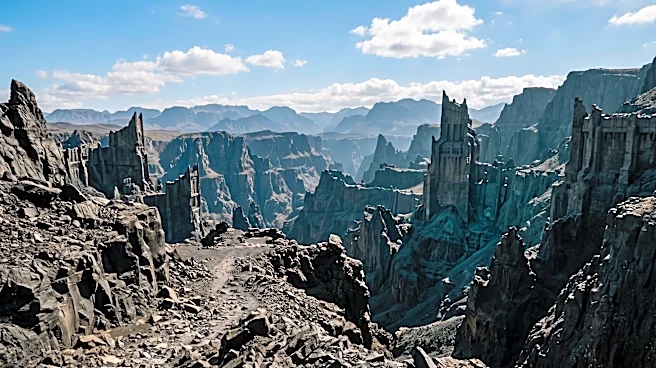
Haymitch’s arena wasn’t a grim jungle or a ruined city; it was described as the most beautiful place imaginable. It was a paradise of lush meadows, sweet-smelling woods, and a snow-capped mountain, all designed to lure the tributes into a false sense of security. The horrifying twist was that everything—from the water in the streams to the scent of the flowers—was lethally poisonous. The only safe resources were at the Cornucopia. IMAX's high-resolution cameras excel at capturing immense detail and vibrant color, which would make this 'poison paradise' feel stunningly real and deeply treacherous. Imagine seeing that deceptive beauty filling your entire field of vision, making the world feel both overwhelmingly gorgeous and suffocatingly dangerous. Every tempting piece of fruit or beautiful butterfly becomes a palpable threat.
Clarity in the Chaos
With 48 tributes, the action sequences in Haymitch's Games are bound to be complex. One of the key benefits of the IMAX format is its staggering clarity and resolution. Where a standard camera might lose detail in a wide, chaotic shot, an IMAX camera captures a crispness that allows the audience to track multiple moving parts. This would be crucial for understanding the dynamics of a 48-person bloodbath and the shifting alliances. More importantly, it would heighten the impact of Haymitch's most famous moment. He won not with brute force, but by cleverly using the arena's force field to ricochet the final opponent's weapon back at her. Seeing this moment of brilliant defiance on a massive, crystal-clear IMAX screen would give his victory the legendary, fist-pumping impact it deserves, showing exactly how he outsmarted the Capitol itself.