





The Tactical Gamble
In an era of sophisticated, possession-based systems, the long ball is often dismissed as a primitive tactic. But in the pressure cooker of a cup match, it’s a powerful and deliberate choice. A well-executed long pass is not a desperate hoof upfield;
it’s a calculated risk to bypass the opposition’s press and skip the methodical work of building through midfield. When a team is pinned back or struggling to find rhythm, a direct, aerial ball to a forward can relieve pressure, push the defensive line back, and turn a defensive situation into an attacking one in a matter of seconds. Modern coaches even integrate it into possession-based styles as a way to punish teams that press too high, exploiting the open space left behind their defensive line. It is, in essence, a tactical reset button, a way to change the question the defense is being asked.
Shattering the Defensive Shape
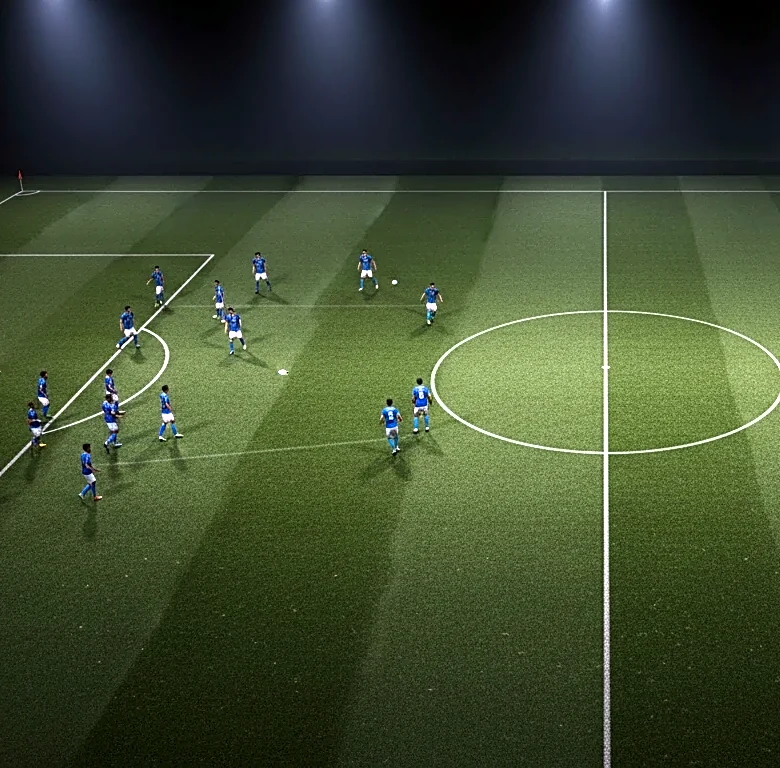
A patient, passing attack allows a defense to remain organized, shifting as a compact unit. A perfect long pass shatters that organization instantly. The goal is to turn disciplined defenders around, forcing them into a panicked footrace toward their own goal—a situation no back line ever wants to be in. The ball hangs in the air, a moment of suspended animation where thousands of possibilities exist. For the attacker, it’s a chance to time their run onto the ball in stride. For the defenders, it’s a moment of pure reaction, where one misjudged header or a single yard of lost pace can be fatal. The pass creates a one-on-one duel, stripping away the safety of the collective and isolating a striker against a goalkeeper or a lone defender. This is how space is manufactured out of thin air, turning order into chaos.
The Psychology of the Switch
More than any tactical shift, the long pass that leads to a goal is a profound psychological blow. A team can dominate possession for 20 minutes, feeling in complete control, only to see their hard work undone by a single kick of the ball. The suddenness is deflating and can plant seeds of doubt. Was all that effort for nothing? Can we no longer trust our high defensive line? For the scoring team, the effect is the opposite: pure electricity. It provides a massive surge of confidence and belief, reinforcing the idea that they are always just one pass away from changing the game. This is especially true in knockout tournaments, where momentum swings are everything. We’ve seen it time and again in the 2026 World Cup, where moments of individual brilliance have decided tense matches. A successful long-ball goal tells a team that their direct approach is working, fueling their strategy and galvanizing the fans.
A Canvas for Genius
This single play has provided the canvas for some of soccer’s most iconic moments. Think of the vision of a master like Paul Scholes or Andrea Pirlo, who could command the entire field with one swing of the foot. They didn't just kick the ball long; they delivered it with the precision of a quarterback hitting a receiver in stride. We see this artistry in today’s game with players like Kevin De Bruyne, whose curling through balls from deep seem to bend the rules of physics. In the recent 2026 World Cup knockout stage, Gabriel Martinelli’s late winner for Brazil against Japan came from just such a decisive, defense-splitting ball that broke a tense deadlock. These aren't just assists; they are statements of intent, moments of genius that see a pass that no one else in the stadium, and sometimes not even their teammates, saw coming. It’s the ultimate expression of vision and technique under pressure.