
The Feeling of Disconnection
It’s a familiar frustration for any seasoned viewer of televised stadium concerts. An artist you know commands massive stages—think Luke Combs, Carrie Underwood, or Morgan Wallen—is pouring their heart
out at Nashville's Nissan Stadium. You can hear the roar of the crowd, see the impressive light show, and yet you feel like you’re watching the concert from the parking lot. The emotional intimacy that defines a great country performance gets lost in translation. The artist looks like a tiny figure on a giant stage, their facial expressions are invisible, and the connection between them and the audience feels abstract rather than immediate. This isn't a problem with the performance itself; it’s a problem of perspective, engineered by a single, recurring production decision.
Identifying the Culprit: The 'Epic' Wide Shot
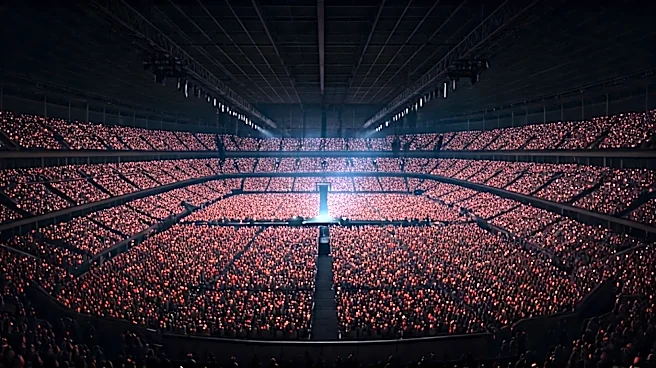
The mistake is the over-reliance on the wide shot. It’s the sweeping crane camera that soars over the audience, the high-and-wide angle from the back of the stadium, the drone shot showing the skyline. On paper, these shots make sense. A producer’s instinct is to convey the sheer scale of CMA Fest. They want to show the viewer at home, “Look at how massive this is! Look at all these fans!” It’s a visually impressive flex. But in a three-and-a-half-minute song, every second spent on a shot that makes the artist look like a spec on the horizon is a second where the story of the song is lost. Country music, at its core, is about storytelling and emotional connection. When a director chooses an epic wide shot over a tight close-up of a singer’s eyes as they deliver a poignant lyric, they are prioritizing the spectacle of the event over the soul of the performance. The result? The event feels big, but the artist and their song feel small.
The Director's Dilemma
To be fair, this isn't born from incompetence. It’s a result of a genuine dilemma in live television production. Directors are tasked with translating a three-dimensional, sensory-overload experience into a two-dimensional frame. The feeling of being in a stadium—the bass vibrating in your chest, the energy of the person next to you, the sheer physical scale—is impossible to replicate on TV. So, they reach for the tool that most directly communicates that scale: the wide shot. They are trying to give the home viewer a sense of the event’s magnitude. The fear is that if they stay in tight on the artist for too long, the viewer will forget the context and the show will feel like a sterile studio performance. The goal is to find the perfect rhythm between showing the cause (the artist's performance) and the effect (the massive crowd's reaction), but the temptation to linger on the impressive 'effect' shots is often too strong to resist.
Getting It Right: The Power of Proximity
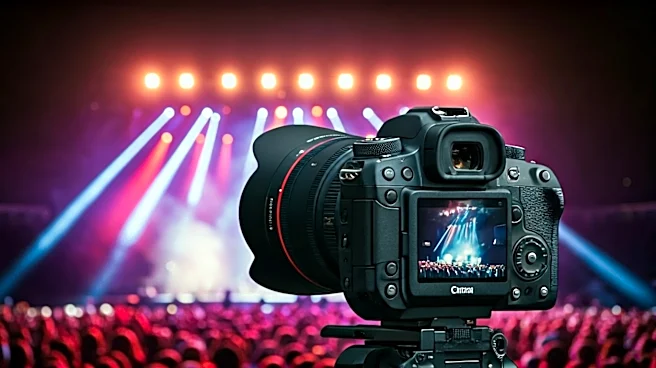
The best live broadcasts understand that television is an intimate medium. The magic isn’t in showing us how far away the artist is; it’s in giving us a better-than-front-row seat. The solution is a confident, disciplined cutting rhythm that serves the song. It starts with a wide shot to establish the scene, but quickly moves in. A medium shot frames the artist from the waist up, letting us see their body language and guitar work. Then, the real money shot: the close-up. A tight shot on the singer’s face as they hit a high note, a close-up on a fiddle player’s flying bow, or a shot of a fan in the front row singing along with tears in their eyes. These are the moments that create a powerful emotional narrative. They make the viewer feel like they are part of a shared experience, not just observing an event from a distance. The scale is implied by the sound and the occasional, well-timed wide shot, but the story is told in the details.