



The World Before Holly: 1950s Conformity
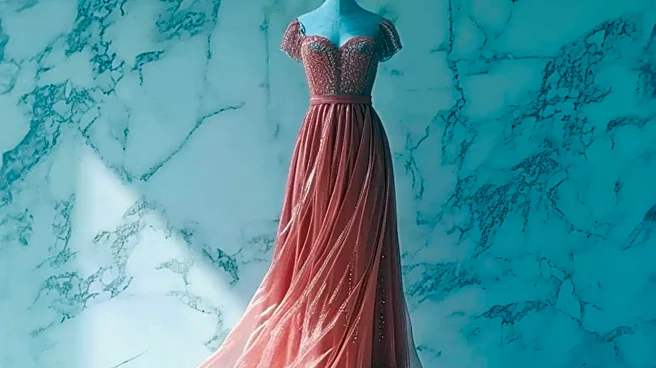
To understand the impact of Holly Golightly's wardrobe, you first have to picture the fashion that came before it. The 1950s were dominated by Christian Dior's "New Look," a silhouette that celebrated an exaggerated femininity after the practical, utilitarian
clothing of the war years. This style was all about soft shoulders, cinched "waspy" waists, and huge, billowing skirts that often required layers of petticoats to achieve their shape. The hourglass figure was paramount, sometimes enhanced with girdles or padded hips to create the desired curve. This was the fashion of the homemaker, beautiful and opulent but also restrictive, reflecting a post-war push for women to embrace domesticity.
Enter the Modern Woman: A New Silhouette
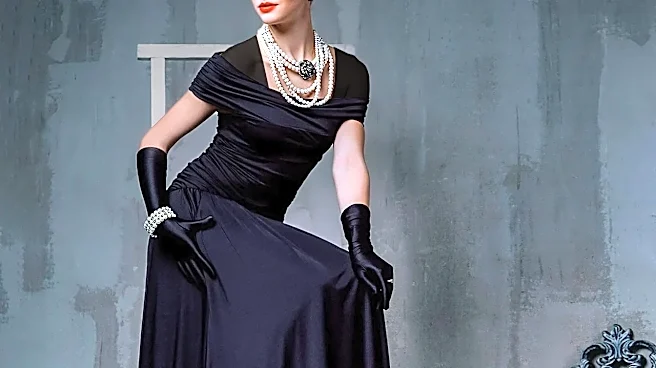
Then came Breakfast at Tiffany's in 1961. Audrey Hepburn's Holly Golightly presented a radically different ideal. Instead of voluminous skirts and constricting shapes, her look was defined by clean lines, sleek silhouettes, and an effortless simplicity. The star of the show was, of course, the little black dress designed by Hubert de Givenchy. It was elegant and sophisticated but also possessed a modern ease. It followed the body's natural lines without constraining them. This was complemented by other key pieces: slim-fitting sheath dresses, a stylish trench coat, and even casual jeans and a sweater, all of which signaled independence, mobility, and a cosmopolitan spirit that felt entirely new.
A Deliberate Departure
The contrast was the entire point. Holly Golightly's style was a rejection of the previous decade's domestic ideal. She was a single woman navigating New York City on her own terms, and her clothes reflected that freedom. The simple, versatile nature of her wardrobe, particularly the little black dress, represented a departure from high-maintenance, structured fashion. It was accessible yet aspirational. While 1950s fashion often felt rooted in an American suburban ideal, Holly's look, courtesy of the French designer Givenchy, was distinctly European and urbane—sleek, sophisticated, and a little mysterious.
The Power of a Partnership: Hepburn and Givenchy
This fashion revolution was the product of one of the most famous collaborations in style history: the friendship between Audrey Hepburn and Hubert de Givenchy. They first worked together on the 1954 film Sabrina, and from then on, Hepburn insisted that Givenchy design her wardrobe for her films. He understood her gamine physique and her personal style, creating clothes that emphasized her long neck and slim frame rather than trying to hide them or force them into a conventional mold. For Hepburn, Givenchy's clothes weren't just costumes; she famously said, "His are the only clothes in which I am myself." He was, in her words, a "creator of personality," and the personality he helped create for Holly Golightly redefined modern femininity for a generation.