






1. The Awkward Science Lecture
In the novel, Ryland Grace's understanding of Astrophage is built through discovery and experimentation. An easy but disastrous trap would be to have a character—perhaps Eva Stratt—deliver a dense, 5-minute monologue explaining everything we need to know.
This 'science dump' kills narrative momentum. It’s the difference between being told how an engine works and being shown it in action. The movie, directed by Phil Lord and Christopher Miller, needs to trust its audience to connect the dots as Grace does, rather than treating them like they’re in a lecture hall.
2. Turning It Into a CGI Monster
Astrophage is terrifying because it’s a force of nature, an indifferent microbe simply following its biological imperative. The temptation in a blockbuster might be to give it monstrous qualities—a shrieking sound, a menacing movement, or a face-like structure. This would cheapen the concept. The horror of Astrophage is its simplicity and scale, like a mold that just happens to live on stars. Giving it a generic monster-movie treatment would undermine the unique, cerebral threat that Andy Weir created. The fear is in what it does, not what it looks like.
3. Showing Too Much, Too Soon
Part of the book's genius is its pacing. We learn about Astrophage in layers. First, it’s a mysterious phenomenon dimming the sun. Then, a microbe. Then, a potential fuel source. Then, a creature with a complex life cycle involving Venus. A film might try to streamline this by revealing all its properties upfront. This would be a mistake. The gradual revelation of what Astrophage is and what it can do is directly tied to the audience’s journey with the amnesiac Ryland Grace. Preserving that slow burn of discovery is essential for the plot's many twists to land.
4. Assigning It Malicious Intent
The conflict in “Project Hail Mary” isn't good versus evil; it's intelligence versus a natural disaster. Astrophage isn't a villain trying to destroy Earth. It's just existing. An adaptation might be tempted to personify it, creating a narrative where humanity is 'at war' with a malevolent alien swarm. This fundamentally misunderstands the story. The plot’s resolution comes from scientific understanding and collaboration, not from defeating a traditional antagonist. Making Astrophage evil turns a brilliant problem-solving story into a generic action flick.
5. Giving It a Pointless Deep-Dive Origin
Where did Astrophage come from? The book grounds it in the fictional world, suggesting it evolved in the Tau Ceti system on a planet called Adrian. What the film must avoid is a lengthy, unnecessary prequel-style sequence showing its evolutionary history. The mystery is part of the point. We don't need to see Astrophage evolving over millennia. We just need to understand its properties as they relate to the immediate crisis. A flashback to ancient alien ooze would be self-indulgent and detract from the urgent, present-day narrative.
6. Dumbing Down the 'How'
Andy Weir's fans appreciate the plausible scientific grounding of his concepts. Astrophage stores energy, converts it to mass, and uses it for propulsion in ways that are, while fictional, based on real principles like mass-energy conversion. A film could easily replace this with vague 'techobabble' or sci-fi hand-waving. It would be a disservice to the material. The filmmakers don't need to include every equation, but they must respect the internal logic of how Astrophage works as a radiation shield, a fuel source, and a climate threat. The 'how' is what makes the story feel real.
7. Forgetting It’s Also the Solution
Astrophage is both the problem and the solution. It’s dimming the sun, but it’s also the only thing that can power the Hail Mary ship for its interstellar journey. This beautiful irony is central to the plot. An oversimplified adaptation might focus only on its destructive nature, treating the 'Astrophage-as-fuel' aspect as a convenient plot device. The movie needs to clearly establish this duality. The very thing threatening humanity is also enabling its only hope for survival, a paradox that gives the story much of its narrative richness.
8. Leaning on Narration Instead of Action
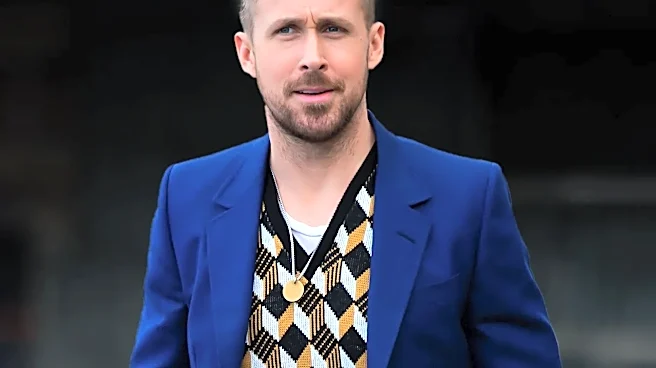
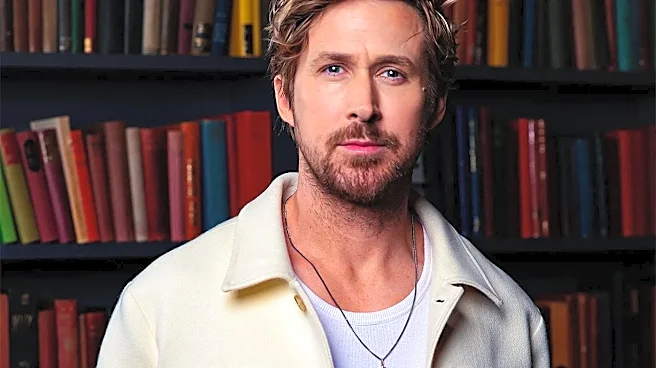
Ryland Grace, played by Ryan Gosling, spends much of the book thinking through problems. A lazy adaptation would translate this into constant voiceover, with Grace narrating his scientific process. The challenge for directors Lord and Miller is to show this process. Let us see him conduct the experiments. Let us watch him fail, get frustrated, and have that 'eureka' moment. Visual storytelling, not expository narration, is the key. Showing Grace discover that Astrophage's predator, Taumoeba, is the key to saving the sun will be far more powerful than having him simply explain it to us.