





The Pop-Up Mega-Corporation
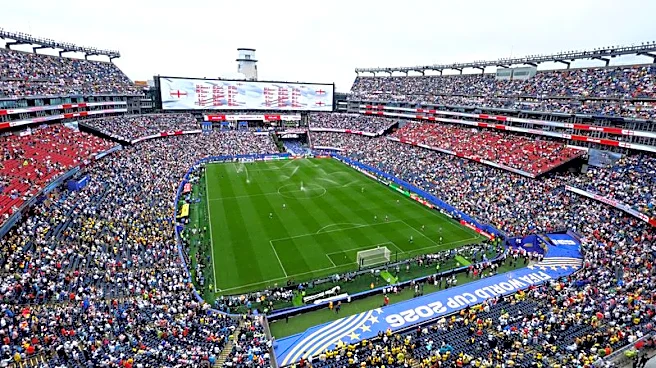
Imagine launching one of the world's largest companies, operating it at maximum capacity for one month, and then dissolving it. That’s the World Cup. For a few weeks, FIFA and the host nation run a logistical behemoth responsible for ticketing, security,
transportation, hospitality, and staffing for millions of fans and thousands of athletes and media members. This requires building or retrofitting a dozen stadiums, coordinating dozens of training sites, and managing a workforce of tens of thousands of volunteers and contractors. Unlike a permanent business like Apple or Amazon, the World Cup is a 'pop-up' enterprise on a national scale. Studying its supply chain management, crisis response planning, and operational execution provides more intense, concentrated lessons than a decade of regular business operations.
A Masterclass in Media Rights
The single largest source of revenue for FIFA is the sale of television broadcasting rights. This isn't just a simple deal with one global network; it's a sophisticated strategy of slicing and dicing rights by territory to maximize income. FIFA negotiates separate, massive deals in Europe, South America, North America, Asia, and beyond, often sparking intense bidding wars between national broadcasters who know the tournament is a guaranteed ratings blockbuster. For advertisers, it’s one of the last remaining global cultural events that can deliver a live, engaged audience of billions, making commercial slots during matches some of the most expensive on the planet. The 2018 and 2022 World Cup cycle, for example, generated over $3.5 billion in broadcasting revenues alone, proving that in a fragmented media landscape, premium live content is king.
The Sponsorship Pyramid Scheme
FIFA’s sponsorship structure is a brilliant, multi-layered pyramid designed to extract maximum value from global brands. At the top are the “FIFA Partners” (think Visa, Adidas, Coca-Cola), who pay hundreds of millions for long-term, category-exclusive rights across all FIFA tournaments. They are woven into the very fabric of the event. Below them are the “World Cup Sponsors,” who pay a still-hefty fee for global rights associated only with the main tournament. Finally, a third tier of “Regional Supporters” allows companies to activate in specific continents. This tiered model allows FIFA to sell the same event multiple times over to different companies with different budgets and goals, creating a nearly $2 billion revenue stream from marketing rights for a single four-year cycle. It’s a textbook example of market segmentation and value-based pricing.
The High-Stakes Nation-Branding Bet
For the host nation, the World Cup is the most expensive marketing campaign in history. Countries like Qatar, Russia, and Brazil have spent tens, and in Qatar’s case, reportedly over $200 billion, on infrastructure—not just stadiums, but airports, highways, and hotels. The return on investment isn't measured in ticket sales, but in “soft power.” Hosting is a chance to project an image of modernity, efficiency, and openness to a global audience of billions. It’s a high-stakes gamble to rebrand a nation, attract future tourism, and draw foreign investment. While the direct economic benefits are hotly debated and often fall short of projections, the intangible prize of shaping international perception is what convinces governments to write the blank checks. It's the ultimate case study in the risks and rewards of investing in national reputation.