







The Myth: A Simple Case of 'It Doesn't Fit'
When a celebrity's dress gives way at the seams on the world's most-watched red carpet, the internet's verdict is swift and merciless. The narrative writes itself: the star, in a moment of vanity, tried to squeeze into a size too small. Maybe they enjoyed the Riviera's croissants a little too much the night before. Or perhaps it’s a story of poor planning and last-minute desperation. The myth is simple and a little bit judgmental—it boils down to the dress being too tight and the person wearing it. It’s an easy, relatable drama. But in the world of haute couture, where a single gown can involve hundreds of hours of labor, 'it was too small' is almost never the real story.
Reality: The Humidity Is a Fabric Saboteur
The number one culprit behind many a snapped zipper isn't a person, but
the air itself. Cannes in May is famously humid. The French Riviera’s proximity to the sea creates a dense, moisture-laden atmosphere that can wreak havoc on delicate fabrics. Materials like silk, organza, tulle, and even fine wools are hygroscopic, meaning they absorb water from the environment. When a dress that was perfectly fitted in a dry, air-conditioned Los Angeles studio or a Parisian atelier is exposed to the damp coastal air, the fibers can swell, tighten, or even shrink. A seam that had breathing room an hour before can become a point of extreme tension. That slight, almost imperceptible change is often all it takes for a delicate closure to give up under pressure.
Reality: Invisible Zippers Are Fragile by Design
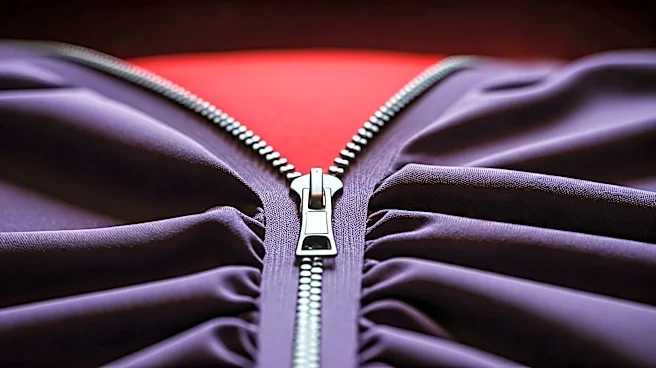
Take a look at the zipper on your favorite pair of jeans. It’s likely a sturdy, metal-toothed beast designed for durability. Now, imagine that on the back of a gossamer Valentino gown. It would be a visual crime. To maintain the seamless, fluid line of a couture creation, designers use 'invisible' zippers. These zippers have tiny, fine teeth, often made of nylon, that are hidden behind the fabric. They are chosen for their aesthetics, not their strength. When you combine this delicate piece of hardware with the immense structural tension of a gown—which might include heavy beading, corsetry, and boning, all pulling the fabric taut—the zipper becomes the single weakest point. It’s not failing because the dress is too small; it’s failing because it’s a tiny, fragile component tasked with holding a masterpiece together against the forces of physics.
Reality: The Dress Has a Grueling Travel Itinerary
We imagine a couture gown is born in a pristine studio and magically appears on the celebrity moments before she steps onto the carpet. The reality is far more chaotic. A dress might be flown from Paris to New York for a first fitting, then to Los Angeles for a final check, and then packed into a trunk and flown across the Atlantic to Cannes. It’s steamed, pressed, tried on, and adjusted multiple times. Each fitting, each journey, and each bit of handling puts stress on its delicate construction. Seams are tested, threads are pulled, and the zipper is zipped and unzipped repeatedly. By the time it arrives at the Hotel Martinez for the main event, the garment has been through more than most of our clothes go through in a year. It's less of a pristine object and more of a weary traveler.
Reality: A Wardrobe Malfunction Is a Team Effort
When a zipper broke on Kelly Rowland’s gorgeous blue gown at Cannes in 2024, photos captured not a moment of solo panic, but a team springing into action. Stylists and handlers immediately surrounded her, working to manage the situation with grace. This highlights the final truth: a red carpet look is the work of a small army. There's the designer, the seamstresses, the stylist who chose it, and the assistants who help dress the star. A malfunction isn't a personal failure but a logistical one—a small breakdown in a highly complex operation. The star is merely the final, poised person in a long chain of custody. Their ability to handle the mishap with a smile, as Rowland did, is the real performance.