







The Man Who Made Late Night Personal
To understand Jack Paar’s reign on The Tonight Show from 1957 to 1962 is to understand a fundamental shift in television. Paar didn't just tell jokes; he told stories. He didn't just interview celebrities; he engaged in deep, often emotional, conversations.
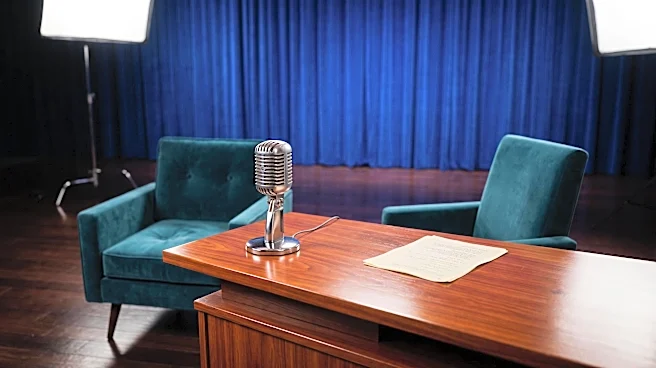
The show, which was even marketed as The Jack Paar Show, became a national obsession precisely because he was so unpredictable. He feuded with newspaper columnists like Walter Winchell and Ed Sullivan, cried on air, and treated his desk as a psychiatrist's couch. Unlike the variety-show formats that preceded him, Paar made the host's personality the main event, creating a direct, intimate connection with millions of Americans who stayed up late to see what he would do or say next.
The Joke That Wasn't a Joke
The "hidden sketch" was, in fact, not a sketch at all, but a simple, mildly cheeky joke. On February 10, 1960, during a taping, Paar recounted a story he’d reportedly heard from his teenage daughter. It involved an English woman staying in Switzerland who was looking for a room. She wrote to the local schoolmaster to ask if the lodging had a "W.C." — a common British term for "water closet," or toilet. The schoolmaster, unfamiliar with the term, mistakenly believed she was asking about a "Wayside Chapel." The ensuing confusion, detailed in a series of imagined letters, formed the basis of the tame, pun-driven anecdote. For a show built on Paar’s edgy monologues, it seemed utterly harmless.
The Walk-Off Heard 'Round the World
Harmless as it was, the term "water closet" sent NBC's censors into a panic. Without informing Paar, they cut the four-minute segment from the broadcast before it aired. When Paar found out, he was enraged—not just by the censorship, but by the implication that he had done something dirty. The next night, on February 11, 1960, he walked out to his desk, visibly emotional. After a few minutes, he turned to the camera and announced his departure. "I am leaving The Tonight Show," he said, his voice trembling. "There must be a better way of making a living than this." He stood up and walked off the set, leaving his stunned announcer, Hugh Downs, to finish the final hour of the broadcast alone. It was a moment of television so raw and real it became an instant cultural touchstone.
The Standoff and Triumphant Return
Paar's walk-off wasn't a stunt; he disappeared for nearly a month. The network, faced with a PR disaster and a hole in its lucrative late-night schedule, eventually relented. They apologized, and on March 7, 1960, Paar returned to a hero's welcome. He strolled on stage, struck a pose, and delivered one of the most famous lines in TV history: "As I was saying before I was interrupted…" The audience roared. He then proceeded to tell the infamous "W.C." joke in its entirety, without a peep from the censors. The battle was over, and Paar had won. He had proven that the star of the show had more power than the network suits, establishing a precedent for creative control that would empower late-night hosts for generations to come. This one incident encapsulated his entire era: a constant, personal fight for authenticity against the corporate machine.