






The Performer's Dilemma
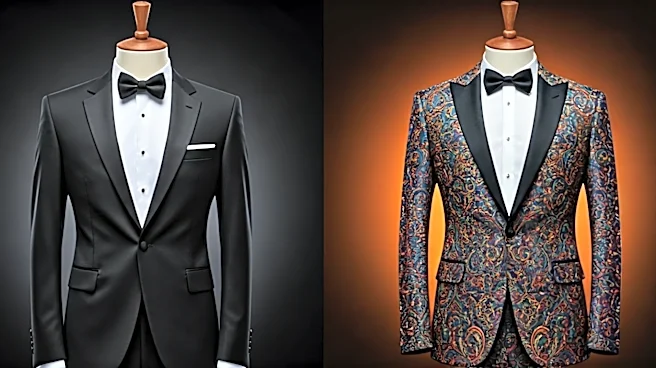
A traditional suit is a beautiful thing. It's built for structure, clean lines, and projecting authority from a boardroom chair or cocktail bar stool. It is, by its very nature, restrictive. The canvas, lining, and wool are designed to hold a shape, not to accommodate a sudden lunge, a high-kick, or a spin. For a performer, a standard off-the-rack or even a bespoke suit is a costume of confinement. The moment they need to connect with the audience through explosive movement, the garment threatens to betray them with a popped seam or a torn crotch. This is the fundamental problem celebrity tailors are hired to solve: how to make a suit look like armor but feel like activewear.
It Starts with the Fabric
The first and most crucial innovation is in the material itself. Forget
the rigid, non-stretch wools of your father’s closet. Today’s performance suits are crafted from high-tech fabric blends that would be unrecognizable to a mid-century tailor. The key ingredient is stretch. Tailors and designers now work with wools woven with a small percentage of elastane or Lycra (typically 2-4%), which provides crucial give without compromising the luxurious look and drape of the suiting. For even more demanding choreography, they might turn to technical knits or four-way stretch fabrics more commonly found in high-end athletic apparel. These materials are engineered to move with the body and snap back into shape, ensuring the suit looks just as sharp at the end of the performance as it did at the beginning.
The Hidden World of Gussets and Pleats
Even the best stretch fabric has its limits. The real genius lies in the hidden construction—the secret architecture that allows for an extreme range of motion. The most important tool in the tailor's arsenal is the gusset. This is a diamond-shaped piece of fabric inserted into high-stress areas, most commonly the armpit and the crotch. Instead of a single point where four seams meet, the gusset distributes stress across a wider area, allowing a performer to lift their arms high or drop into a squat without fear. Another trick is the 'action back,' a pair of pleats set behind the shoulder blades that expand when the arms are extended forward. It’s a feature borrowed from classic hunting jackets, now repurposed for the stage.
Reinforcing the Foundation
With all that movement, seams are under constant threat. Celebrity tailors don't just sew a seam; they fortify it. They often use a stronger, more elastic thread than is standard. Many will double-stitch or even triple-stitch critical seams, especially in the pants. Some go a step further, using techniques like bar tacking—a series of tight stitches used to reinforce stress points on jeans—on the corners of pockets and the base of the fly. Every potential point of failure is identified and reinforced, creating a garment that is deceptively durable. The goal is invisibility; the audience should see a flawless suit, not the painstaking work that keeps it from falling apart.
The 'Dress Rehearsal' Fitting
A standard suit fitting involves standing still while a tailor pins and marks. A performance suit fitting is a collaboration in motion. The tailor will have the artist wear the nearly finished garment and run through their actual choreography. They'll jump, lunge, spin, and slide right there in the studio. This is where the final, crucial adjustments are made. The tailor watches for any point of pulling or restriction, letting out a seam here, adding a bit more room in the shoulder there. It’s a dynamic process that ensures the suit is not just fitted to the artist's body, but to their specific performance. This final check is what separates a good suit from one that can truly survive the spotlight.