






The Engine of the Apocalypse
First, let's break down what the Petrova Line is within the world of the film. Based on the novel by Andy Weir, 'Project Hail Mary' posits a near-future where humanity discovers the sun is dimming at an alarming rate. The cause is a mysterious, microscopic
organism dubbed "Astrophage," which is consuming the sun's energy. Scientists first detect this phenomenon as a faint trail of infrared light connecting the Sun to Venus—a line named after its discoverer, Dr. Irina Petrova. This line, invisible to the naked eye, is the physical evidence of Earth's impending ice age. It's the story's inciting incident and its central threat. The entire plot is driven by a desperate mission to travel to Tau Ceti, a distant star that mysteriously remains unaffected, to figure out why it has no Petrova Line and find a way to save humanity.
Turning the Invisible into Awe
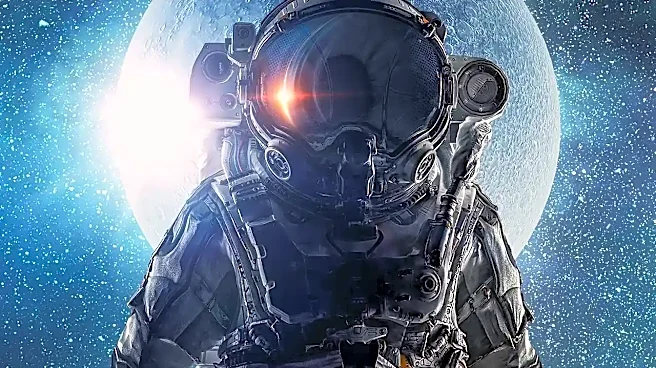
While the Petrova Line is a scientific concept in the story, directors Phil Lord and Christopher Miller transformed it into one of the film's most breathtaking visual sequences. The problem for the filmmakers was clear: how do you show something that characters can't see without a special scope? Their solution is a moment of pure cinematic grace. When astronaut Ryland Grace, played by Ryan Gosling, performs a spacewalk, he enters the stream of Astrophage. The film shifts its visual language, and the audience sees what Grace can only imagine: a swirling, ethereal vortex of pink and magenta light particles dancing in the void of space. The scene is praised by viewers as not just beautiful, but emotionally profound, capturing a moment of sublime wonder in the face of an existential threat.
The Practical Magic Behind the Motif
What makes this visual feat even more impressive is how it was created. In an era dominated by computer-generated imagery, the filmmakers opted for a stunningly practical effect. Cinematographer Greig Fraser, known for his innovative work on 'Dune: Part Two,' was the mastermind behind the sequence. To capture the otherworldly glow of the Astrophage, Fraser's team took an ARRI Alexa 65 camera and removed its infrared filter. They then built a cage of chicken wire around Ryan Gosling and packed it with hundreds of blinking infrared LEDs. To the naked eye on set, the scene looked like almost nothing—just an actor in a spacesuit surrounded by wires. But through the lens of the modified camera, the invisible infrared light was rendered as the gorgeous, swirling bokeh that appears on screen. This commitment to practical effects gives the Petrova Line a tangible, almost tactile quality that CGI often lacks.
Why It's More Than Just a Pretty Picture
This brings us back to the headline's claim. The Petrova Line isn't just a plot device or a cool special effect; it's a true visual motif that encapsulates the film's core themes. It represents the collision of hard science and profound human emotion. It is both the terrifying problem and a source of cosmic beauty. The decision to render this invisible threat as a scene of breathtaking wonder is a powerful narrative choice. It elevates the story from a simple disaster movie to a meditation on discovery, sacrifice, and the search for light in the darkness. The line is the mystery Grace must solve, the journey he must undertake, and the visual embodiment of the universe's terrifying but magnificent scale. It's the element that ties the scientific puzzle box of the plot to the beating heart of the story, making it the film's most essential and unforgettable image.