







From the Street to the Stage
Before luxury co-opted the look, distress was authentic. In the 1970s, punk rockers like The Ramones and the Sex Pistols wore torn denim and leather jackets not as a fashion choice, but because they were worn from constant use. [21, 23] This DIY aesthetic
was a symbol of rebellion against societal norms and polished consumerism. [19, 21] Safety pins weren't accessories; they were functional repairs that doubled as an anti-establishment statement. [6] By the 1990s, the grunge scene in Seattle, championed by bands like Nirvana and Pearl Jam, repurposed this attitude. [10] Kurt Cobain's thrift-store cardigans and ripped jeans weren't about creating a look; they were a rejection of the '80s flashy aesthetic, an embrace of an unpolished, anti-fashion stance. [10, 23] This was distress as a biography—a garment’s wear and tear told a story of its life. [21]
The Avant-Garde Reinterpretation
The transition from street to runway began with a group of revolutionary designers in the late '80s and '90s. They weren't just copying punk or grunge; they were dissecting the very idea of a garment. Belgian designer Martin Margiela became a key figure, pioneering a philosophy of "deconstruction." [29] At Maison Margiela, he would expose seams, turn clothes inside out, and use unconventional materials like old military fabrics or plastics. [4, 25] This wasn't about looking poor; it was a conceptual critique of fashion's obsession with perfection and authorship. [12, 16] Margiela, who famously remained anonymous, wanted the clothes to speak for themselves, questioning what gives a garment its value. [29] His iconic Tabi boots, with their split-toe design, and his simple four-stitch label became quiet symbols for those in the know. [4, 29]
The Philosophy of Wabi-Sabi
Simultaneously, Japanese designers like Rei Kawakubo of Comme des Garçons and Yohji Yamamoto were introducing a different, yet related, philosophy to Paris: wabi-sabi. [8, 26] This traditional Japanese worldview finds beauty in things that are imperfect, impermanent, and incomplete. [8, 9] 'Wabi' relates to a rustic simplicity, while 'sabi' refers to the beauty that comes with age and decay, like rust or a patina. [8] These designers challenged Western ideals of beauty with asymmetrical cuts, raw edges, and a focus on texture. [26] Their work embraced the idea that a garment could be more beautiful as it aged and showed signs of wear, embodying a story and a passage of time. [8, 9] This wasn't damage; it was character.
The 21st Century Status Symbol
In the 2000s, designers like Rick Owens and brands such as Balenciaga under Demna Gvasalia took these intellectual concepts and supercharged them with celebrity culture and commercial appeal. [2, 5, 11] Rick Owens blended a 'grunge meets glamour' aesthetic with post-apocalyptic, architectural forms, creating a devoted following. [27] Balenciaga's notoriously expensive, extremely distressed sneakers and hoodies became viral sensations, sparking debate about whether luxury brands were 'cosplaying poverty.' [5, 7] In this new context, wearing heavily distressed clothing is no longer just about rebellion or artistic appreciation. It has become a form of 'inconspicuous consumption'—a way for the wealthy to signal they are above the need to show off with shiny, new things. [5, 7] The deliberately worn-in look suggests a story and an effortless cool that, paradoxically, costs a fortune to acquire.
A Language of Authenticity
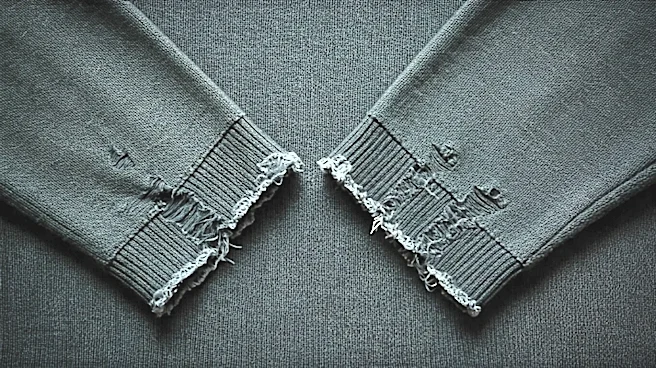
Today, distressed textures are a complex language. For the wearer, a pre-distressed luxury item offers instant character and a sense of uniqueness in a world of mass production. [2] It communicates an insider knowledge of fashion history and an appreciation for craftsmanship that can create a perfectly imperfect object. [14] The scuffs on a pair of Golden Goose sneakers or the careful fraying on a pair of designer jeans are not signs of failure but of intention. [7] They tell a story—even if that story was fabricated in a high-end Italian factory. It's a rejection of clean, corporate perfection in favor of something that feels more personal and human, even if that feeling comes with a luxury price tag. [2, 14]