




The Art of the Rope-a-Dope
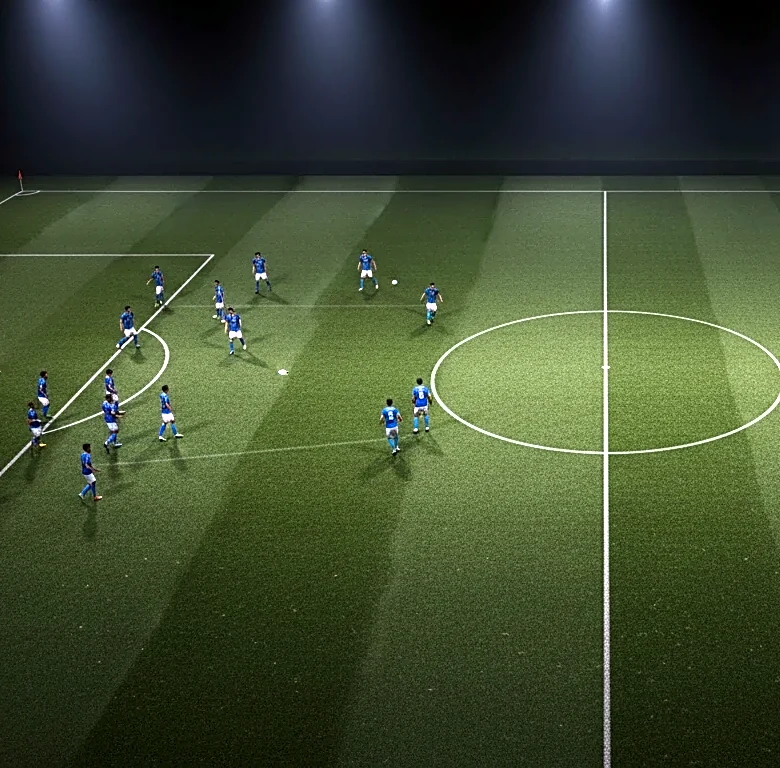
A great counterattack doesn't start with an attacker; it starts with the entire team committing to a defensive posture that borders on tactical genius. Think of it as a strategic retreat. Teams will often deploy a "low block," packing players deep inside
their own half, creating a compact, defensive shell. This looks passive, but it's an invitation. They are baiting the opponent, daring them to push more players forward and leave valuable green grass undefended. By absorbing pressure and clogging passing lanes, they’re not just defending; they are setting a trap, turning the opponent's strength—possession and attack—into a critical vulnerability waiting to be exploited.
The Trigger and the Transition
The entire strategy hinges on a single moment: winning the ball. The instant a pass is intercepted or a tackle is won, a mental switch flips for the entire team. This is the trigger. There is no hesitation. The first action is almost always a sharp, vertical pass forward, designed to immediately bypass the opponent's midfield before they can regroup. The players who just won the ball aren’t looking to play it safe with a sideways pass; they are thinking about how to launch the attack with a single, decisive action. This phase is about speed of thought as much as speed of foot. A successful transition happens in seconds, catching the opposing team physically and mentally off-balance.
Exploiting Space with Speed
Once the counter is launched, it becomes a high-speed chess match. The goal is to exploit the space the attacking team has vacated. This is where a team's chemistry and training are on full display. Attackers who were moments ago helping defend explode into sprints, not just randomly, but with intelligent, coordinated runs. They make diagonal runs to pull the few remaining defenders apart, use overlapping sprints to create numerical advantages like a 3-on-2, and communicate with instinct. The player on the ball needs to be quick but also composed, choosing the right moment to release the final pass for a high-quality shot on goal. It’s a rapier thrust, not a battering ram—all about precision and timing.
The Ultimate Knockout Weapon
In the high-stakes, do-or-die environment of a cup tournament, the counterattack reigns supreme. In a 90-minute knockout match, a single goal can be the difference between advancing and going home. This raises the psychological stakes and often leads to more cautious, possession-focused play. The counterattack is the perfect antidote. It allows a team to remain defensively solid while still carrying a lethal threat. It's a strategy that empowers underdogs, as proven by teams like Greece at Euro 2004 or Morocco during their historic run in the 2022 World Cup. They demonstrated how to absorb pressure from supposedly superior teams and strike with ruthless efficiency, proving that in cup soccer, you don't need to dominate the ball to dominate the game.