






The Surface-Level Similarities
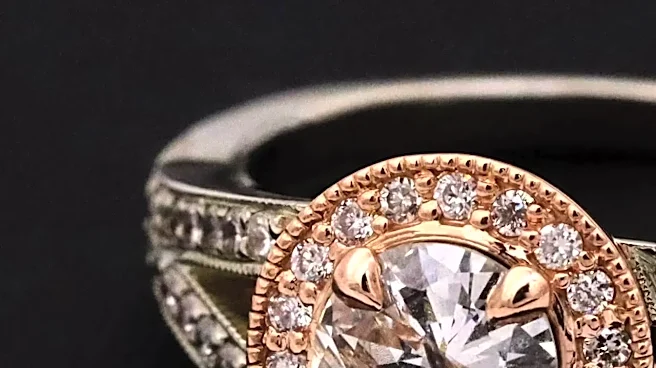
When you’re staring into a jeweler's case, picking between platinum and white gold feels like splitting hairs. Both offer that cool, silvery-white luster that makes diamonds pop. White gold is typically yellow gold mixed with white metals like palladium
or nickel and then coated in rhodium for a bright, mirror-like finish. Platinum, on the other hand, is a naturally white metal, prized for its purity and rarity—it's about 30 times rarer than gold. This difference in composition leads to the most obvious distinction: price. Platinum is denser and more pure, so a ring made from it will be heavier and almost always more expensive upfront than its white gold counterpart. White gold offers a similar aesthetic for a lower initial cost, but requires more maintenance, as the rhodium plating will eventually wear away, revealing a warmer, yellowish tint underneath.
The Hidden Detail: How They Age
Here is the secret that jewelers know and that isn't immediately obvious: the two metals age in completely opposite ways. When white gold gets scratched, microscopic bits of the metal are lost forever. Over many years, this can lead to the piece, especially the prongs holding a stone, becoming thinner. Platinum behaves differently. It’s an incredibly dense and durable metal. When platinum is scratched, the metal doesn't flake away. Instead, it gets displaced, moving from one spot to another on the surface. This means that even after decades of wear, a platinum ring retains its volume and weight, a quality that speaks to its longevity. This fundamental difference in how the metals respond to daily life is what sets the stage for the true mark of craftsmanship.
The Patina: A Story Written in Metal
The displacement of metal on platinum’s surface creates a unique effect called a patina. Over time, the countless tiny scratches and shifts in the metal create a soft, lustrous, satin-like finish. Instead of a mirror-like shine, the ring develops a gentle, muted glow that many collectors and connoisseurs find highly desirable. This patina is not seen as damage; rather, it’s viewed as a symbol of the piece’s journey and history, reflecting the life it has lived. Some cultures, particularly in Japan, treasure this patina as a representation of wisdom and perseverance. White gold, by contrast, doesn’t develop a patina. As its rhodium plating wears off, it simply looks uneven and requires a trip back to the jeweler to be re-plated to restore its bright white shine.
What This Says About Craftsmanship
A master jeweler understands this distinction intimately. The choice between platinum and white gold isn’t just about color or cost; it’s about intent. When a craftsman chooses platinum, they are often designing for permanence and the graceful evolution of the piece. Platinum's density and malleability make it superior for securing valuable gemstones, as its prongs are less likely to become brittle or thin out over time. The expectation that platinum will develop a beautiful patina is part of the design consideration. The artisan knows the piece won't just be worn, but that it will age with its owner, its surface telling a story without compromising its structural integrity. Choosing platinum is a deliberate act of creating an heirloom—a piece intended to last for generations, whose character deepens with time. This embrace of the metal's natural aging process is the hidden signature of true, forward-thinking craftsmanship.